
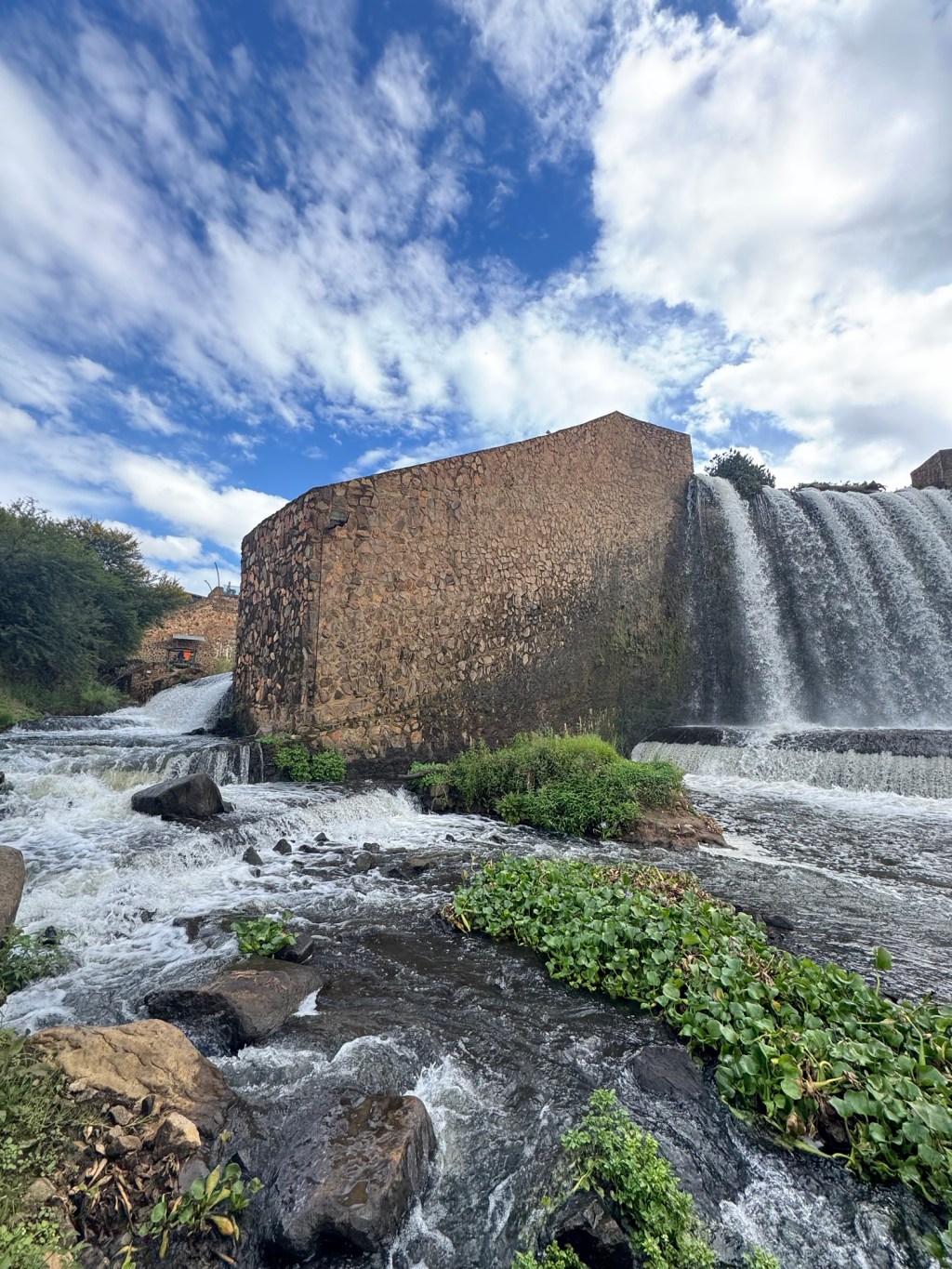
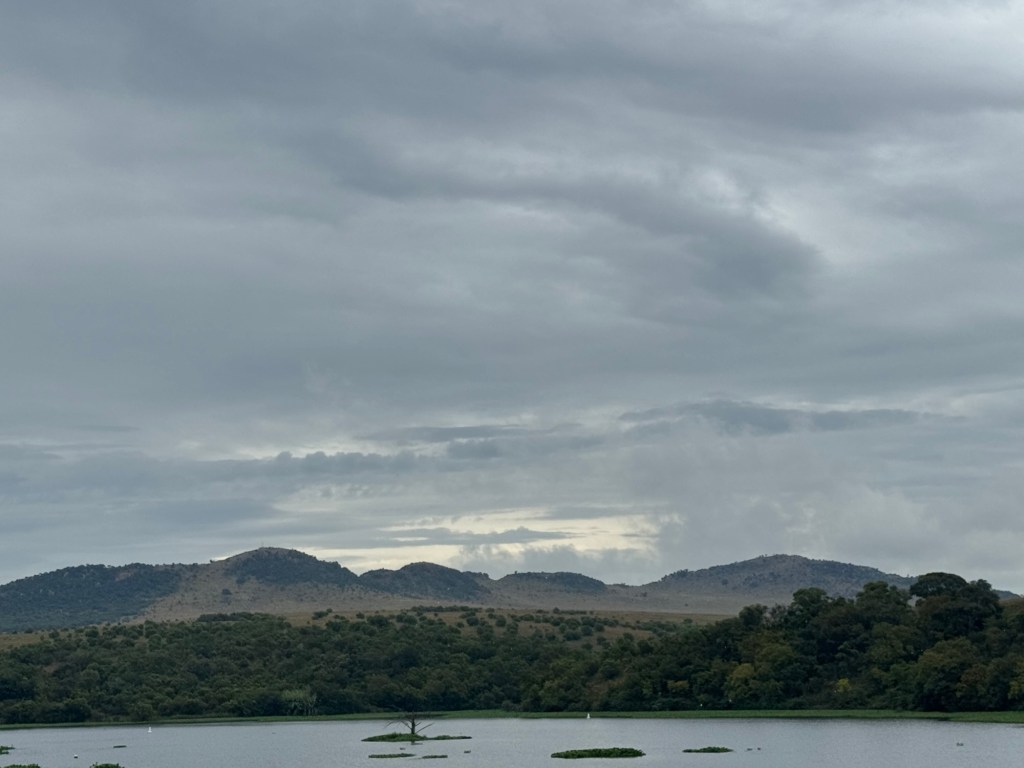
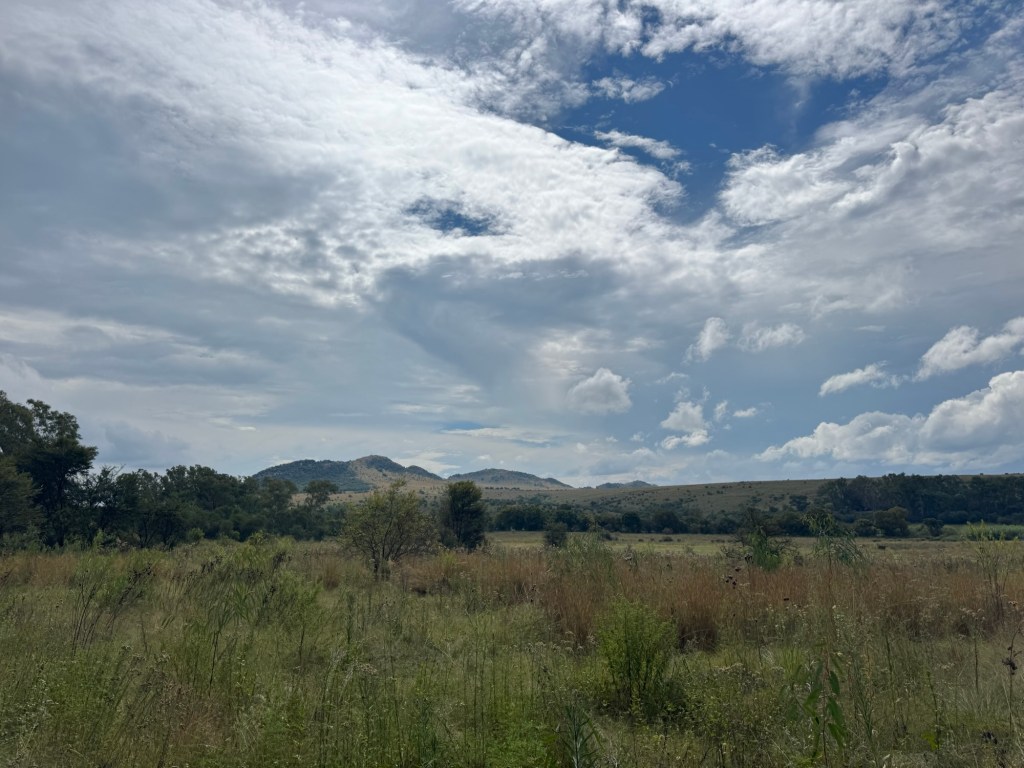
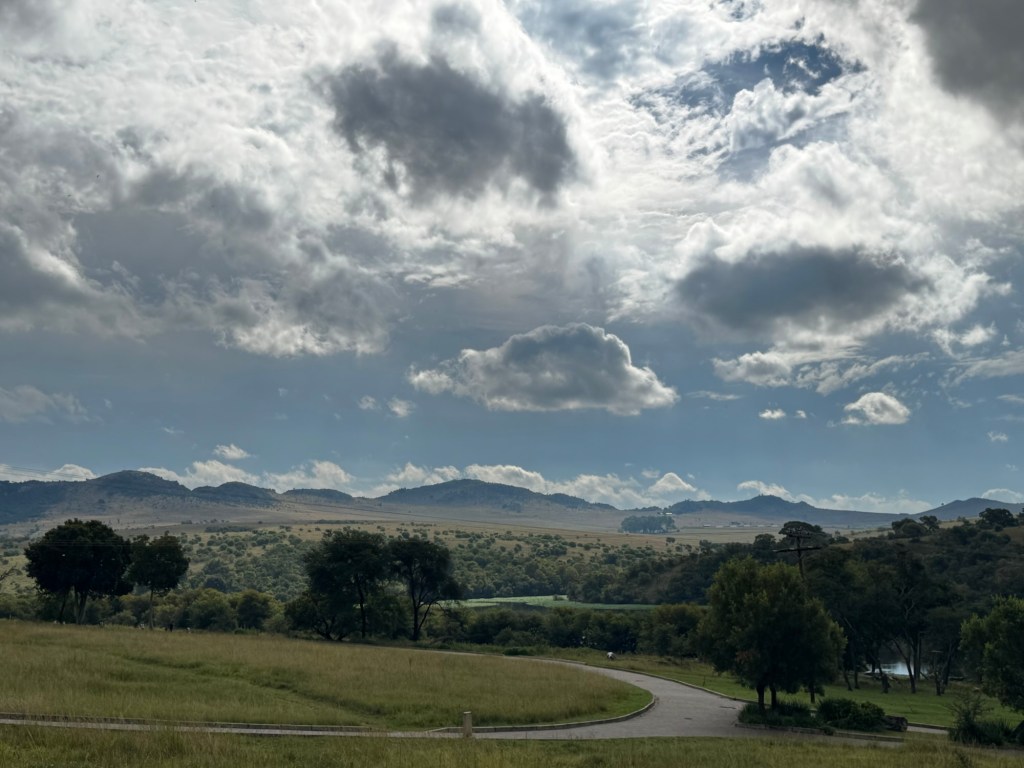
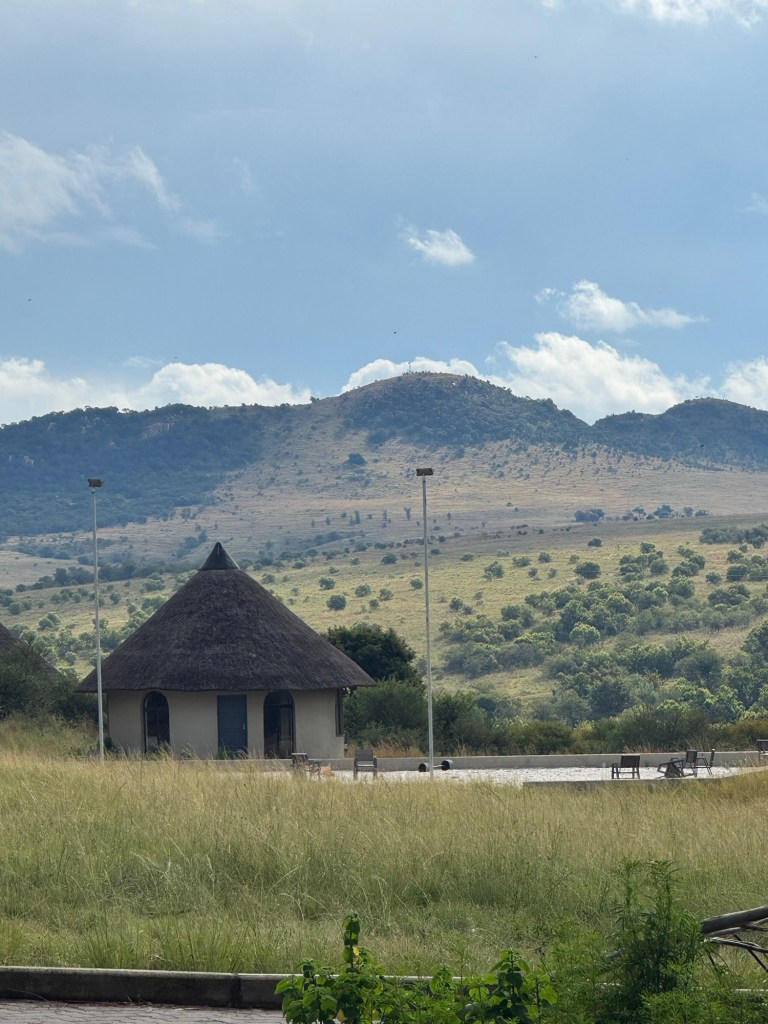
The Cradle of Humankind is about a 50 minute drive from Pretoria and 50 km outside Johannesburg. It is one of 8 World Heritage Sites in South Africa where you can find caves, lakes, rivers, grassland and rocky hills. It has a rich fossil history
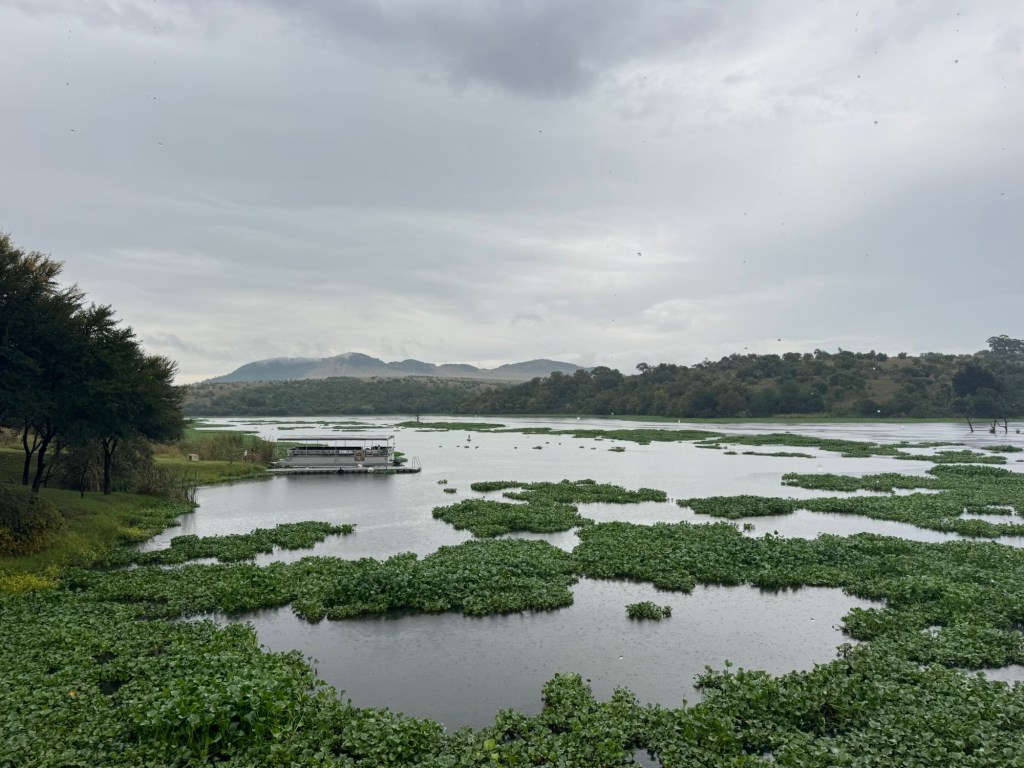
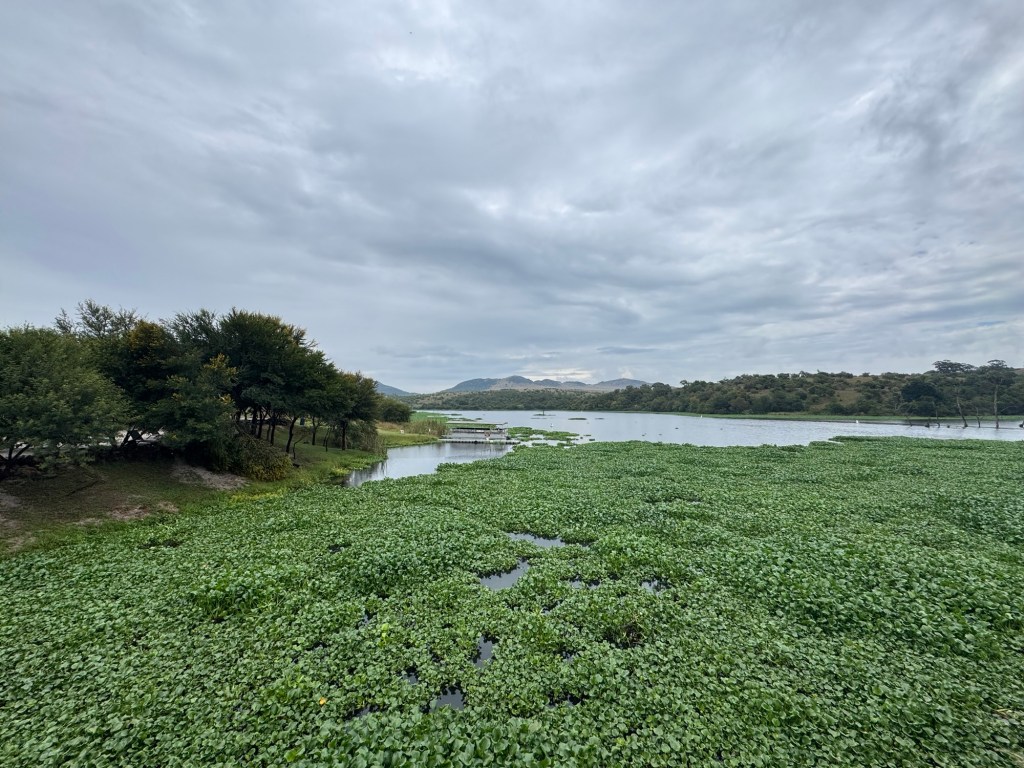
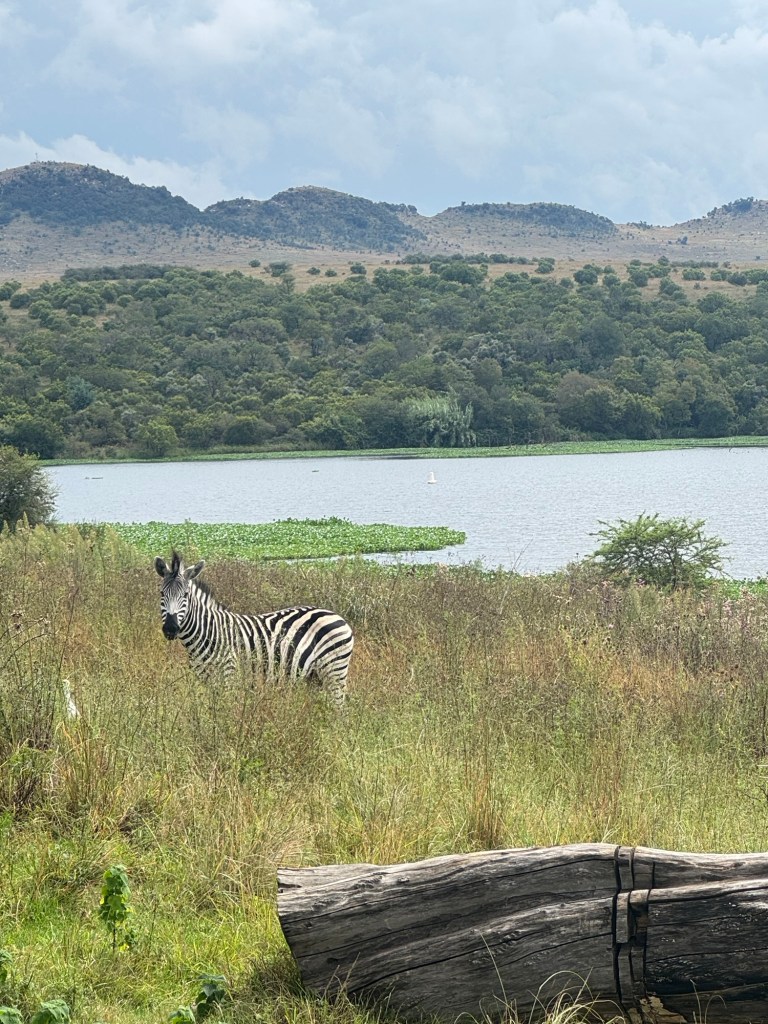
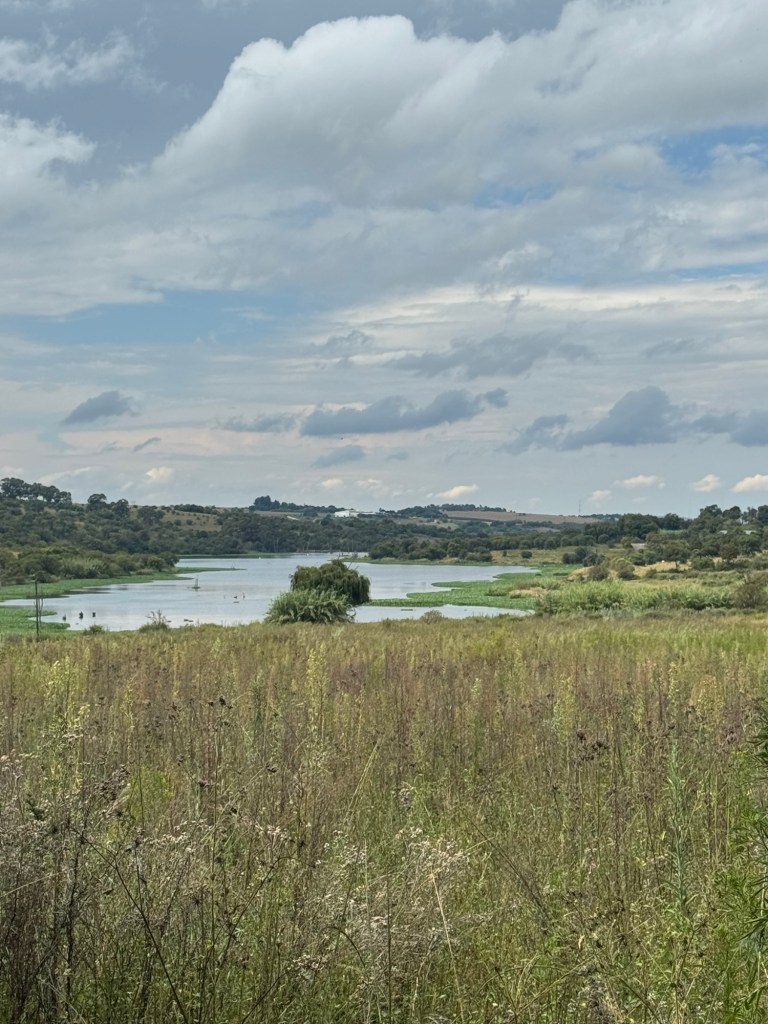
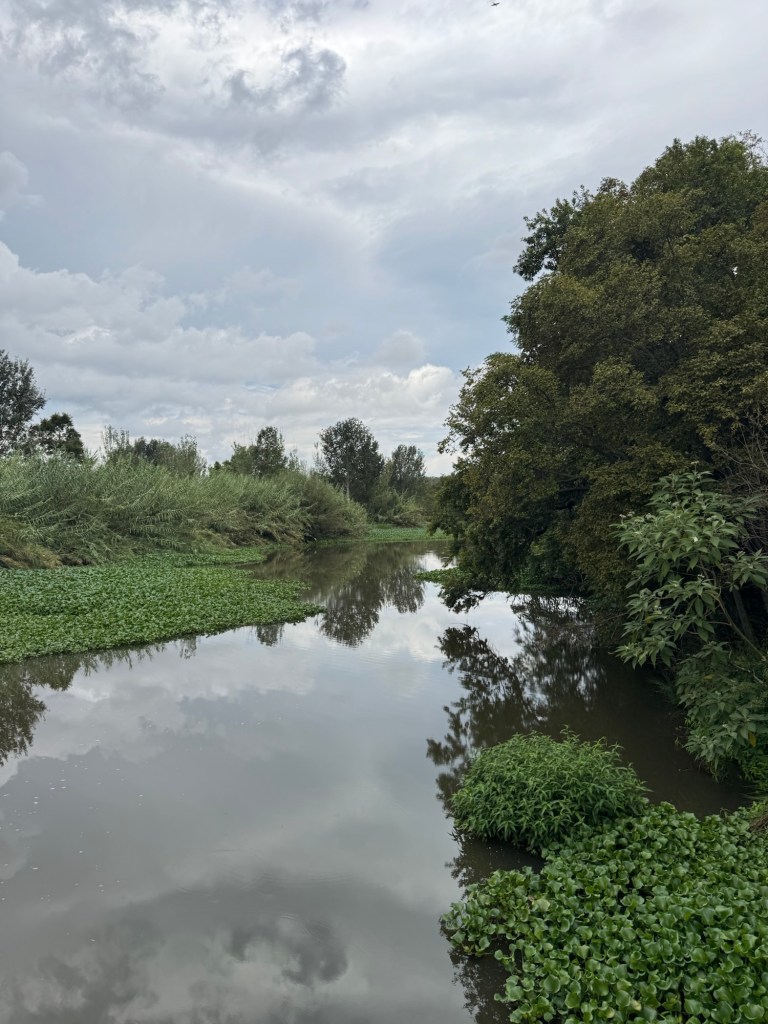
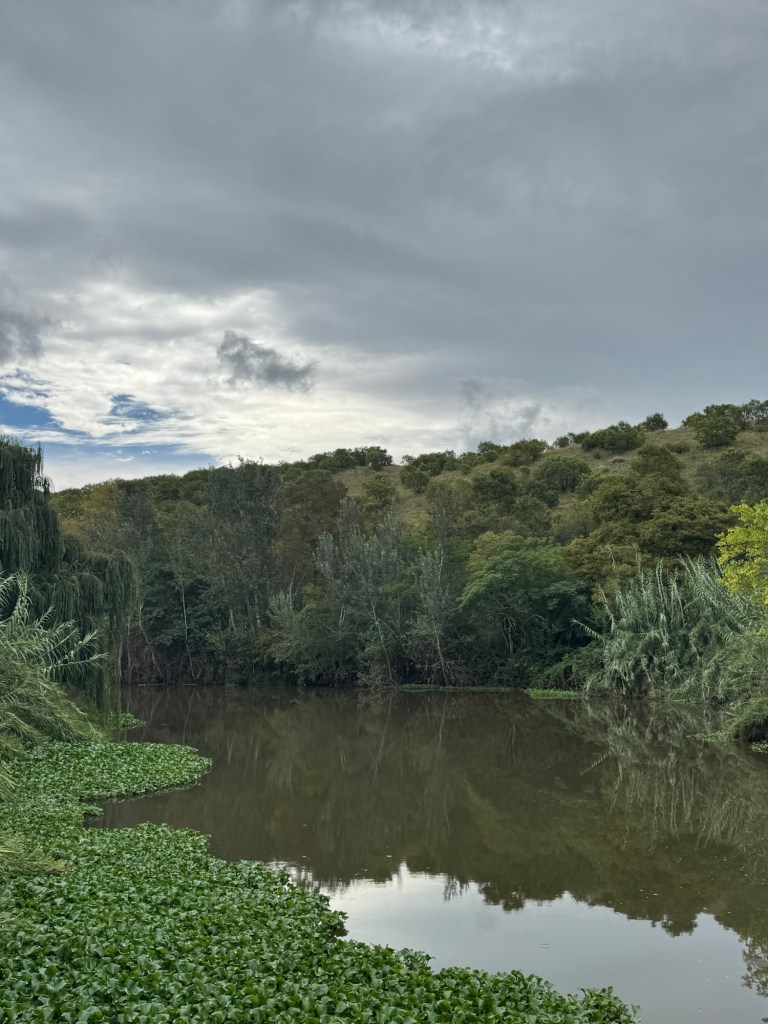
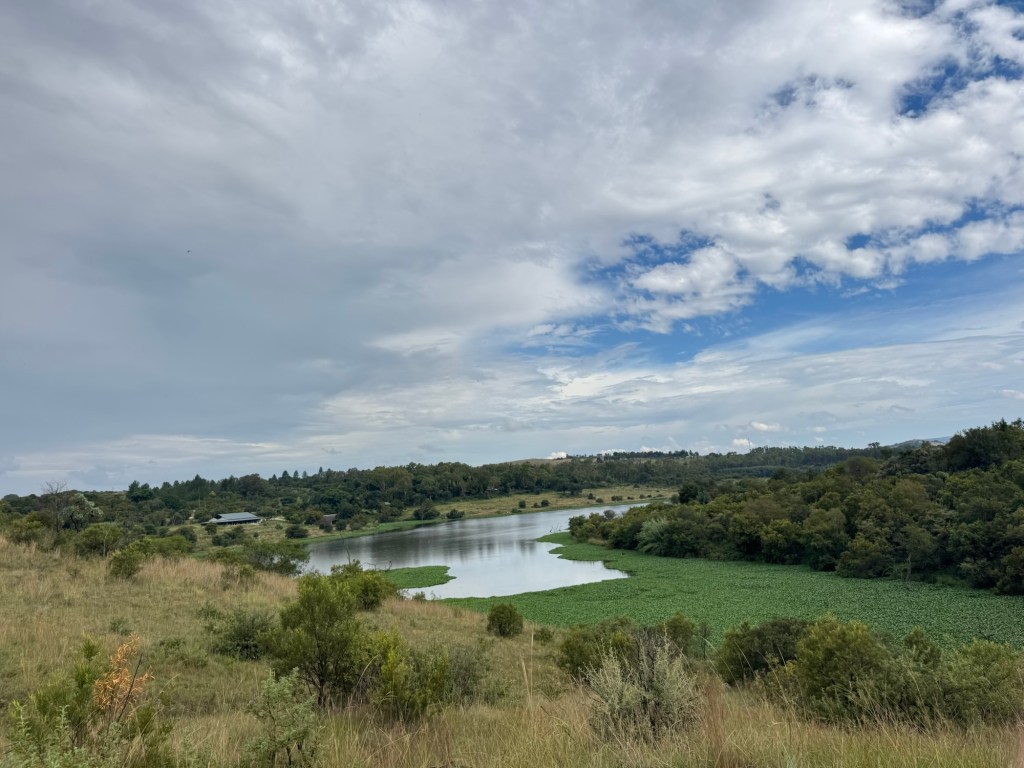
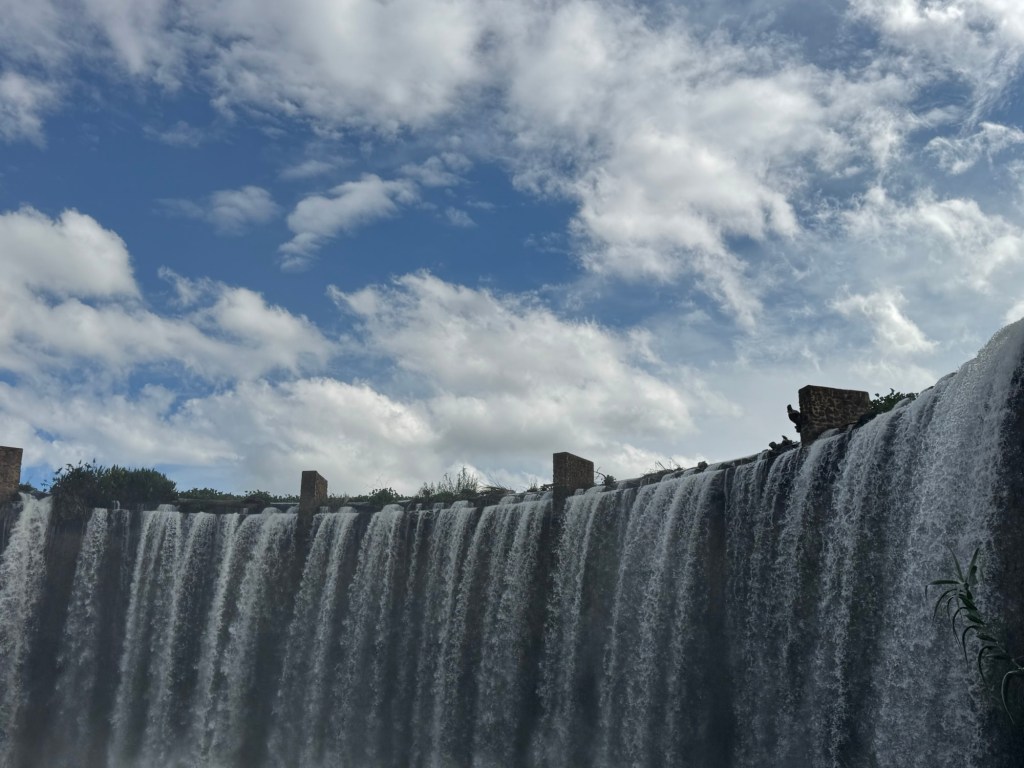
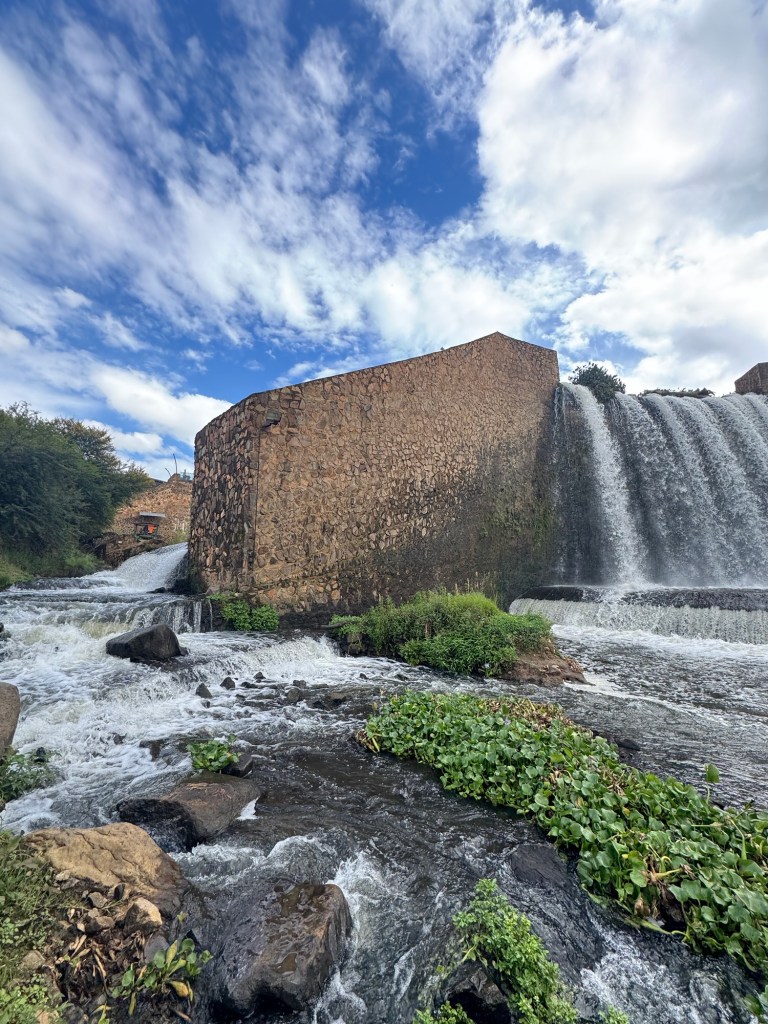
Cradle Moon Lake is nestled within this area and is where I spent a good chunk of my Sunday. As I drove to meet my friend, Raj, to kayak in the lake, the skies darkened, rain fell and lightning lit the sky. We dodged raindrops and opted for lunch at the restaurant overlooking the lake. Water hyacinths were plentiful, making for a beautiful sight along the shore. Behind us, the waterfall roared as it crashed down below.
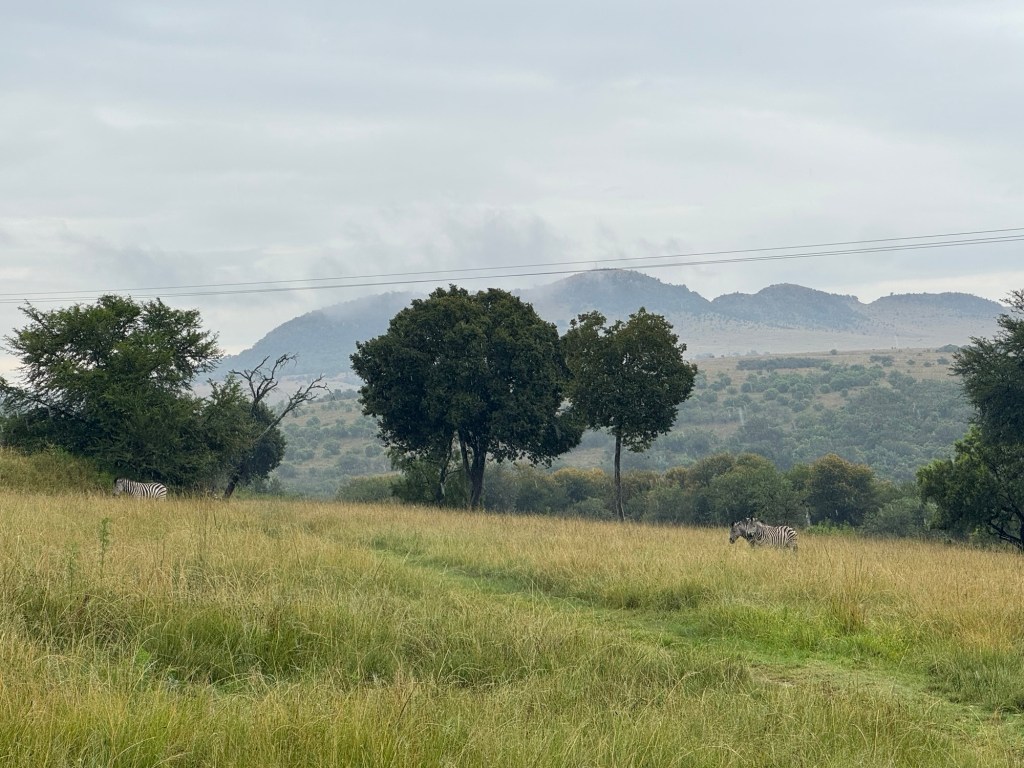
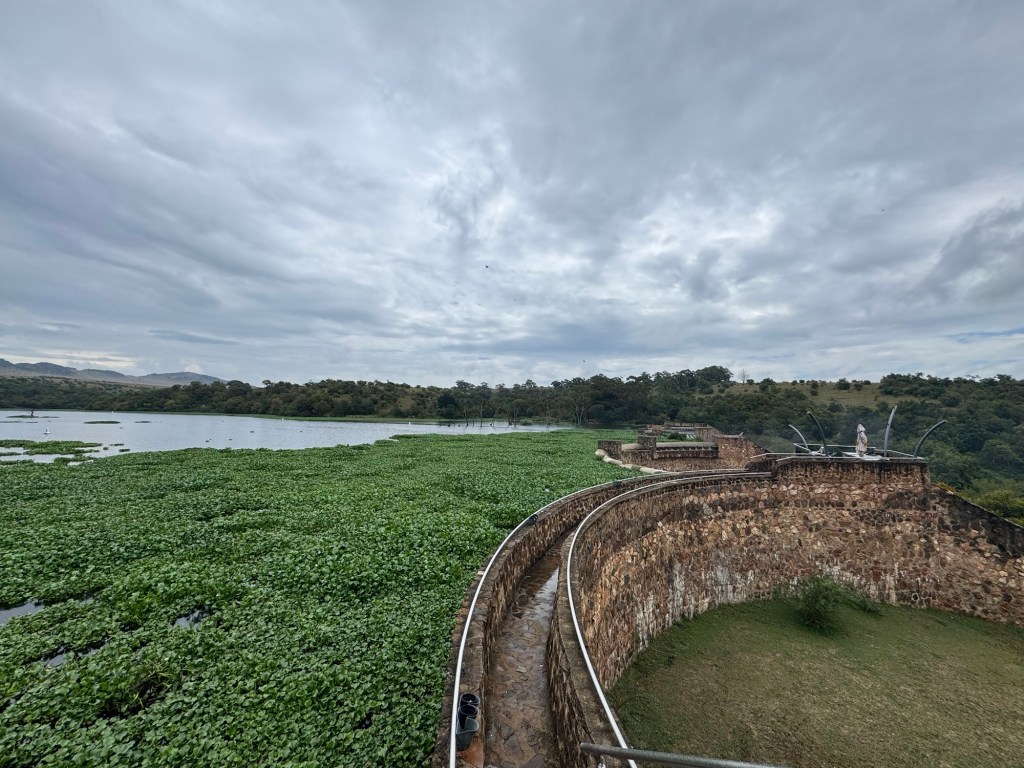
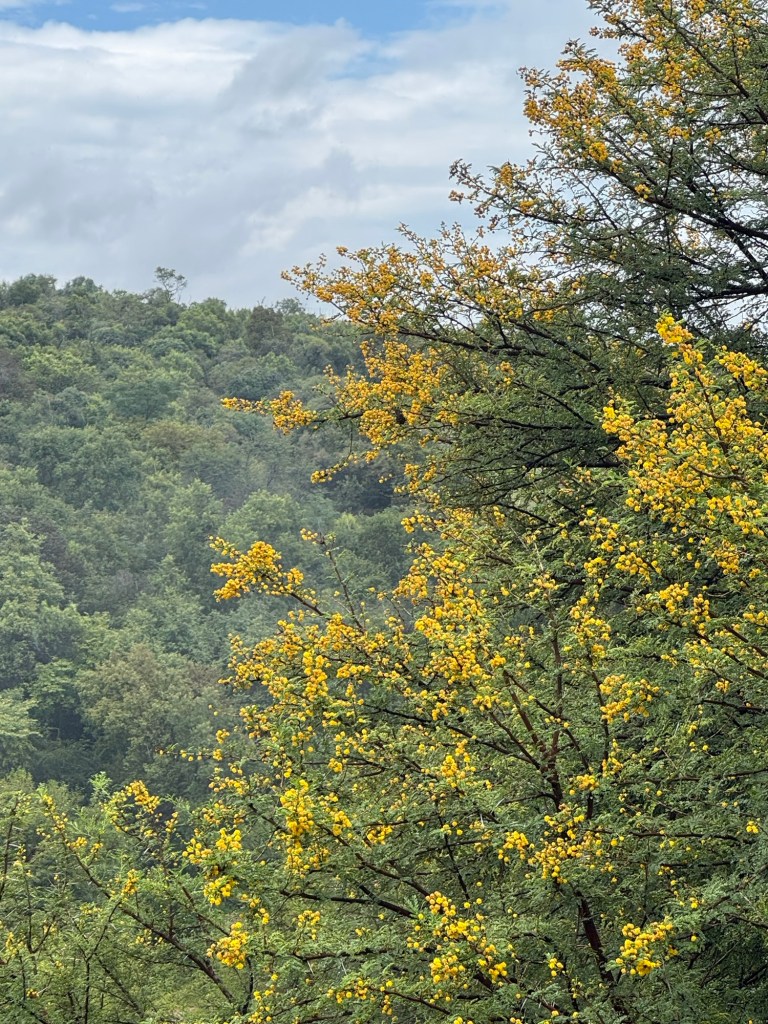
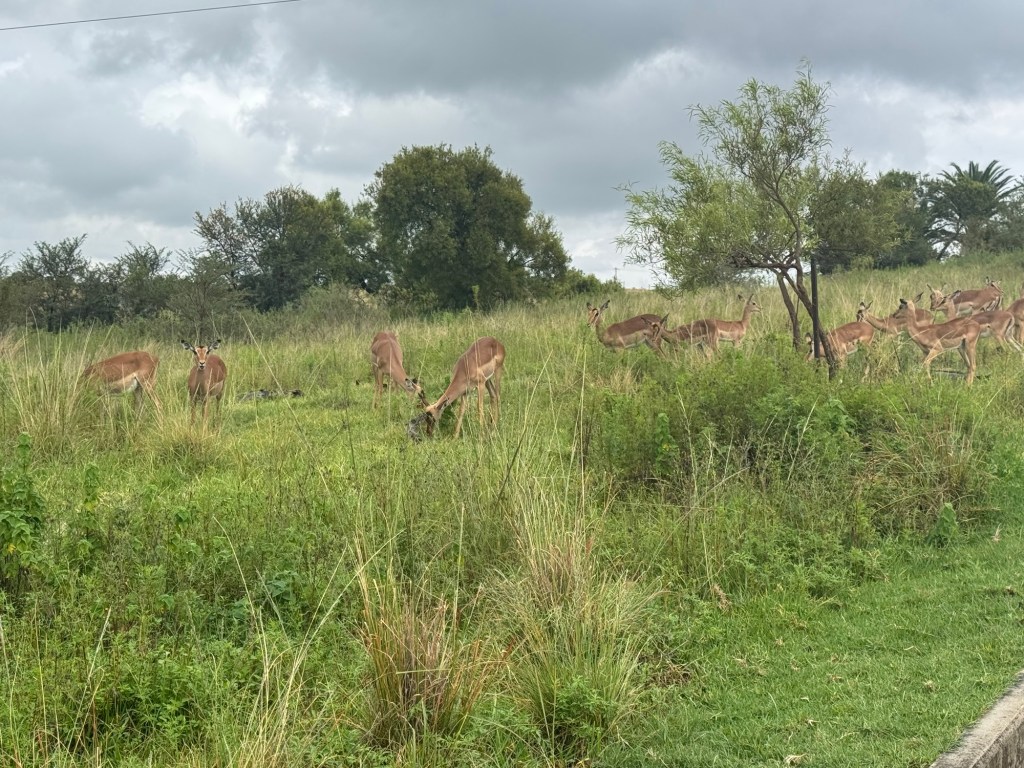
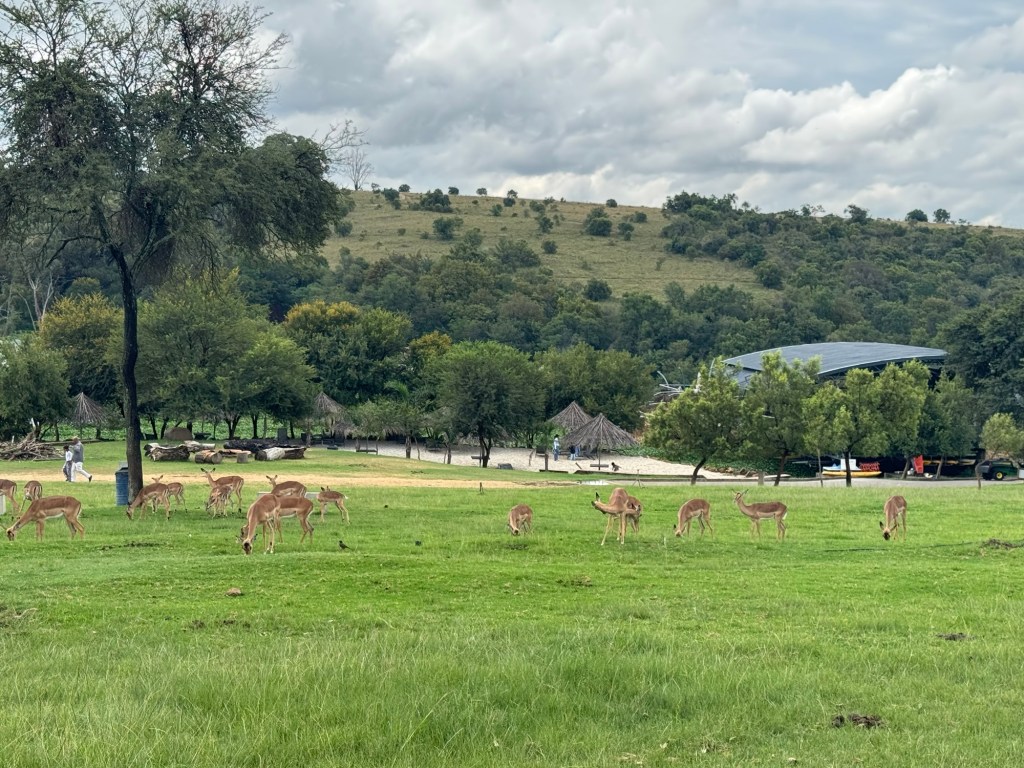
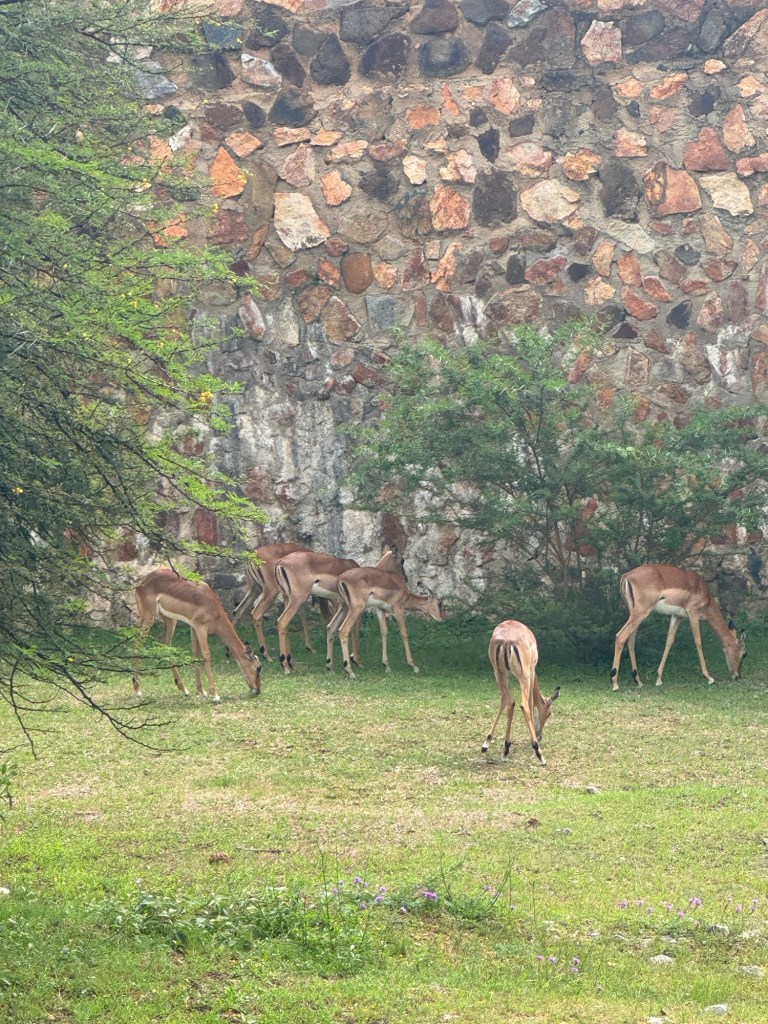
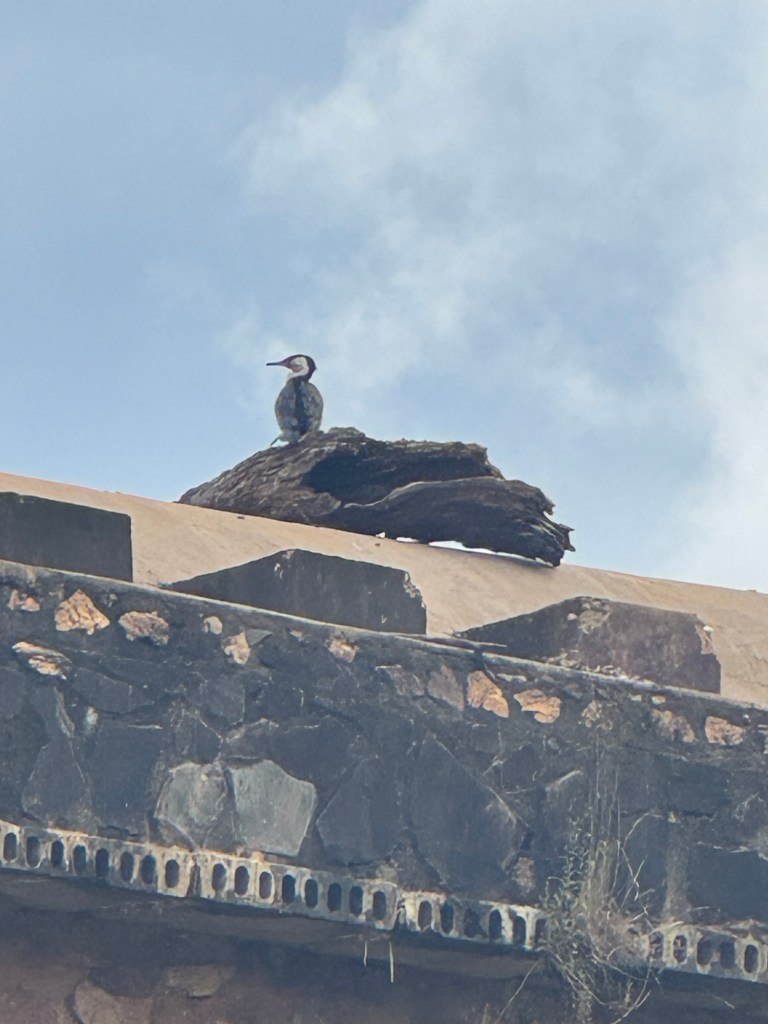
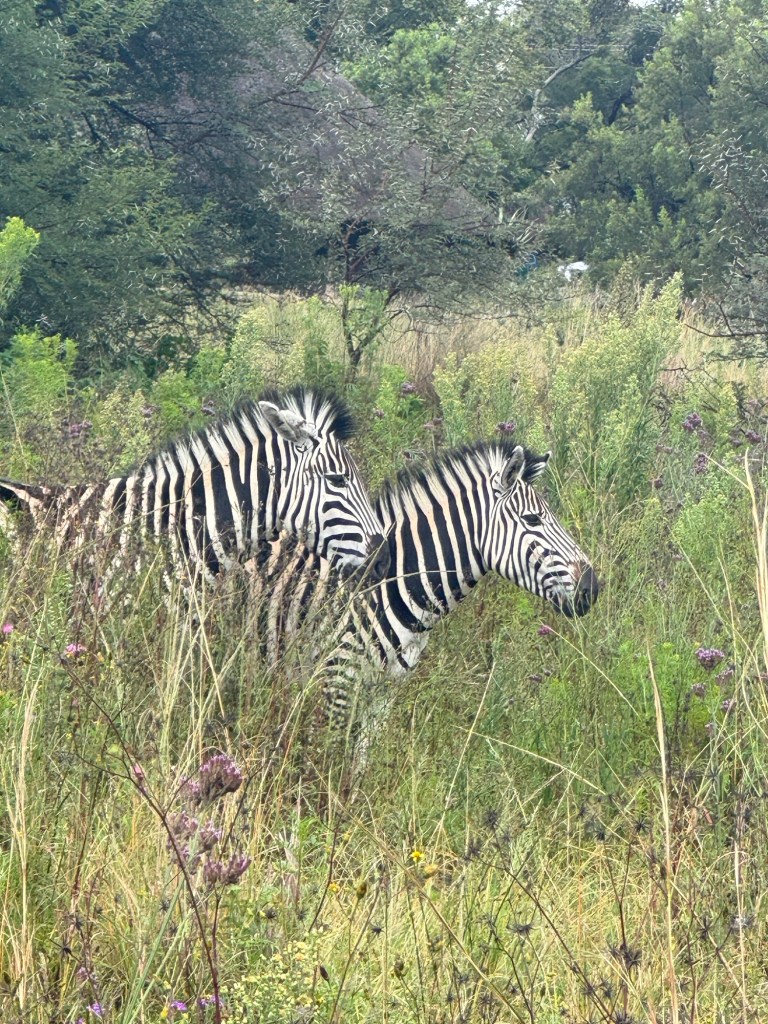
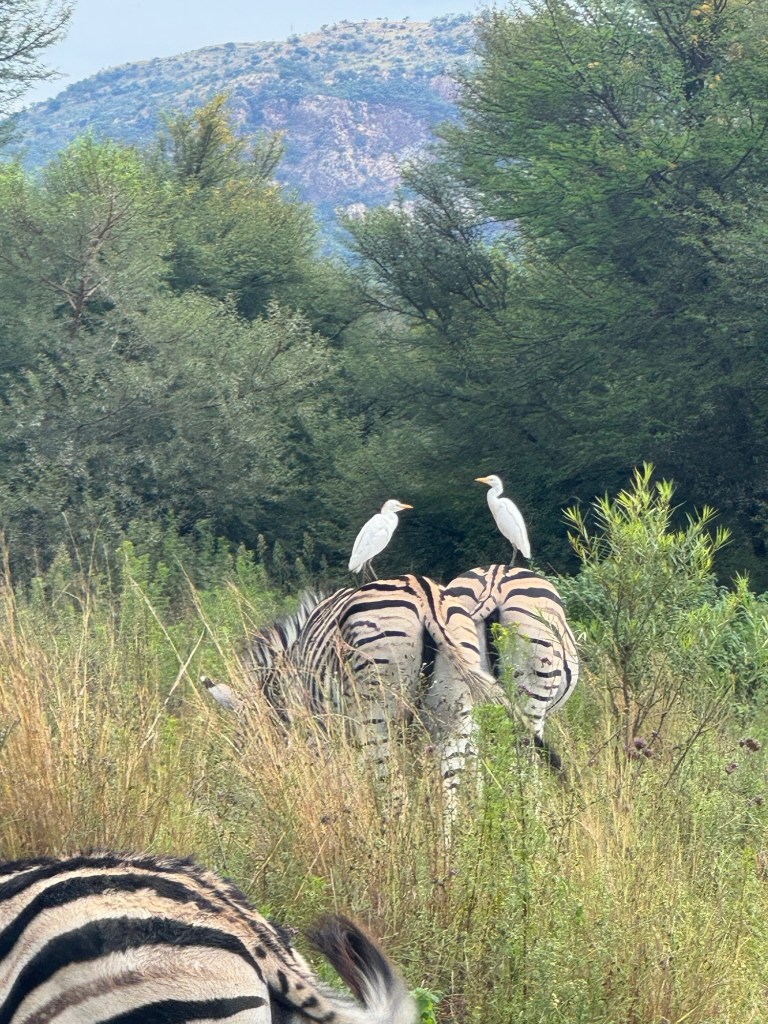
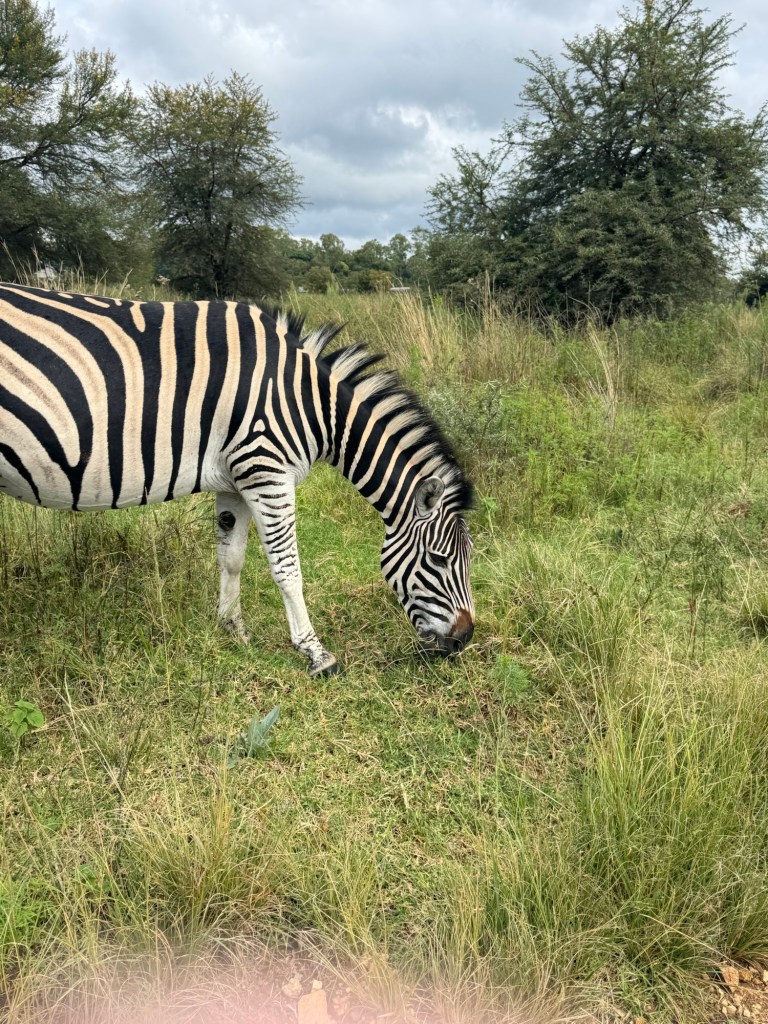
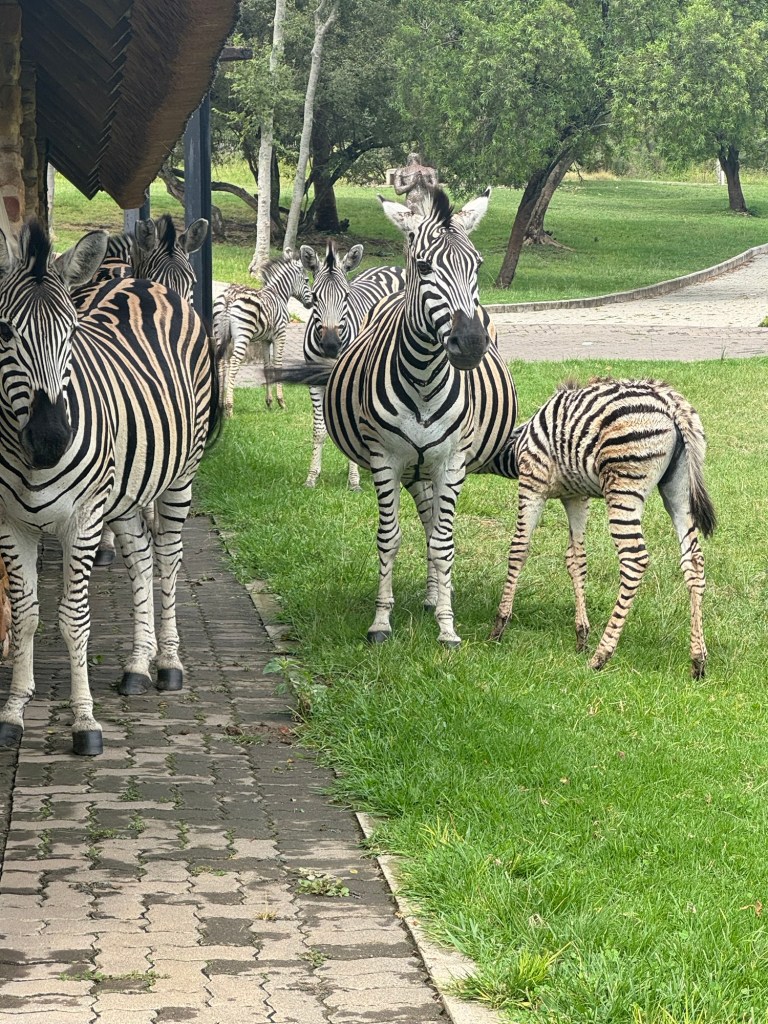
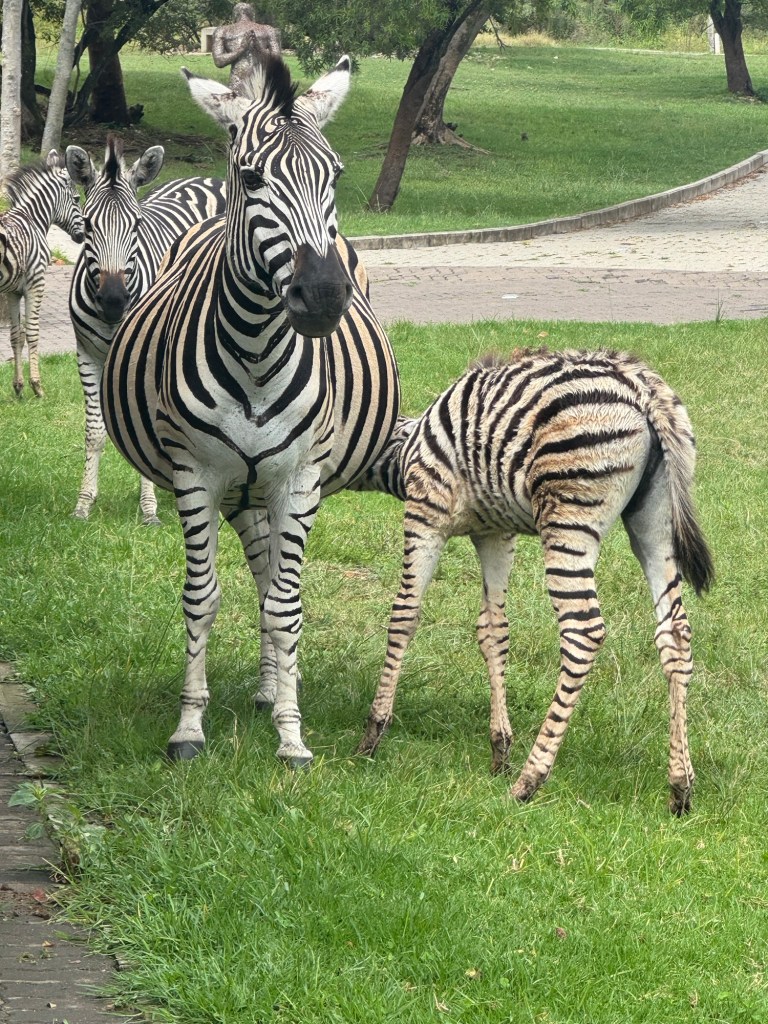
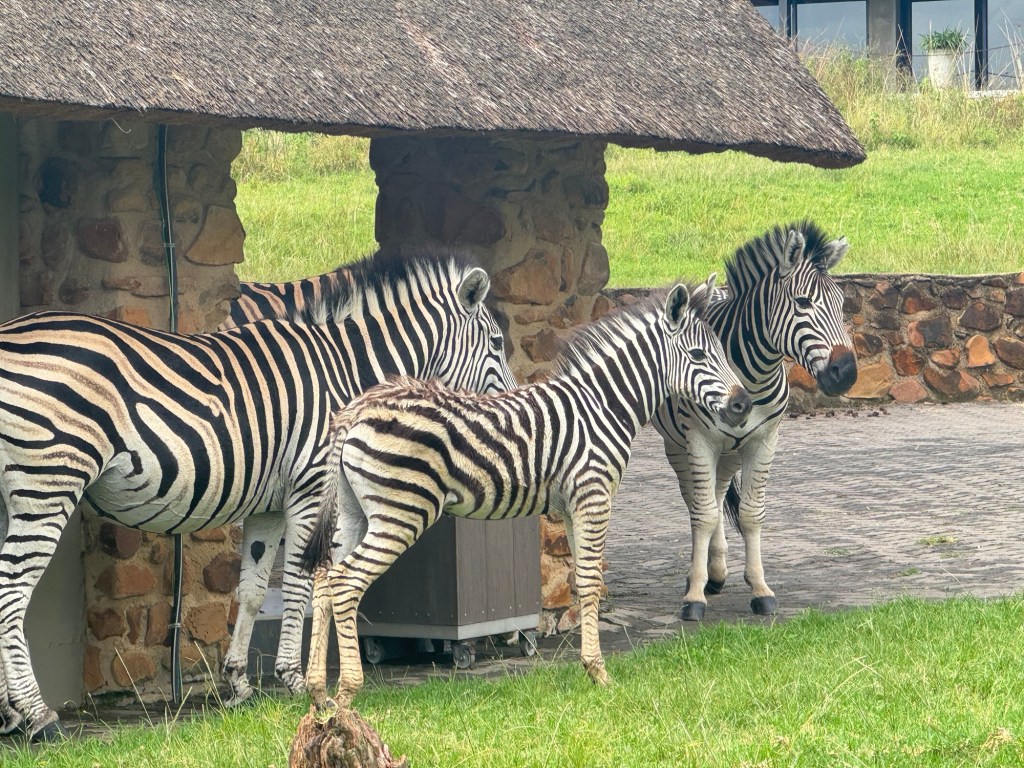
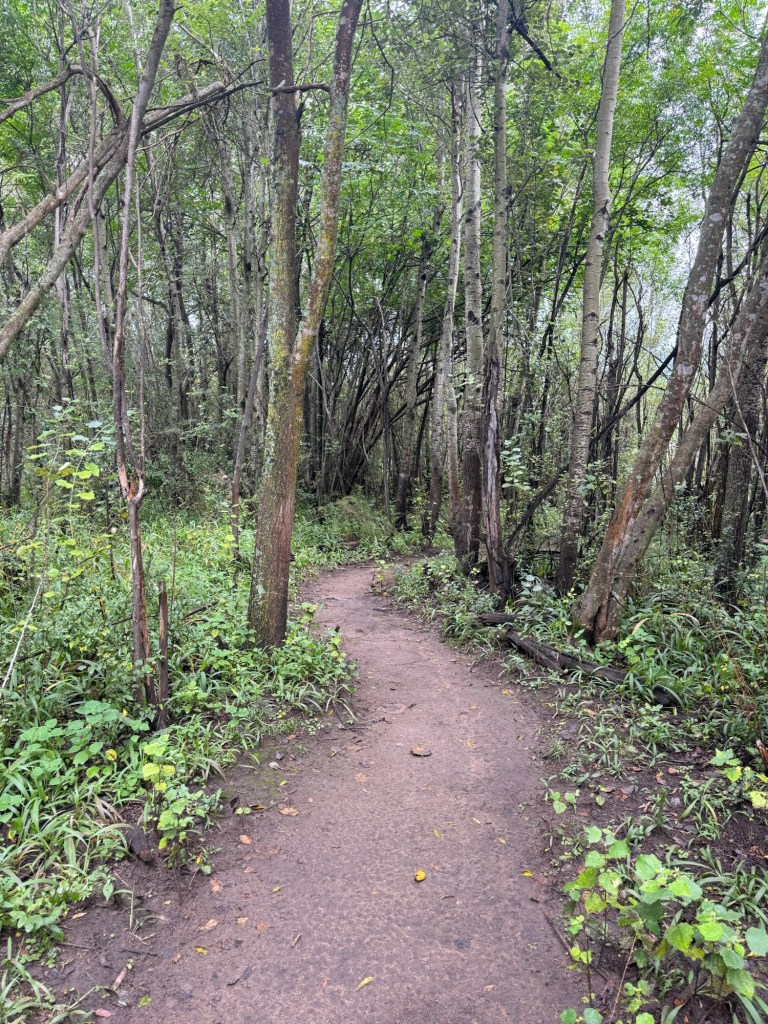
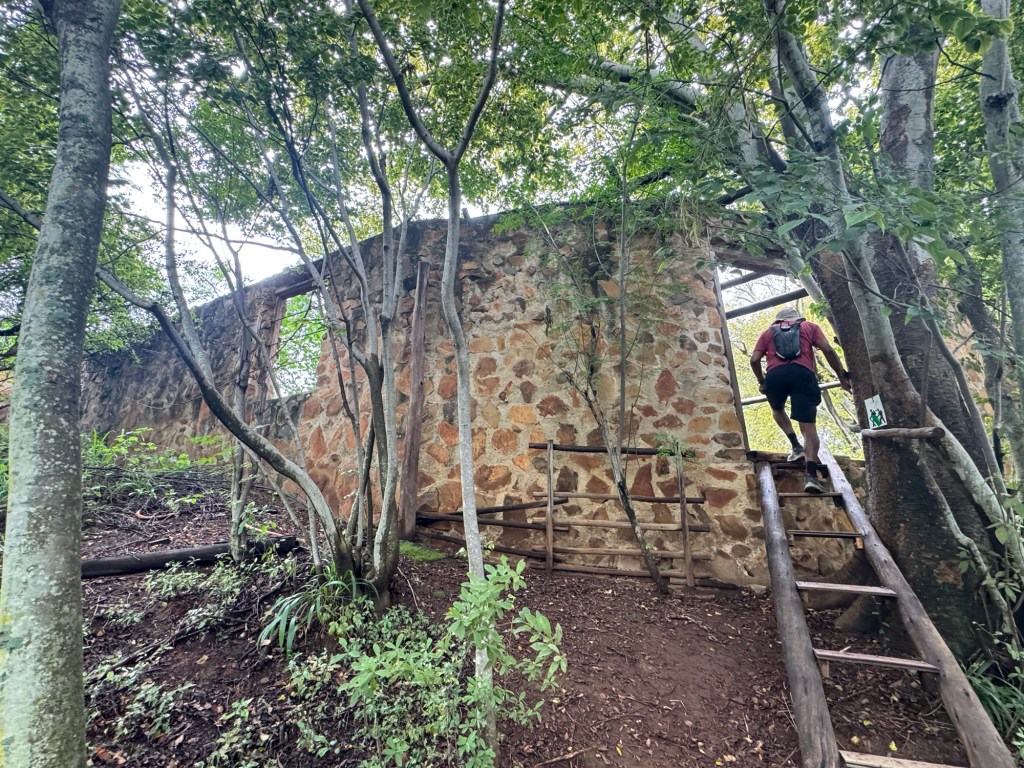
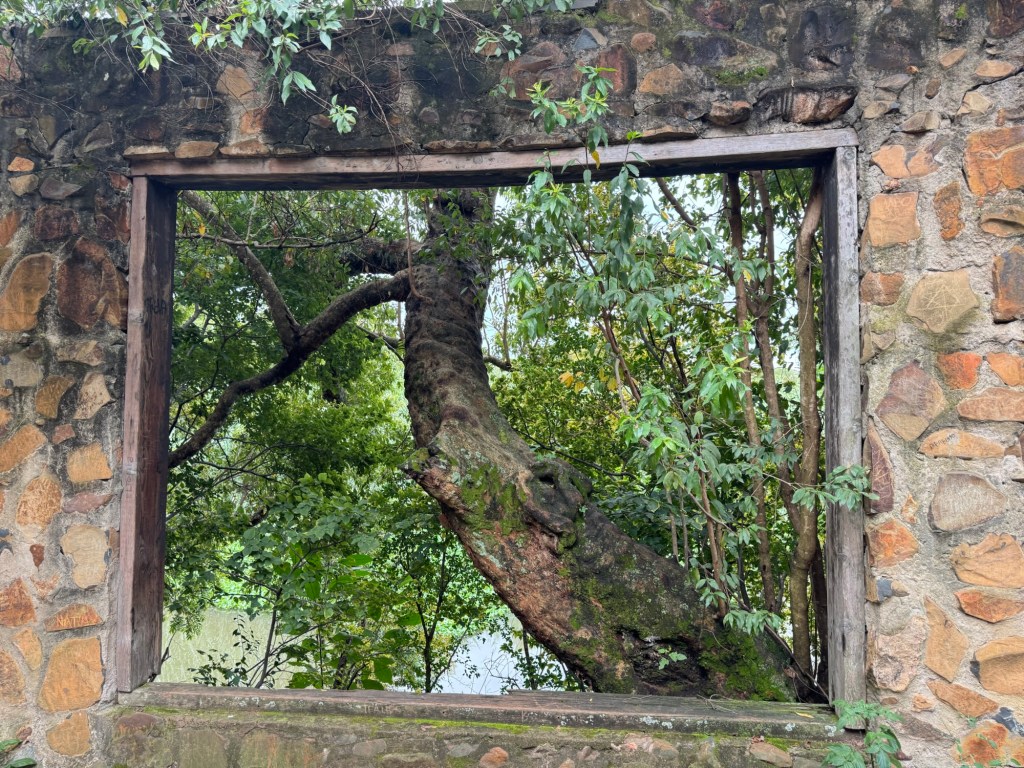
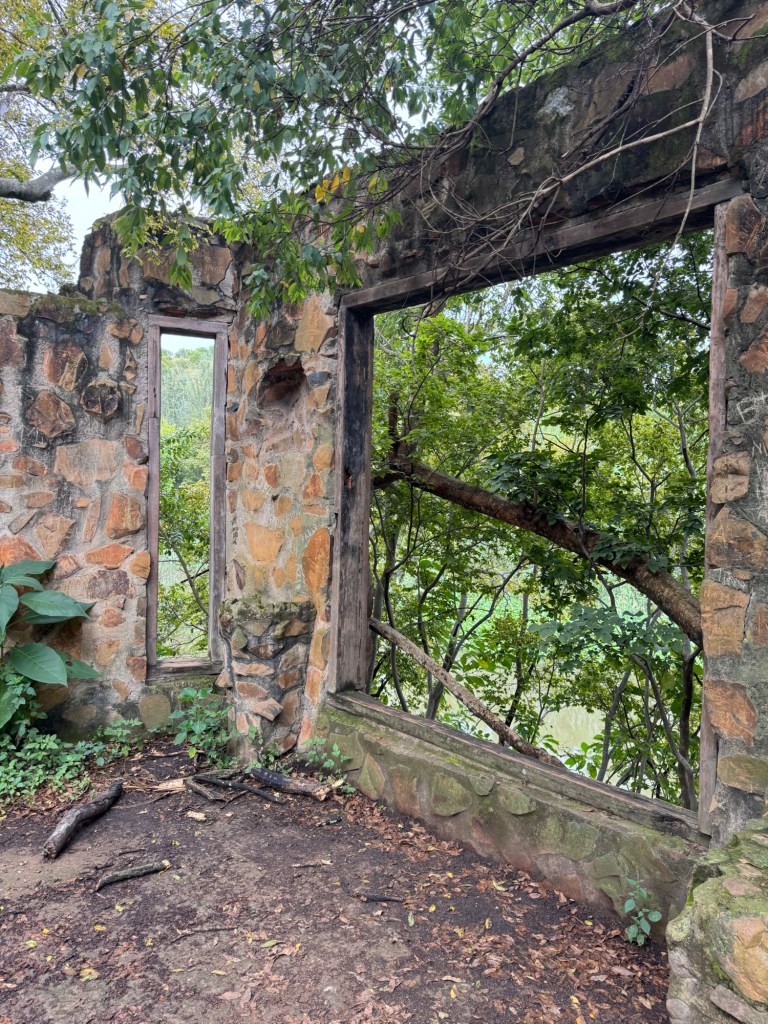
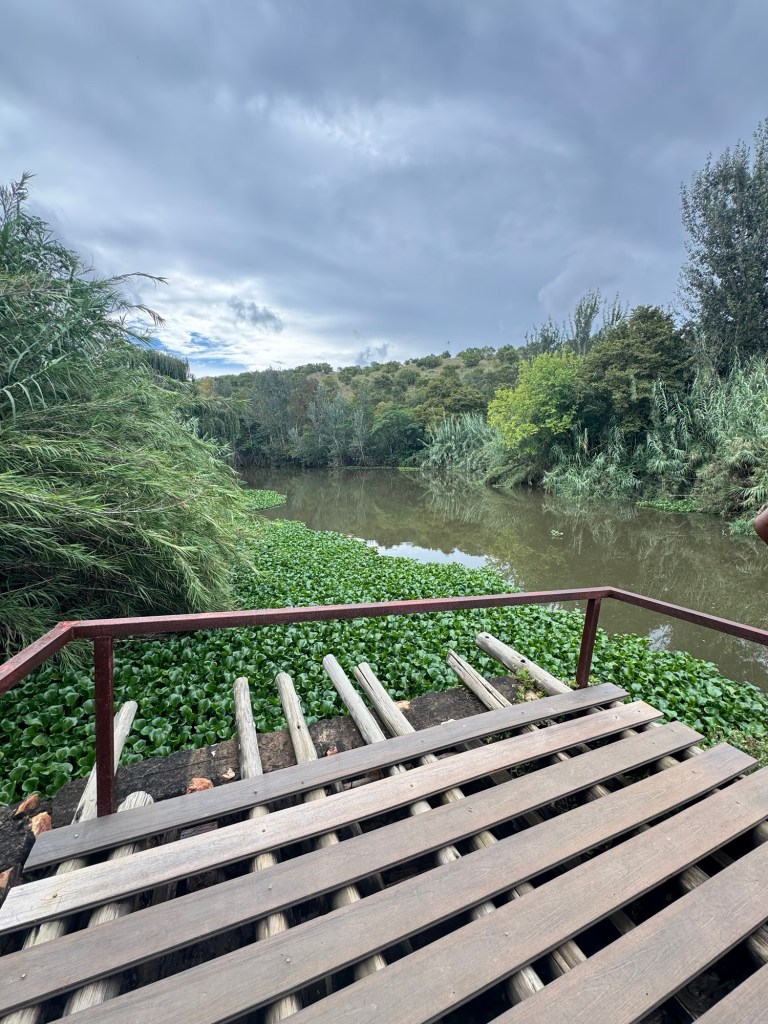
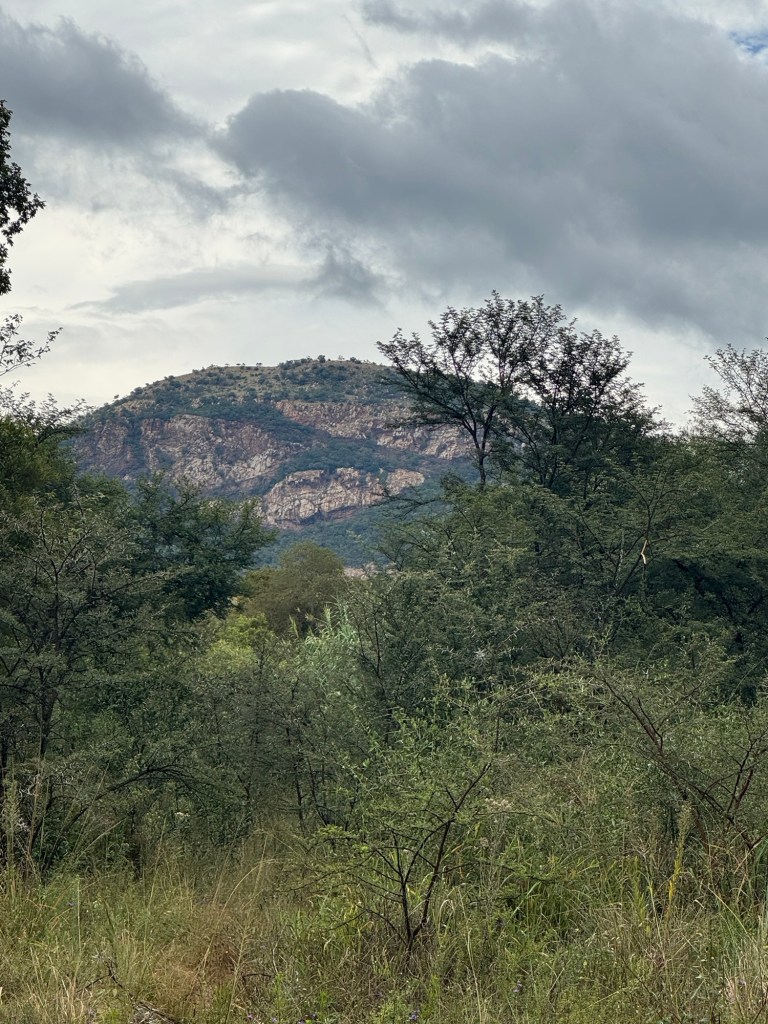
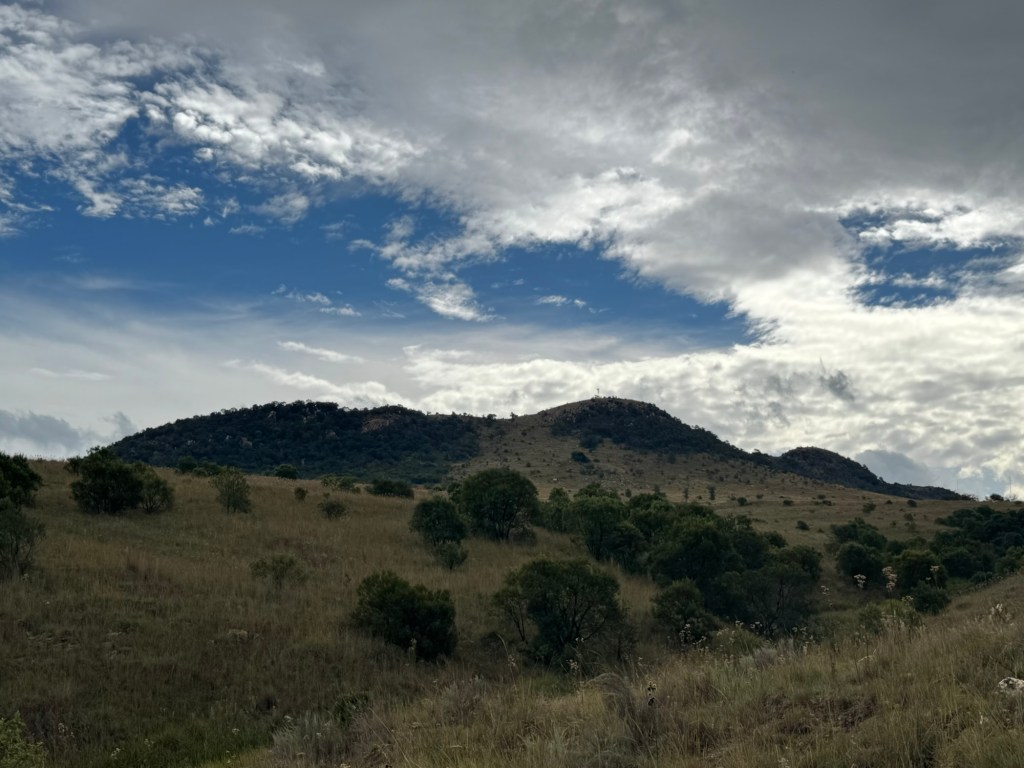
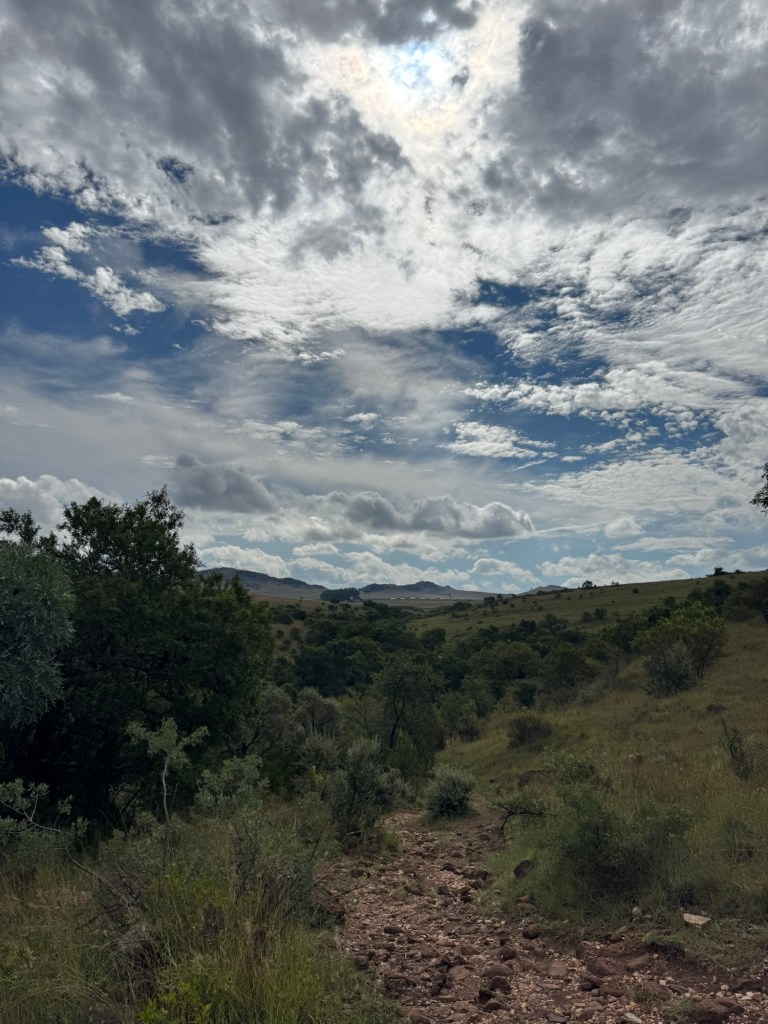
By the time we’d finished lunch and shared a pot of tea, the sun was peeking out. We opted to hike rather than walk and it was a perfect day for it. The hike was about 5 miles long and brought us alongside the lake at times, across a bridge above the falls, through grassy meadows, shady forests and up into the hills. The trail was clear and easy to follow. We saw countless impala and zebras and the birds were cheering us on (or perhaps they were jeering in some cases!).
About 3.5 miles in, a couple was coming toward us the wrong way on the trail. They said two rhinos were very near the path and so they decided to turn back. I was very nervous, but at the least wanted a photo, so we carried on. I was watchful and vigilant, tingling with both fear and excitement.
From my game drive, I recognized the large piles of poop very distinctive of rhinos. Their feces tells researchers so much about them and their health, but also spreads seeds to germinate more plants. You simply can’t miss it. I wondered if they’d be around the next curve or bluff. But for the better or worse, we did not see them. I was shocked, though I shouldn’t have been, that there were rhinos in the park where we were walking and yet there was no signage or warning. South Africa, I reminded myself. It’s just how it’s done.
The Cradle of Humankind is something I want to know more about, especially after reading about a black South African named Lazarus Kgasi, who helped paleontologists find countless fossils here. Performing the work of locating and excavating for years, only to have the credit go to white paleontologists, he eventually won the respect of all he worked with for his curiosity and scientific mind.
It was a beautiful day and I look forward to returning again, although I’ve just learned that hippos live in the lake. Hmmm.
 The Journey Inward
Leave a comment