
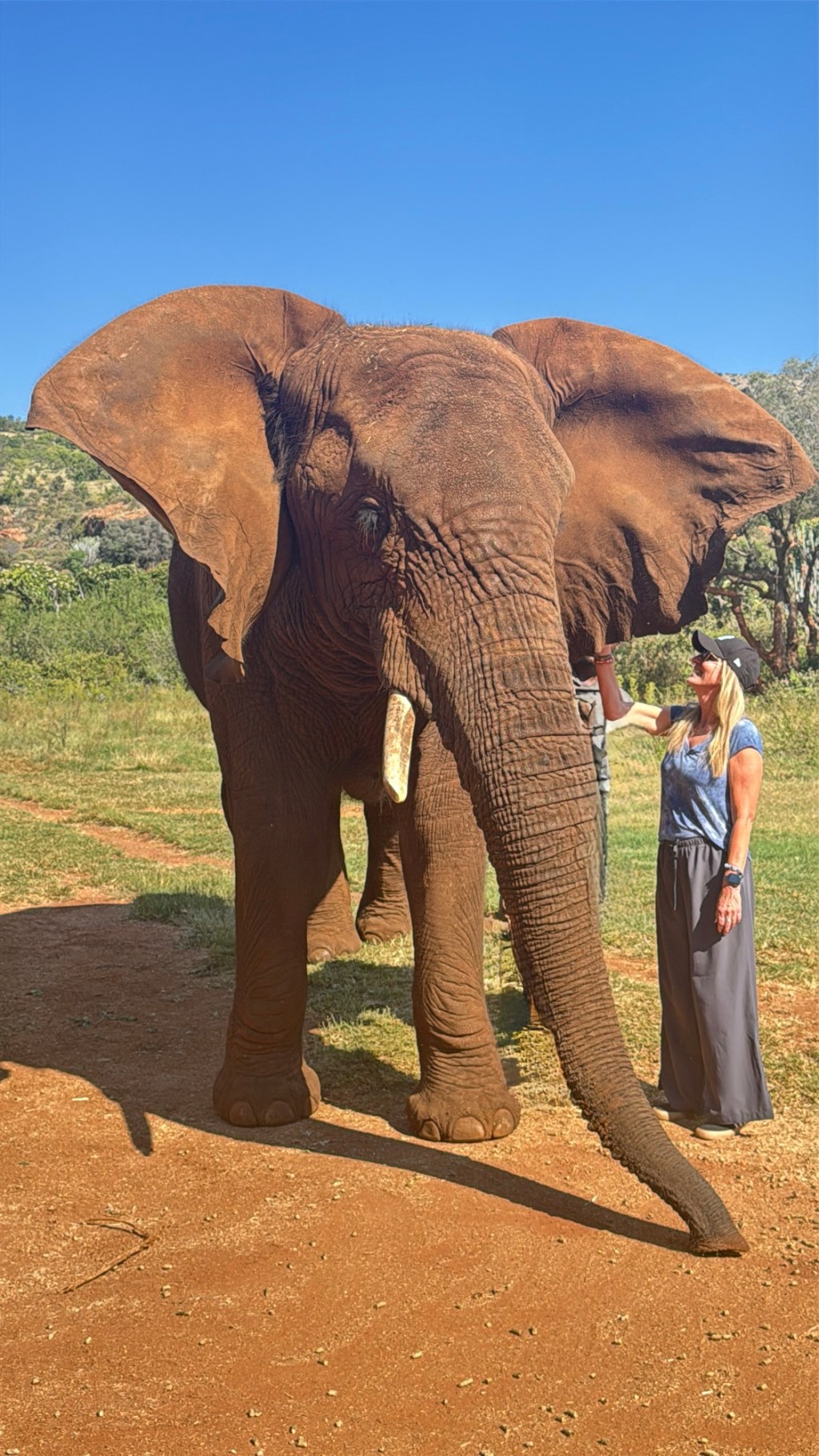
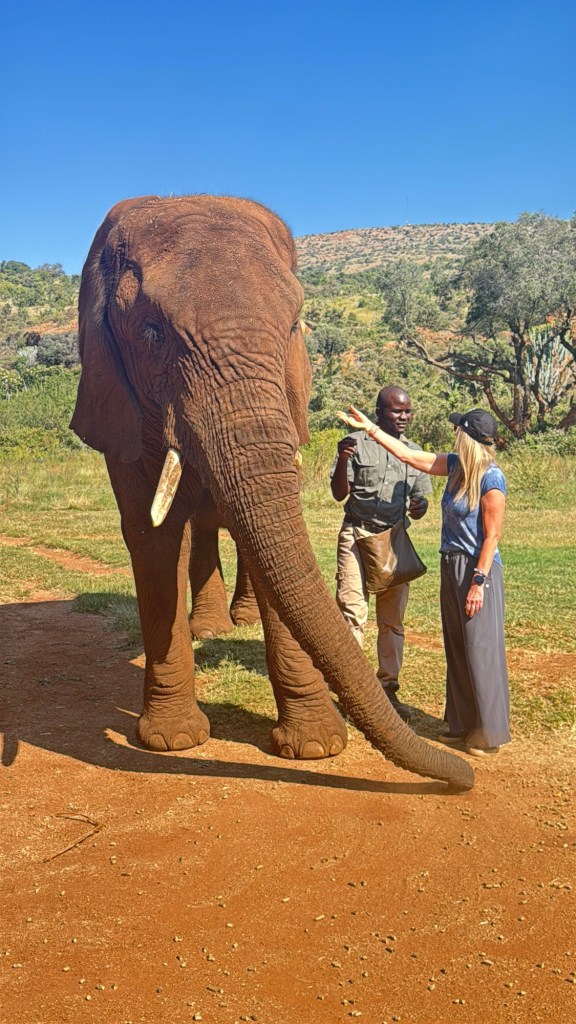
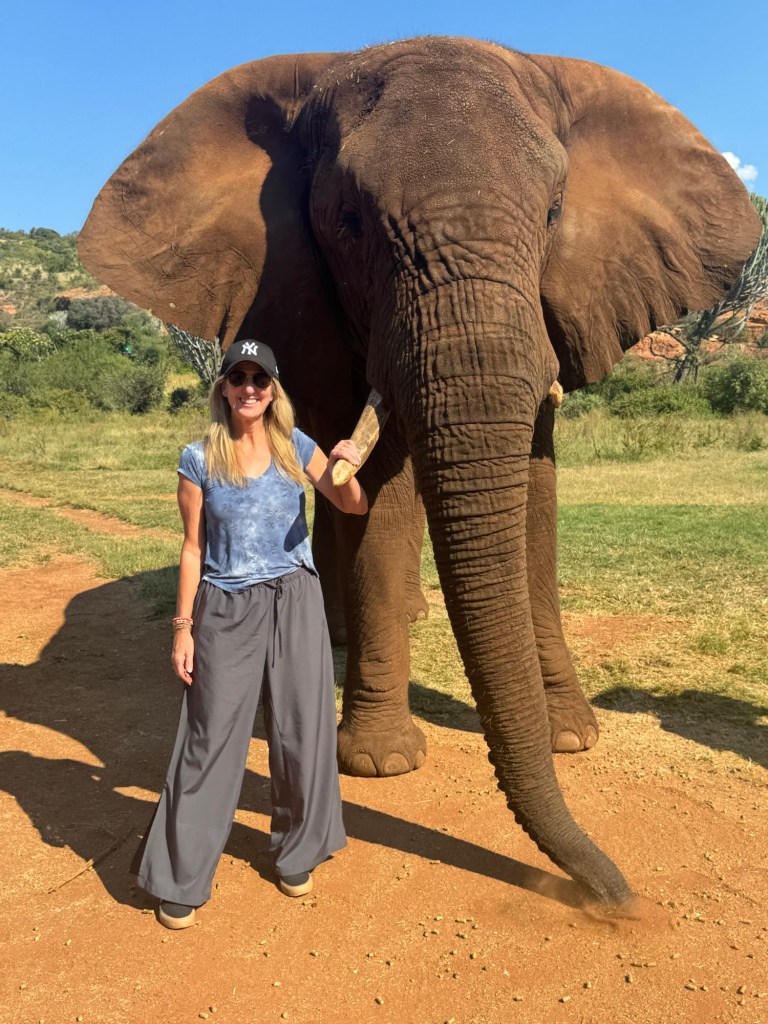
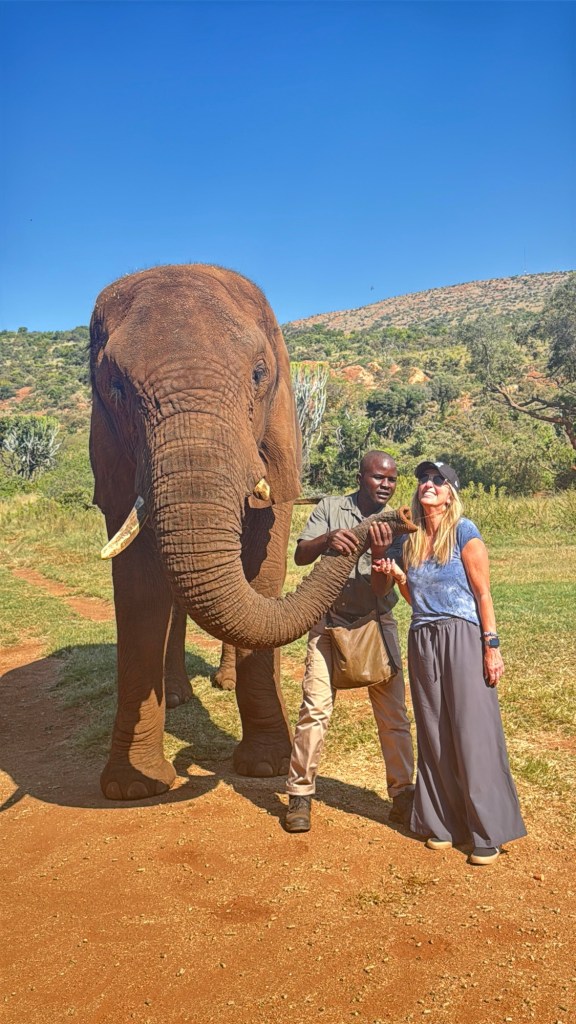
My friend at work recommended this sanctuary and it did not disappoint. Situated on 500 ha, it is home to four elephants who were brought in from zoos and from nature reserves that would have culled them.
There were two cows and two bulls, ages 27 to 40. In the wild, bulls live alone or with each other, but not with the cows or their babies.
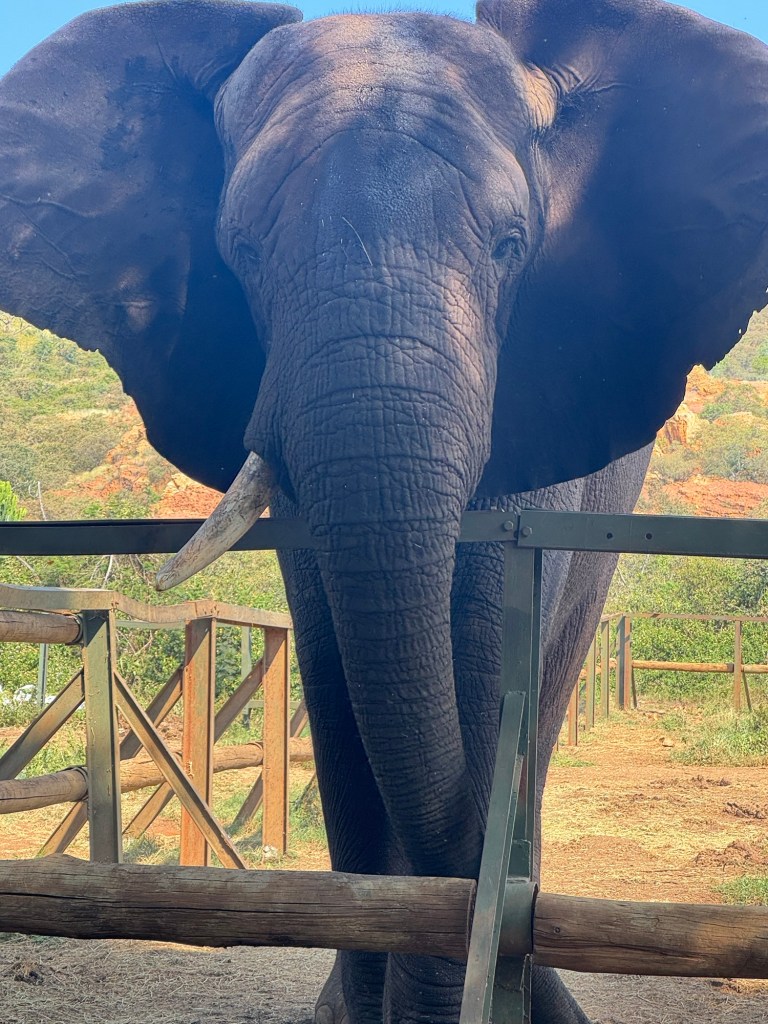
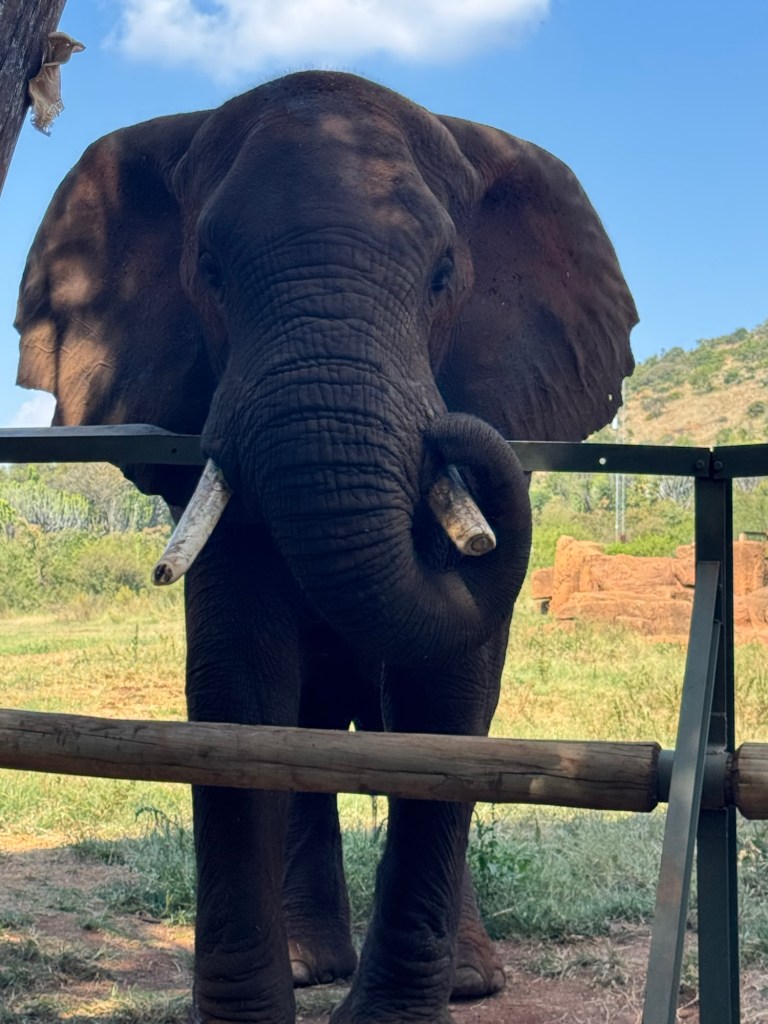
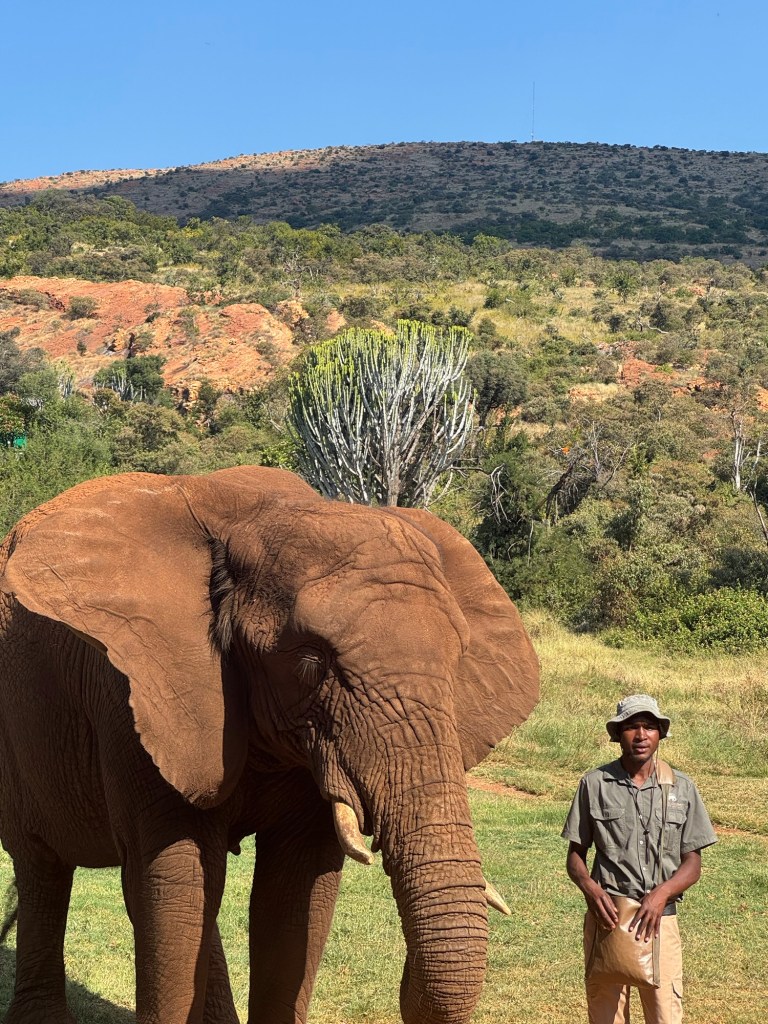
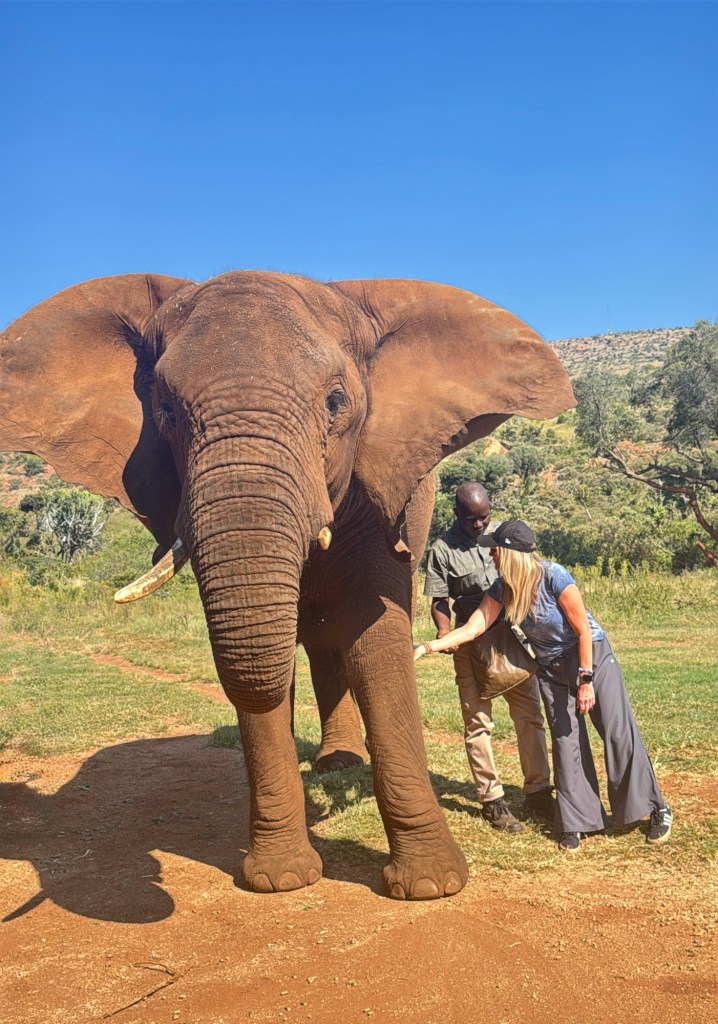
Their tusks are not just what is visible, but also the roots that are below the skin. If broken outside the head, they will regrow. Most often tusks are broken during play fighting. The caretakers will not intervene. However, when internal injuries to the tusk have occurred, doctors have performed surgery or given medicine if there was an infection.
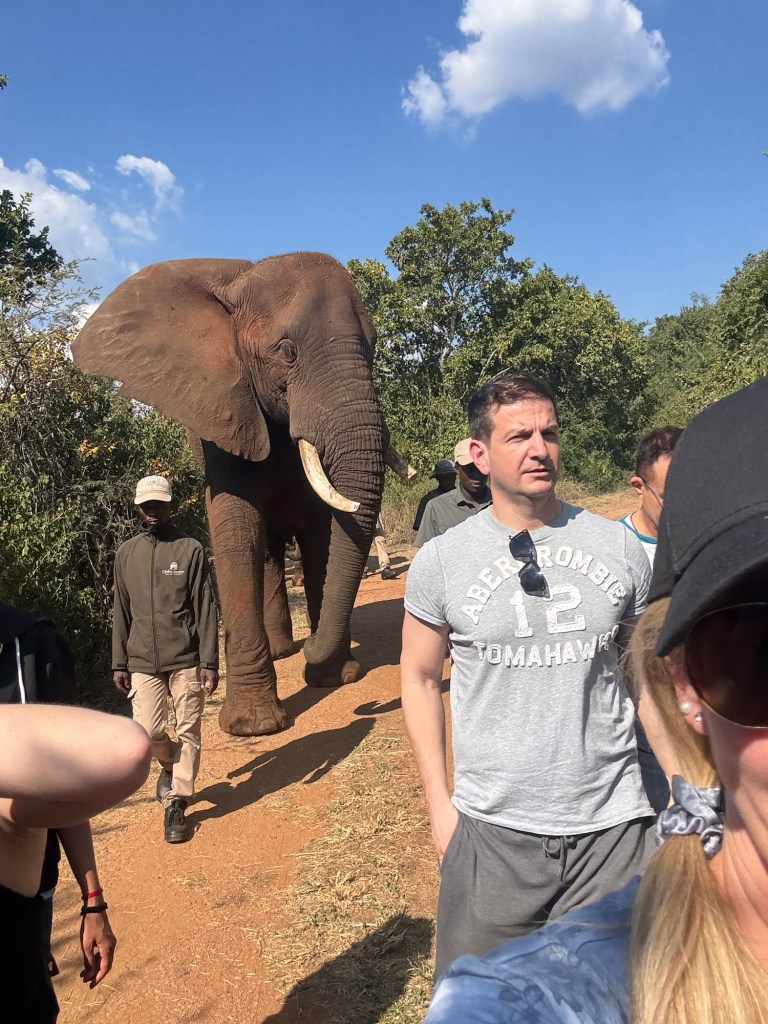
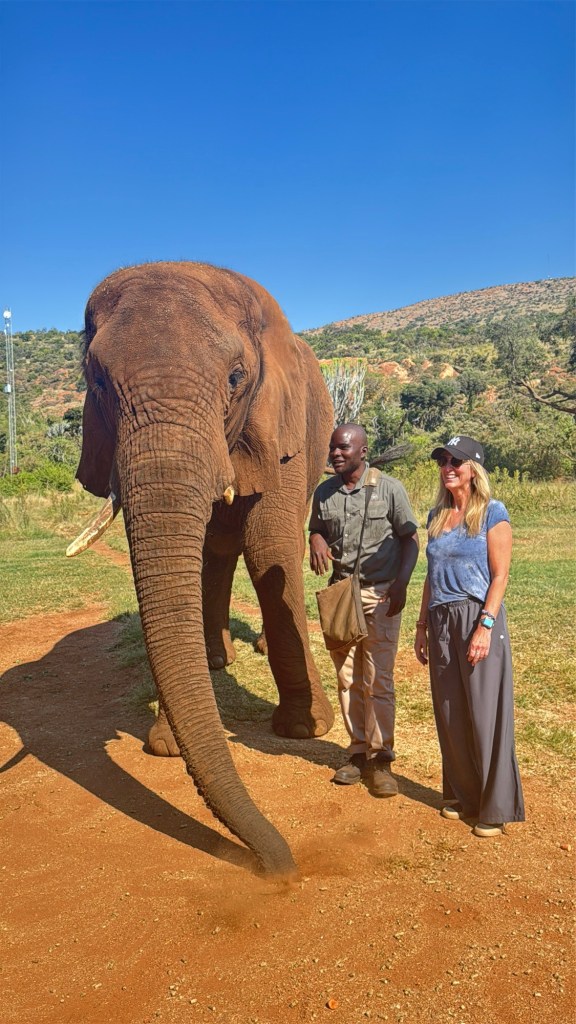
The elephants live free on the land and are only brought to the public area twice a day. The caretakers stay out on the land to babysit them.
Elephants are left or right tusked, or sometimes ambidextrous, just like humans. The shorter tusk shows which is dominant. It does most of the digging, stripping of bark, and fighting.
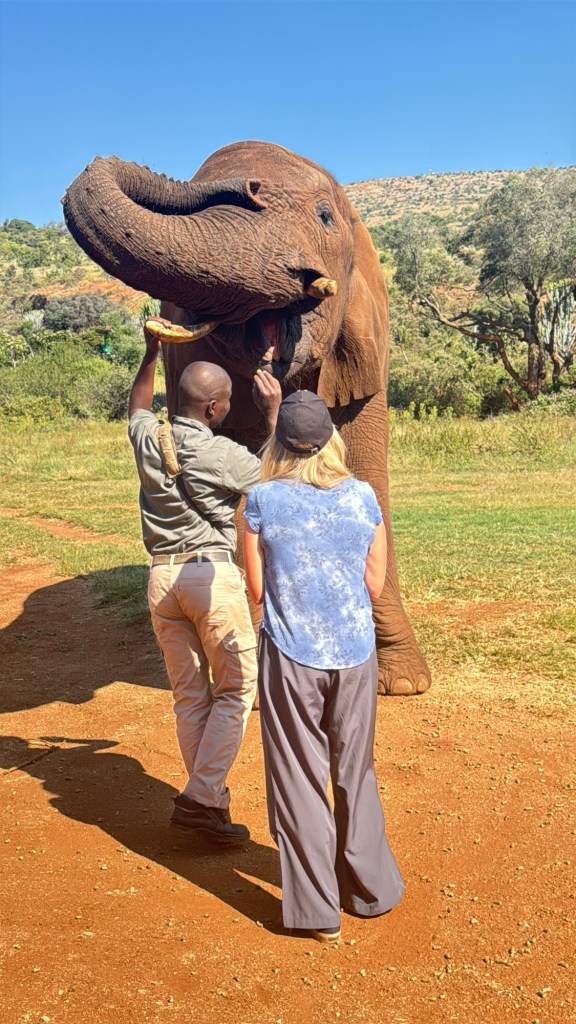
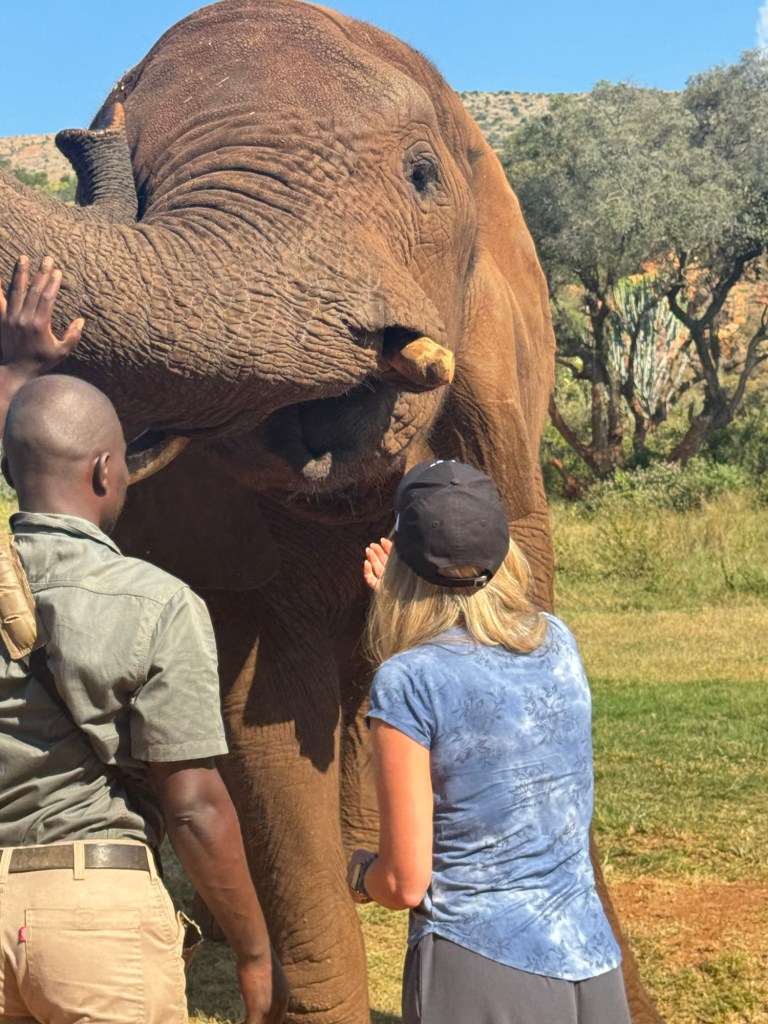
Elephants have just four teeth, two on the top and two on the bottom, though it looks like many more. They are all molars for grinding bark. They strip the branch and then throw it away. It’s hard to see the lower teeth because their tongue does not move up and down, but lays over top.
Elephants have six sets of teeth that move forward like a conveyor belt in their lifetime. Depending on how much grinding they do, these will last them about 45 years.
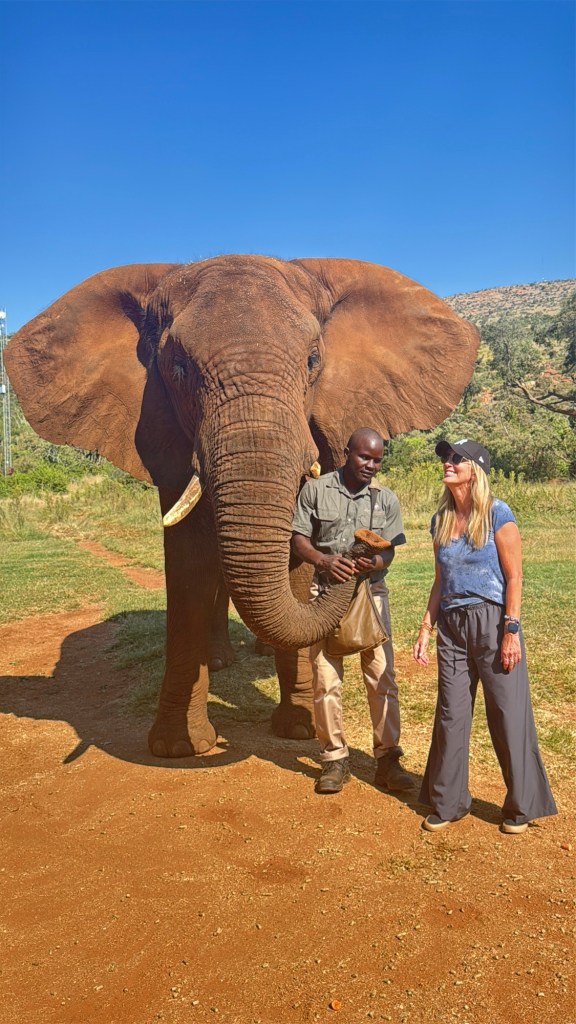
These gentle giants are vegetarians and consume about 300 kg of food a day. They have a poor digestive system and only absorb about 40% of what they take in. They produce 1 ton of poop per week!
Pregnancies have a gestation period of 22 months, the longest of any land mammal. It is most common to have one baby at a time, weighing about 150 kg at birth. The babies are born with teeth that help them suckle.
An elephant skull has air holes in it, which is what helps to make that trumpeting noise.
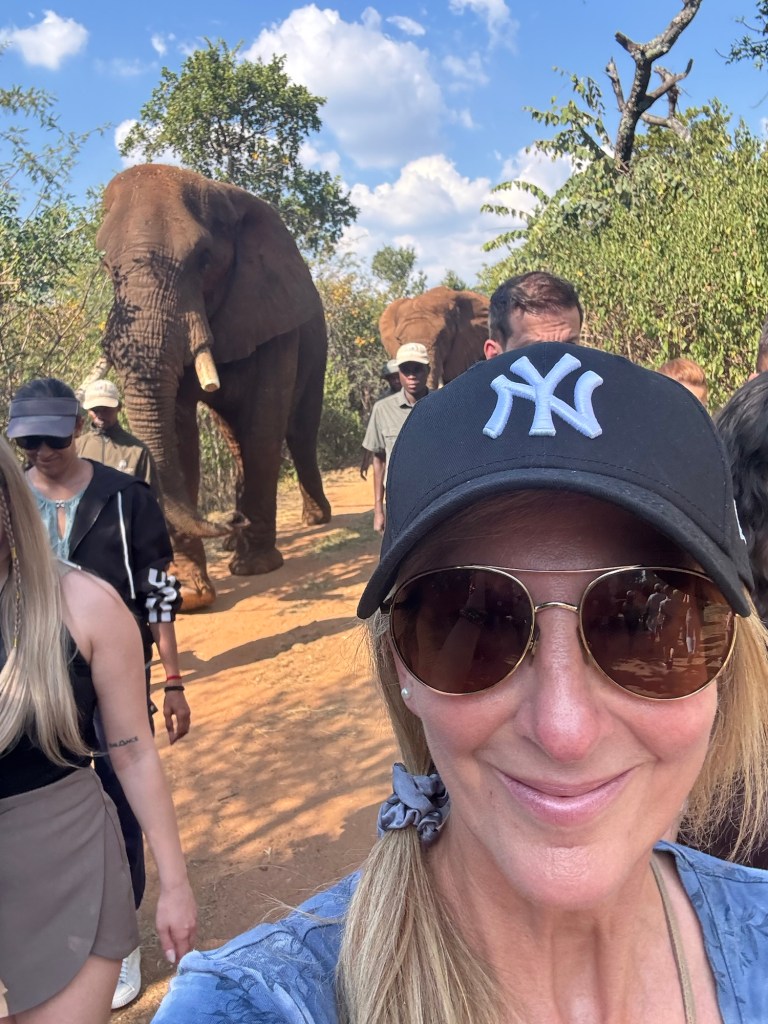
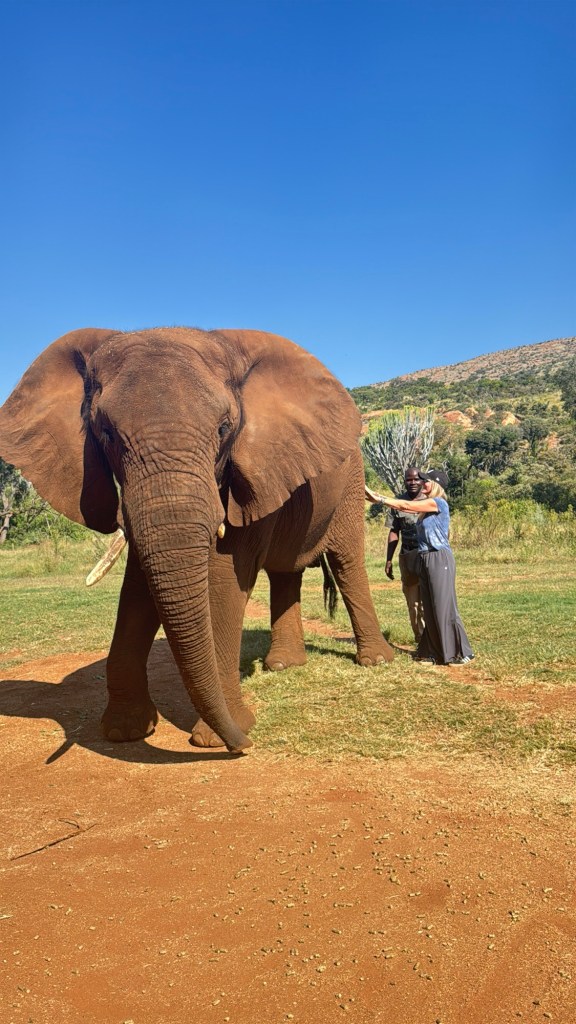
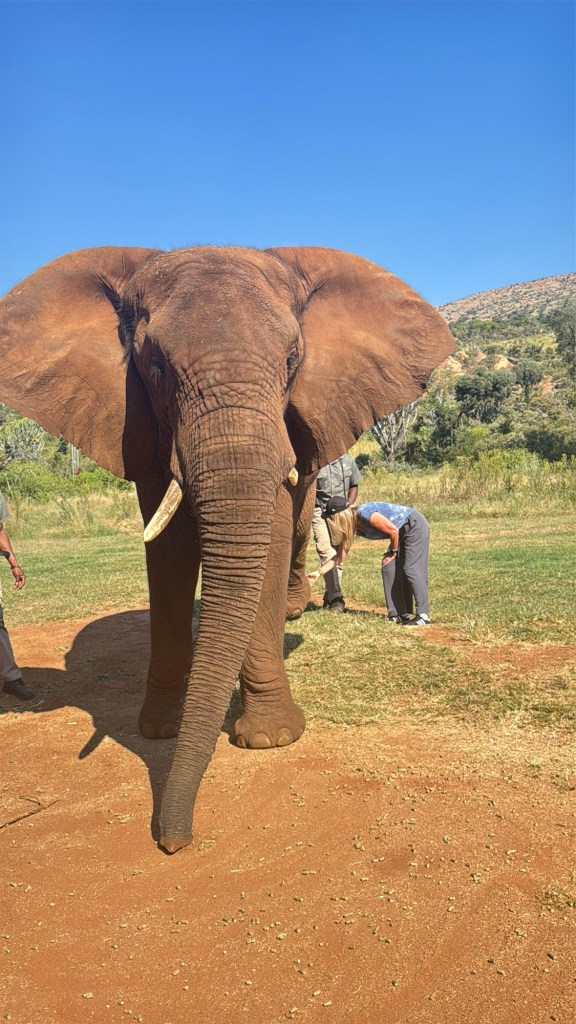
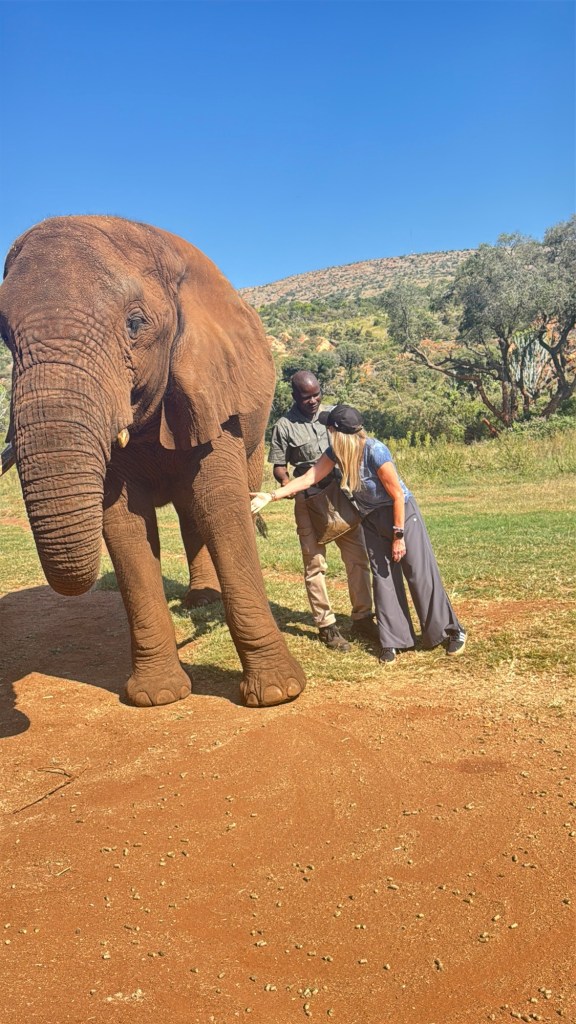
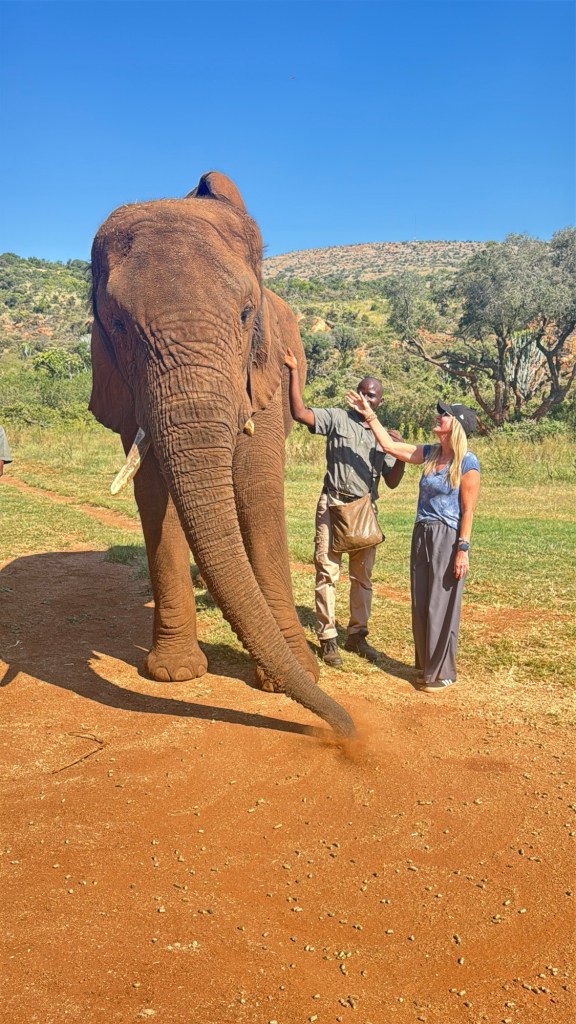
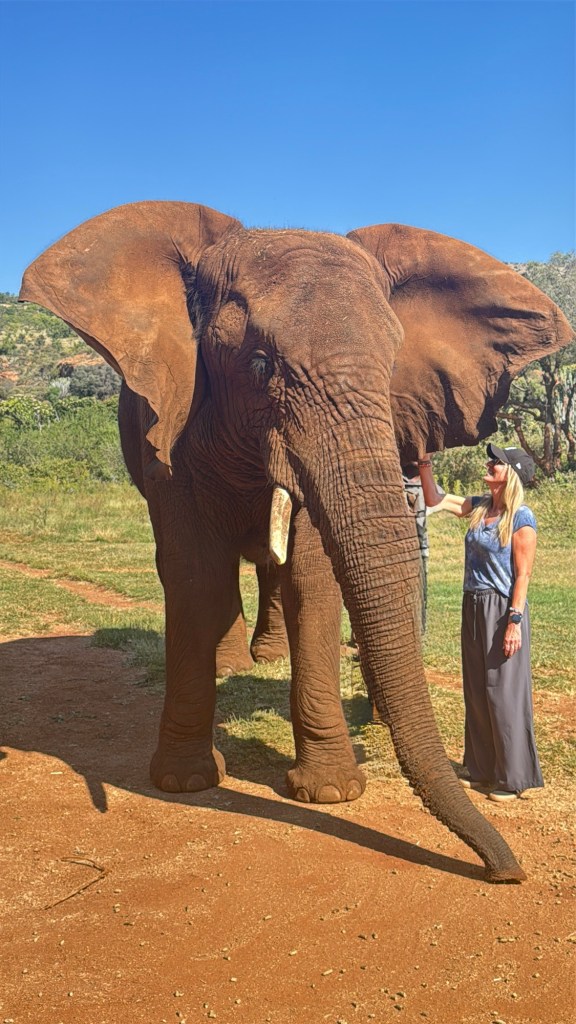
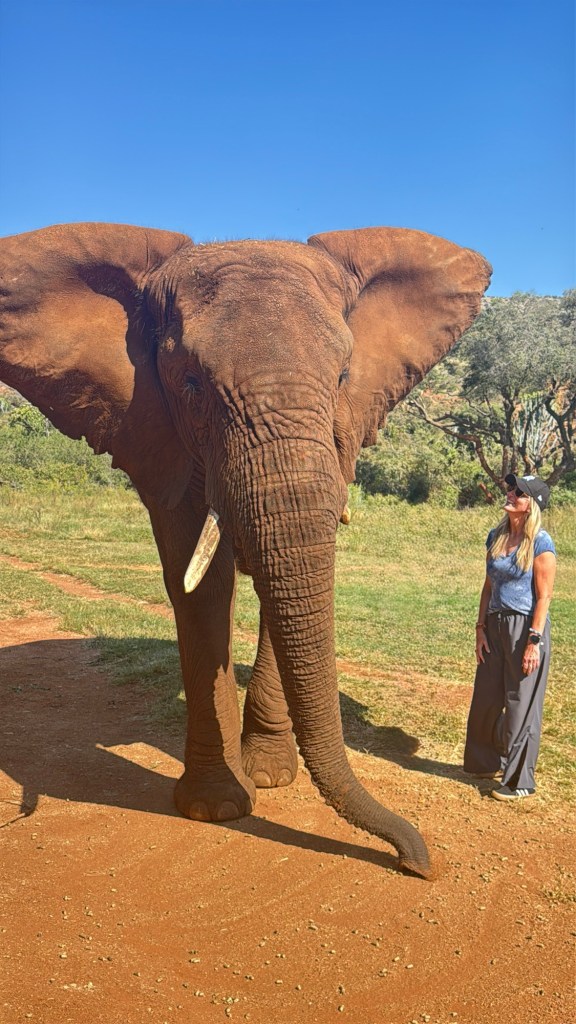
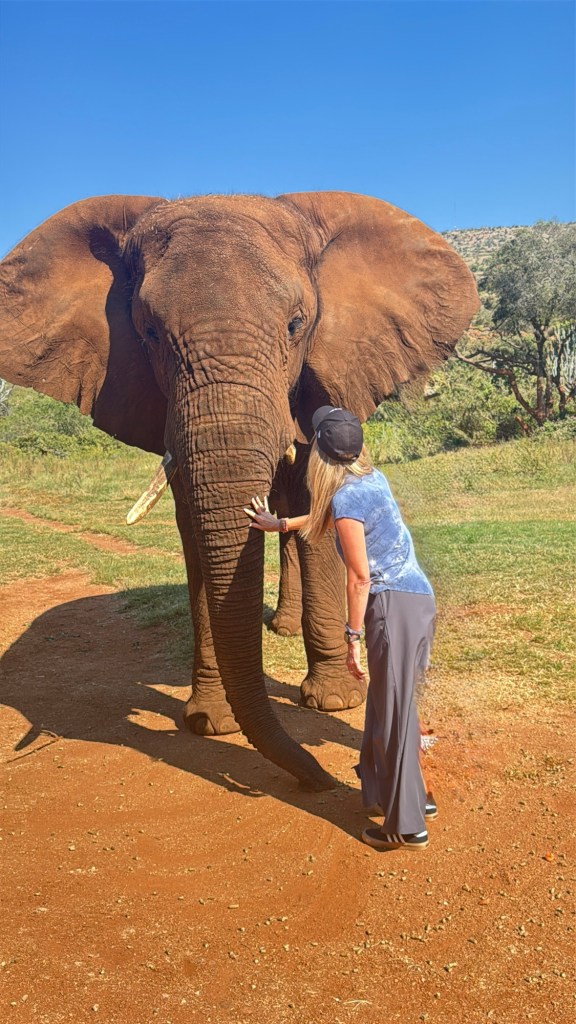
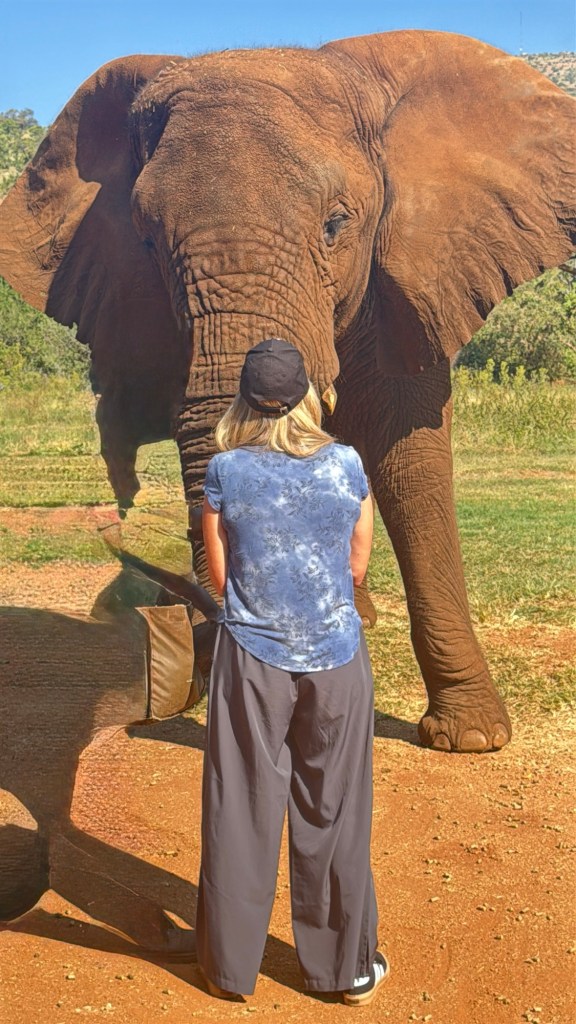
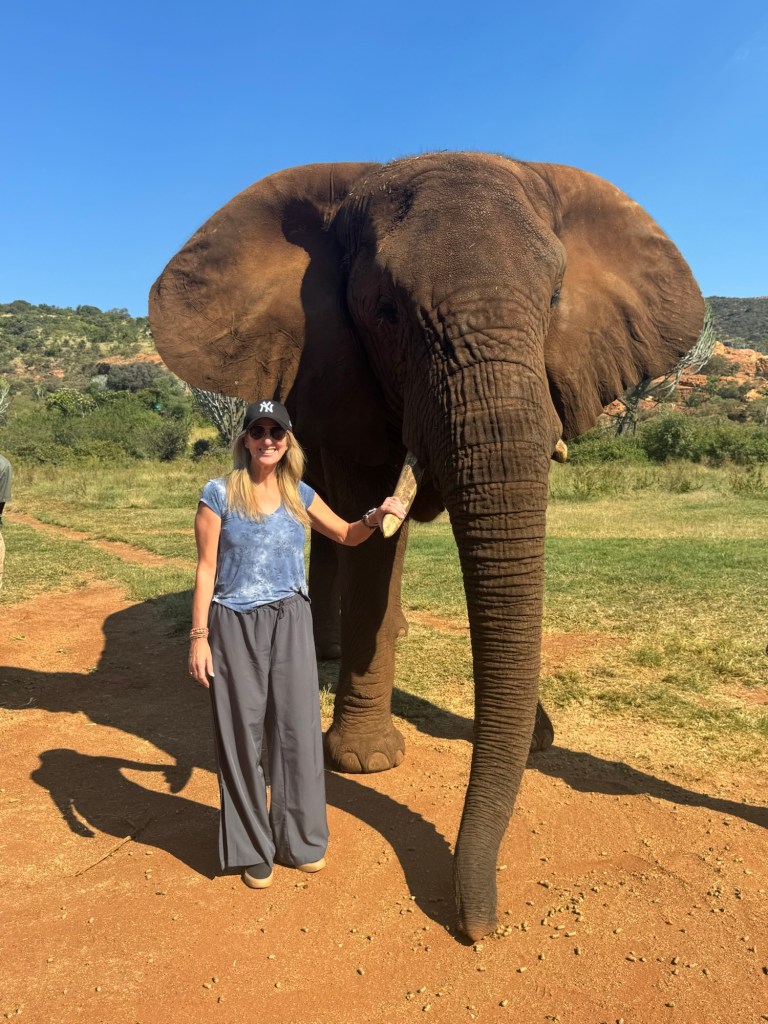
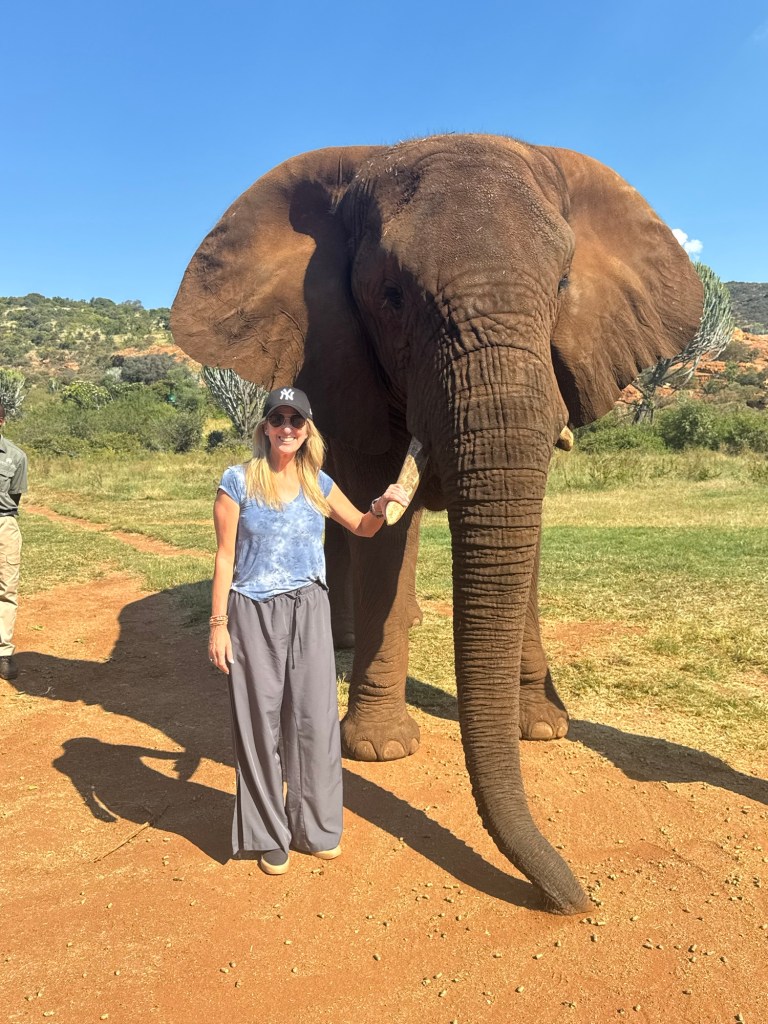
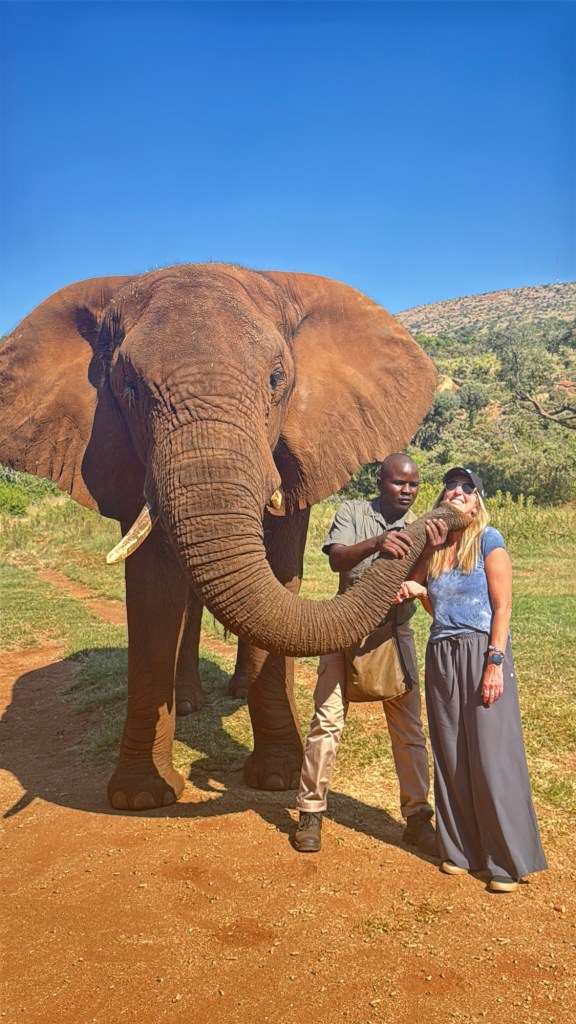
It was absolutely stunning to see the largest land animal up close!

 The Journey Inward
Leave a comment