

More facts I learned from the blue route bus tour today. Cape Town has 3 universities and 2 technical colleges. More and more businesses are moving their headquarters, or body corporate, here. The Cape gets 20 million visitors a year.
A cannon is fired every day at noon in Cape Town from the Lion Battery on Signal Hill, a tradition known as the Noon Gun, as it fires at noon (except Sundays). Historically, ships could set their chronometers (?) by it, but today locals just check their watches.
Rooibos tea originated in the Western Cape. The indigenous Khoisan people harvested it to make herbal remedies and it still grows in this region today. I’m a fan of a red cappuccino, which is made with rooibos tea. Now I know it’s even more special since it’s grown here.
There is a large convention center downtown that has events and functions.
Music in Cape Town is diverse and fuses African sounds into other styles.
Once again, I learned that much of the current town was underwater until the 1930s when the bay was dredged and the town built. The skyscrapers make serious wind tunnels that can even topple a delivery truck!
A common money making scheme in town is people trying to sell you permits to walk on the streets, apparently.
Long Street has restaurants, shops, and lots of pedestrians. I didn’t get off here, but they had free walking tours that I would try another time.
We passed the first mosque built here in 1802.
The University of Cape Town was originally in town. It is the oldest university in South Africa, built in 1892. Students there are passionate about social change, innovation, diversity, inclusion and collaboration. The buildings are still used, but a modern campus is on the side of Table Mountain.
Mount Nelson is a 5 star hotel built in 1899. Churchill and Mandela both stayed there.
Table Mountain is one of the 7 natural wonders of the world! I didn’t know that!
South Africa is big on wines and wine tours, some of which run out of Cape Town. Apparently, the wine is very good here. Stay tuned…
The beautiful open spaces outside of town came about because of the forced removal of the black residents by white people in the 60s and 70s. Prior to that, people had been living in harmony there. More than 60,000 people were forcibly removed to outlying areas called the Flats. Their houses in District 6 were flattened. Living out in rural areas did not provide much chance for income for blacks. They started moving closer to the cities and set up little villages so they could earn money.
Cape Town was a vital stop for ships traveling between Europe and Asia. The Dutch East India Company (VOC) founded Cape Town. When the Suez Canal opened in 1869, ship traffic decreased, but by then they’d discovered diamonds in the interior.
An island off the coast houses a nuclear power plant.
Devil’s Peak used to be called Wind Mountain. A popular legend said that a Dutch sea captain got into a smoking contest with the devil. Where the two competed, their smoke gathered at the peak. The clouds are often referred to as a tablecloth!
It is said that you can experience all seasons in a day in Cape Town. I concur.
Pine trees are not indigenous here, nor are other trees brought over from Australia. They have choked out many of the indigenous plants here. Some are trying to rehabilitate the fynbos, while others say that vegetation that has been here 100 years is no longer invasive.
Cecil John Rhodes lived in a large Greek style home on the hill to Table Mountain so he could look over his town. He was a British imperialist and prime minister of the Cape Colony. He enriched the lives of the colonizes and dispossessed the Africans. He is still controversial today. He wanted to build a highway from Cape Town to Cairo. Zimbabwe and Zambia are now what he once called Rhodesia.
South Africa, as well as much of the world, is looking at the hundreds of years of statues and monuments and deciding what to do with them. Churchill said that history starts with the victors, but what about the voices of the oppressed? Storytelling is a means of keeping history alive here. The statue of Rhodes was the first to be taken down in this country after protests..
I didn’t make it to Robben Island because I didn’t book far enough in advance, but I look forward to visiting next time. It was where Nelson Mandela was imprisoned for years, but it was also a leper colony and had other uses over the years. When Mandela came to power in 1994, he was the first black president. He inherited a fractured and fragmented country, one deeply divided. People were scared and scarred. But he met them with compassion, and showed them how to rise. Rise above adversity, oppression, their circumstances and their own limitations. Powerful.
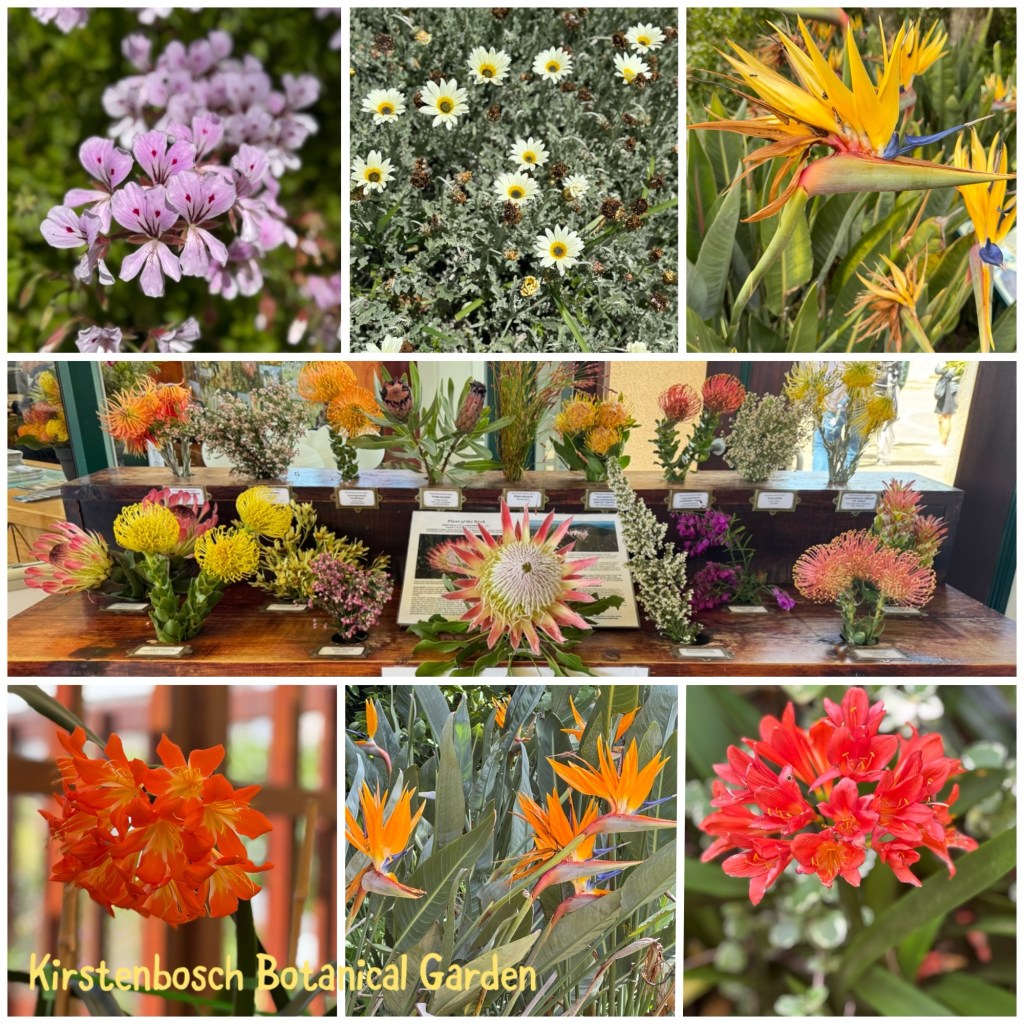
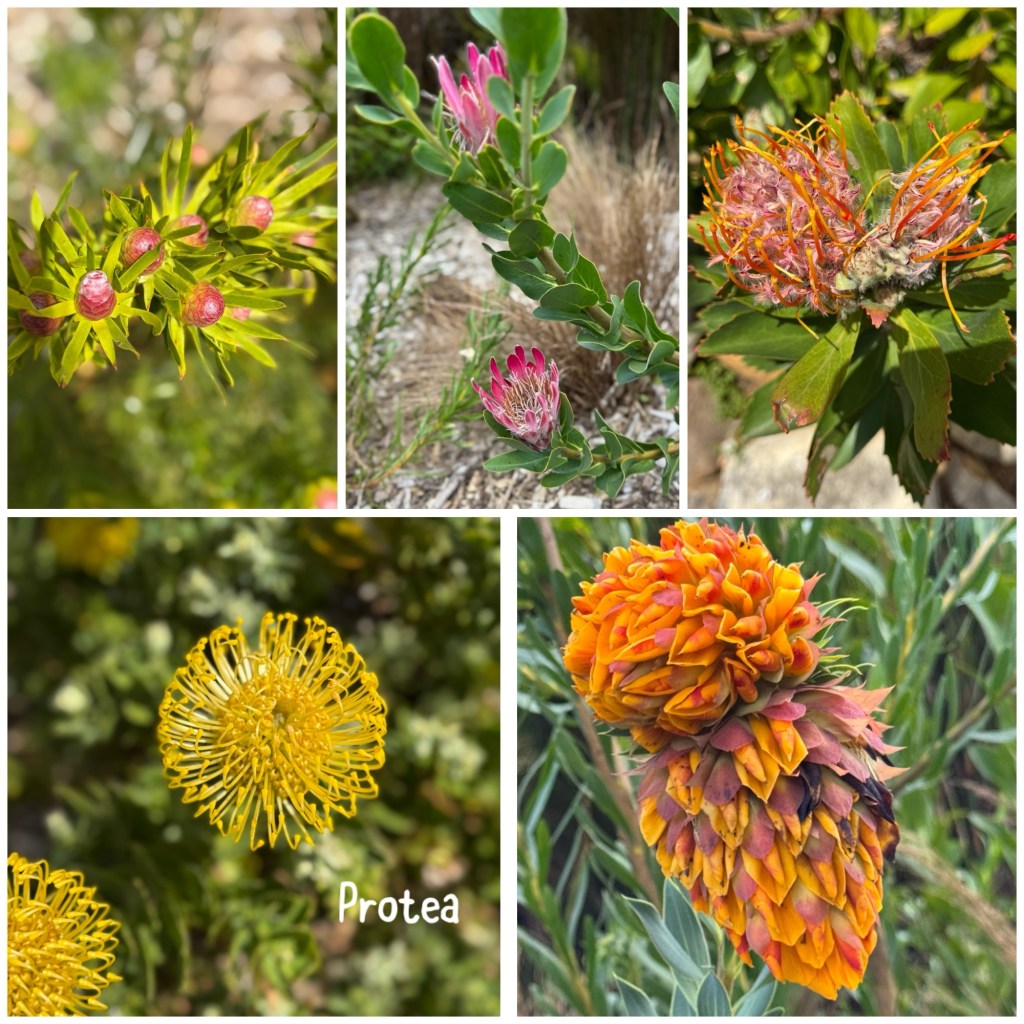
My first stop today was Kirstenbosch Botanical Gardens, a UNESCO world heritage site. We drove through Constantia, beautiful wine country and home to diplomats and international figures. It was beautiful countryside. The gardens were gorgeous and I enjoyed the canopy walk, protea gardens, sculptures and mountains the most. It was a peaceful place, except for the school groups here and there. South Africans wear uniforms to school and they look very grown up and serious until you get close and they are as silly and goofy as any students.
My next stop was the lowlight of my trip. I went to a place called Bird World, or something like that. Despite having a fear of birds as a young child after being attacked by a blue jay, and further scarring from watching The Birds as an upper elementary child, I have worked to desensitize over the years. I bought a canary in college. I have lots of birdfeeders and have a bird app that records bird calls everywhere I go and gives me a list of all “my” birds. I thought I was ready for this. I was not!
First off the enclosures were rickety, chicken wire mazes of strange doors and low ceilings. This meant that picture taking was hard through the tiny squares, but also birds were flying low and I had a giant messy bun on top of my head that I feared would snag them, or worse yet look like a good nesting spot. The birds were big, loud, many were ugly, and they just kept coming. I was hustling down the pathways and whispering constantly, “I am friend, not foe.” I was also intermittently muttering to myself and encouraging myself. From the start, this visit was fraught.
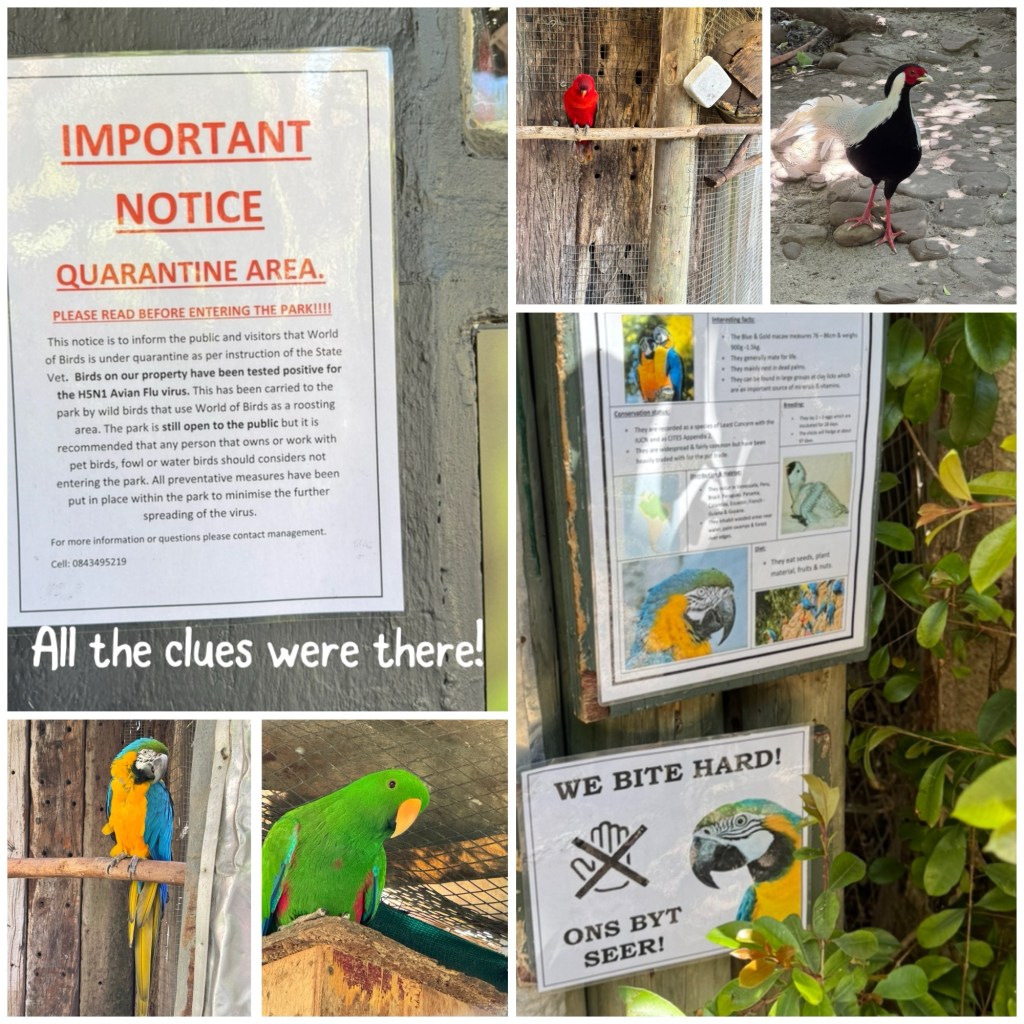
I should have turned back and gotten the next bus. But I pushed on. Some birds were cute, but some looked at me like they knew things. Others did fast moves that freaked me out. One kept turning upside down to look at me. Birds are unnerving. Then I came upon guinea pigs, then meerkats, then monkey and finally penguins. What was this place? This guy was just a kind soul to animals and tried his whole life to make this “sanctuary” work. When he lost his land, he started over. When predators killed his birds, he started over. Neighbors donated fence. But it was all kind of thrown together and the enclosures made me sad for the animals.

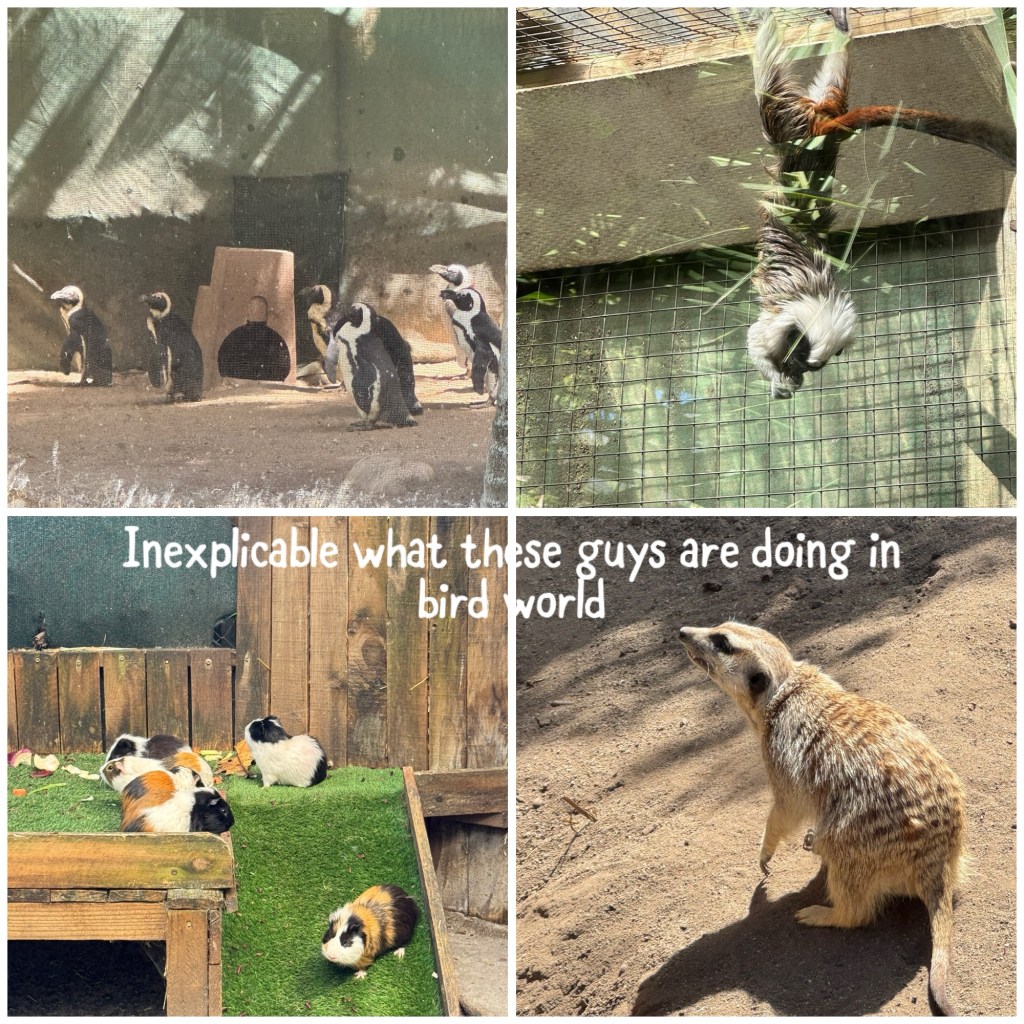
This was my last straw and my cue to get out of dodge! I thought, I know I just paid for this, but I’m a grown ass woman and I can leave without seeing it all. I’ve had enough! That exit sign perfectly represented me running for the exit!
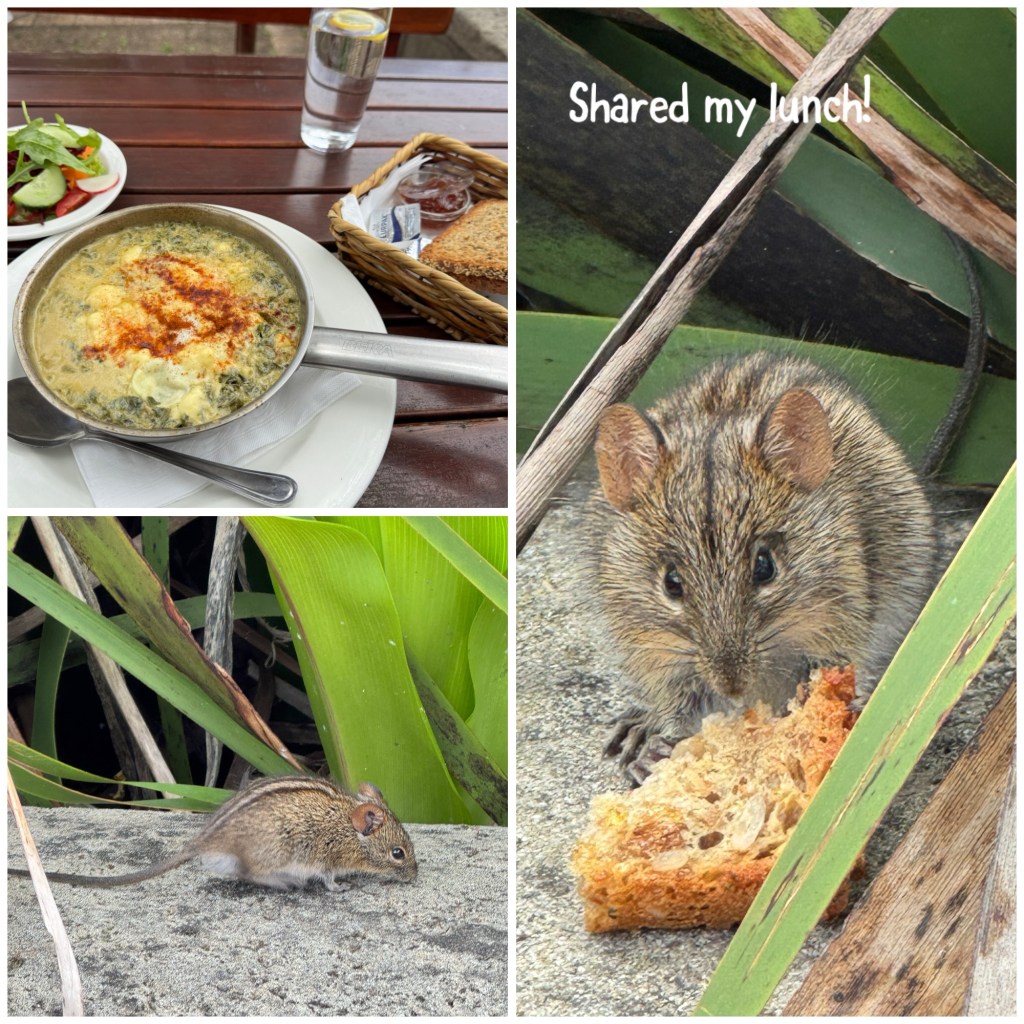
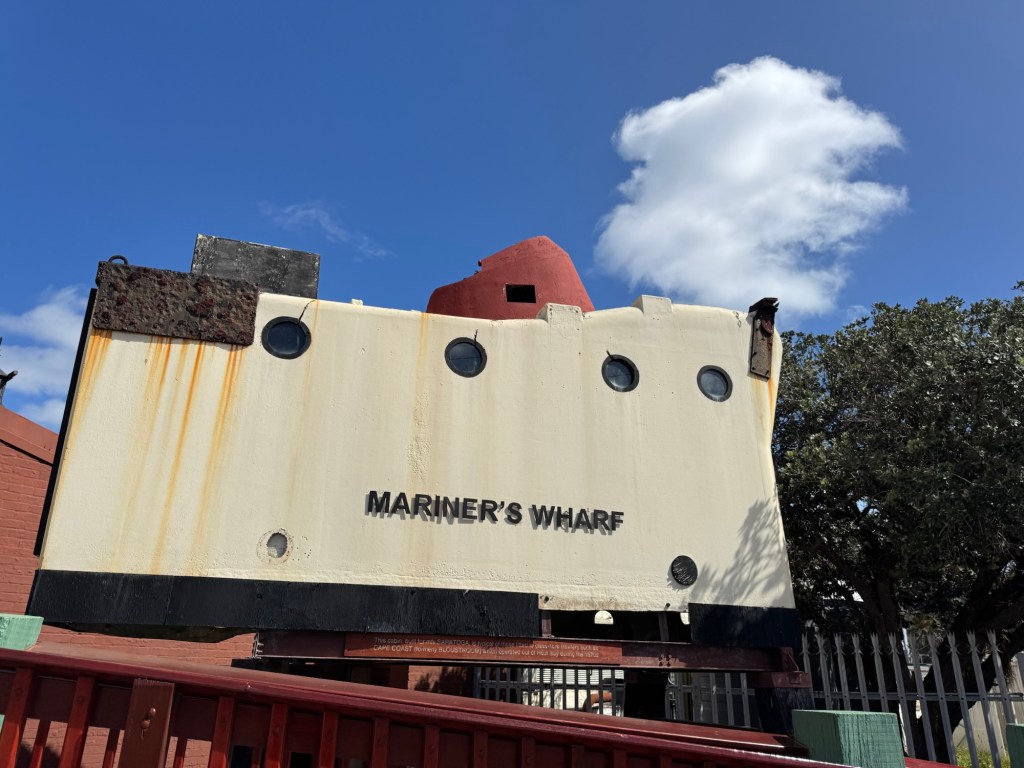
That experience behind me, I got back on the bus for Hout Bay and Mariner’s Wharf. It was a quick visit with some time spent gazing up at yet another different view of the mountains from the beach, where my hair and clothes shipped wildly in the wind, and brushing in shops. I have been told to get the seafood boil, but I wasn’t hungry after my lunch at the tea room and the botanical garden. Waiting for the bus, I chatted with two sisters, one from Cape Town and one visiting. They praised President Trump and asked if I agreed that he was good for our country. They said it seemed like he was just like we needed.
From there, the best took me back through Camps, Clifton and Bantry Bays. There are 4 main beaches there and they are numbered and have stairs down to each. First Beach is secluded and mainly visited by locals. Second page is a bigger version of that and has a younger crowd. Third beach is for the bronzed, beautiful, and bodybuilders. Fourth beach has chairs and vendors and is ideal for families. This is the most expensive area of Cape Town and a parking bay costs as much as a house. There are elevators that take owners from beach level up to their homes. Many famous people live and vacation here and enjoy the privacy that comes with Cape Town. They are not bothered and it is considered rude to point and disturb.
Coming back into Green Point, I learned that the DHL stadium was built in 2010 FIFA World Cup, on the spot where the green pointe stadium used to be. The horn that sounds from there is the second most familiar sound after the hadeda!! There is a golf course around it and it is said that work is for people who can’t play golf!

After stopping back at the apartment to grab a sweatshirt, I walked down to the waterfront to grab a braised rib baobun and head to my sunset tour. On the way to Signal Hill, I got more beautiful shots of both water and mountains.
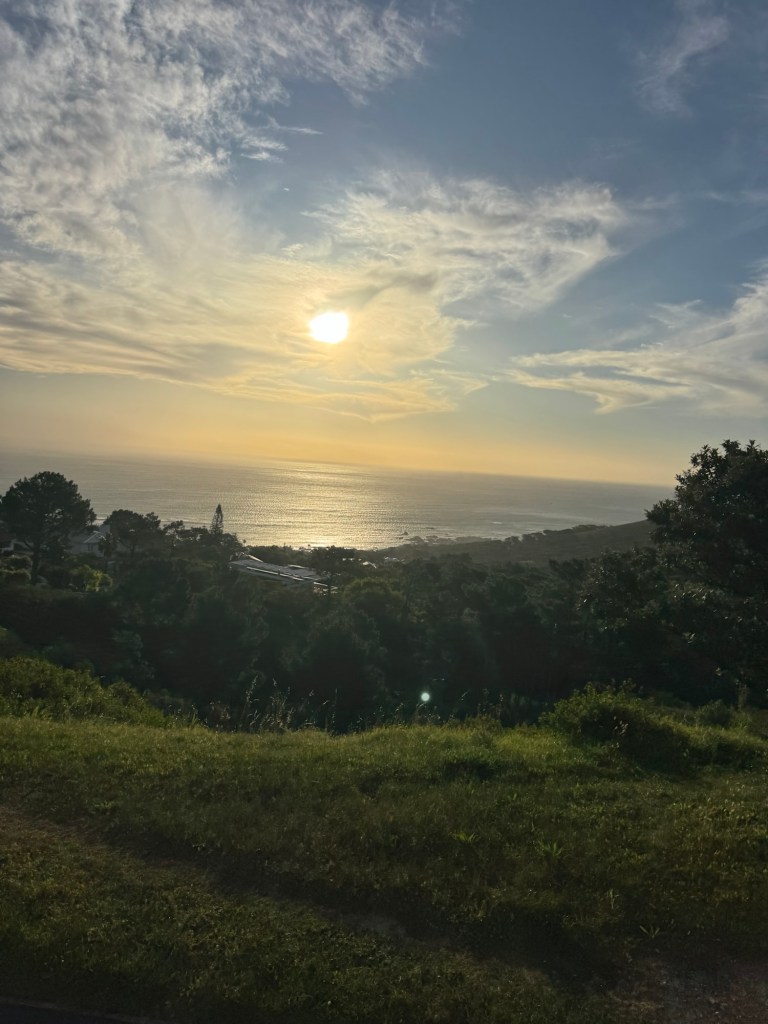
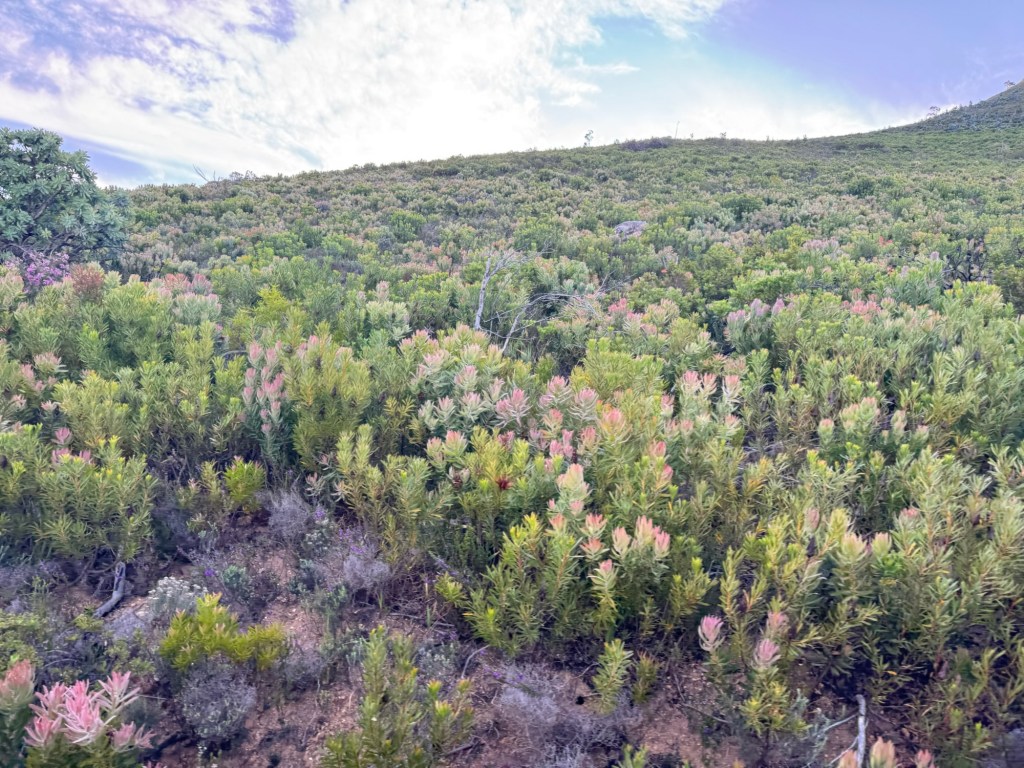


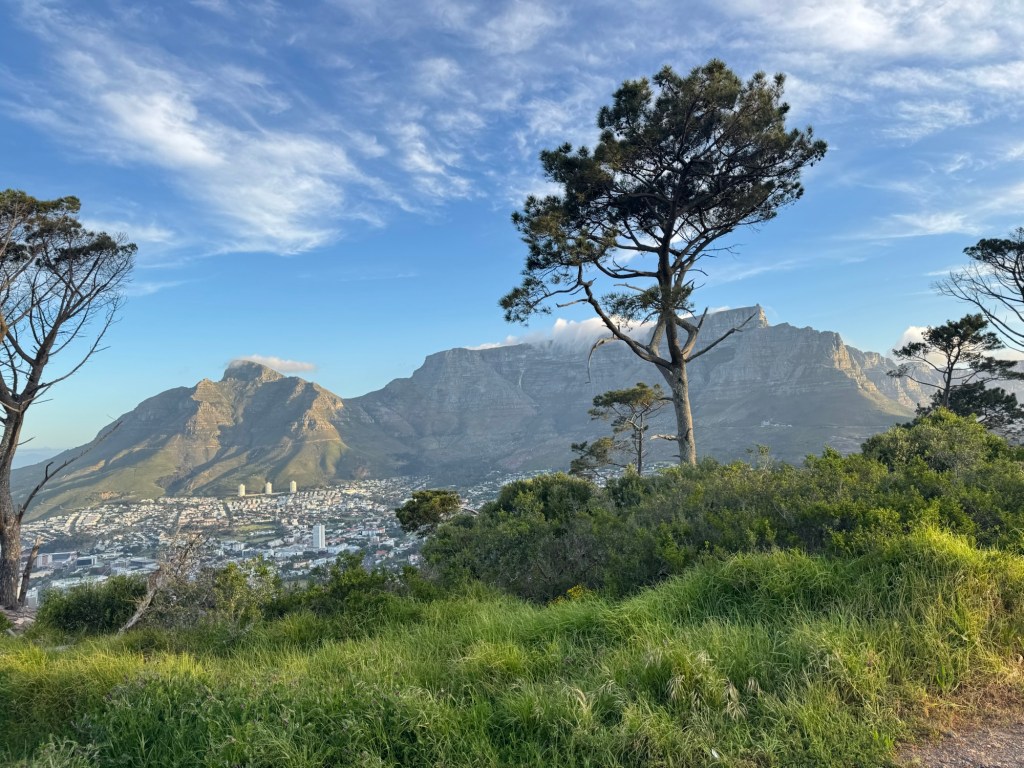
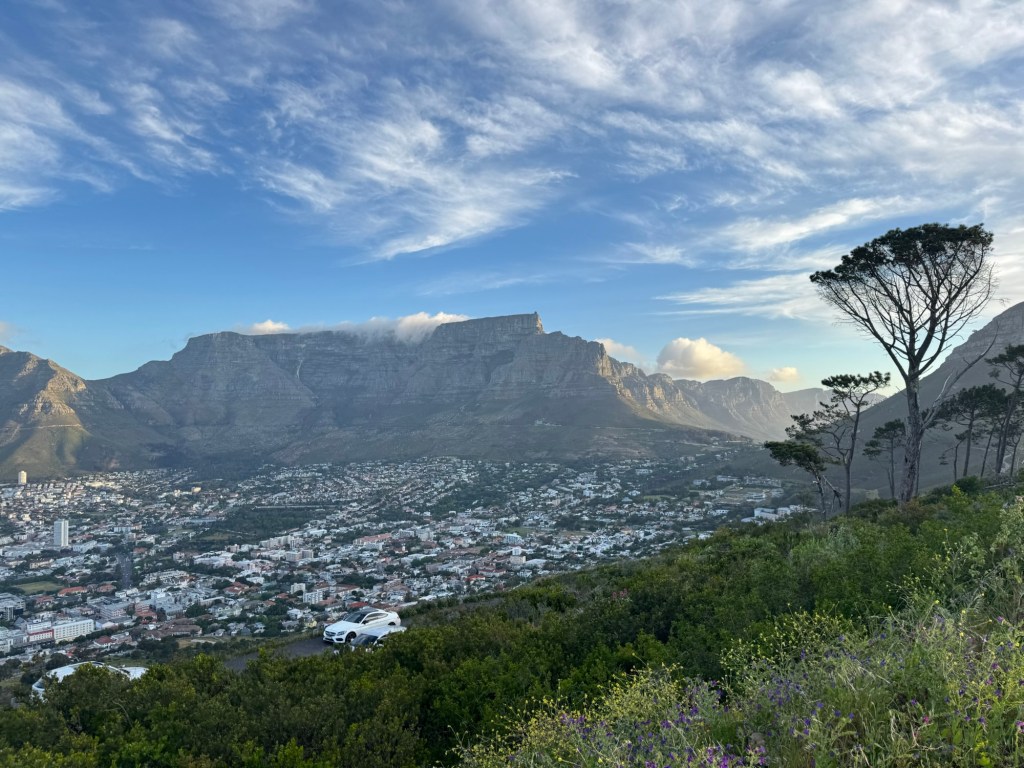
The drive up to Signal was harrowing. A rocking double decker bus on a narrow, twisting road on the side of a mountain on a windy night. And I’m on the upper level. I was low key terrified, but grateful to be on top and enjoying the views at long last! People gather there from a watching spot each evening.
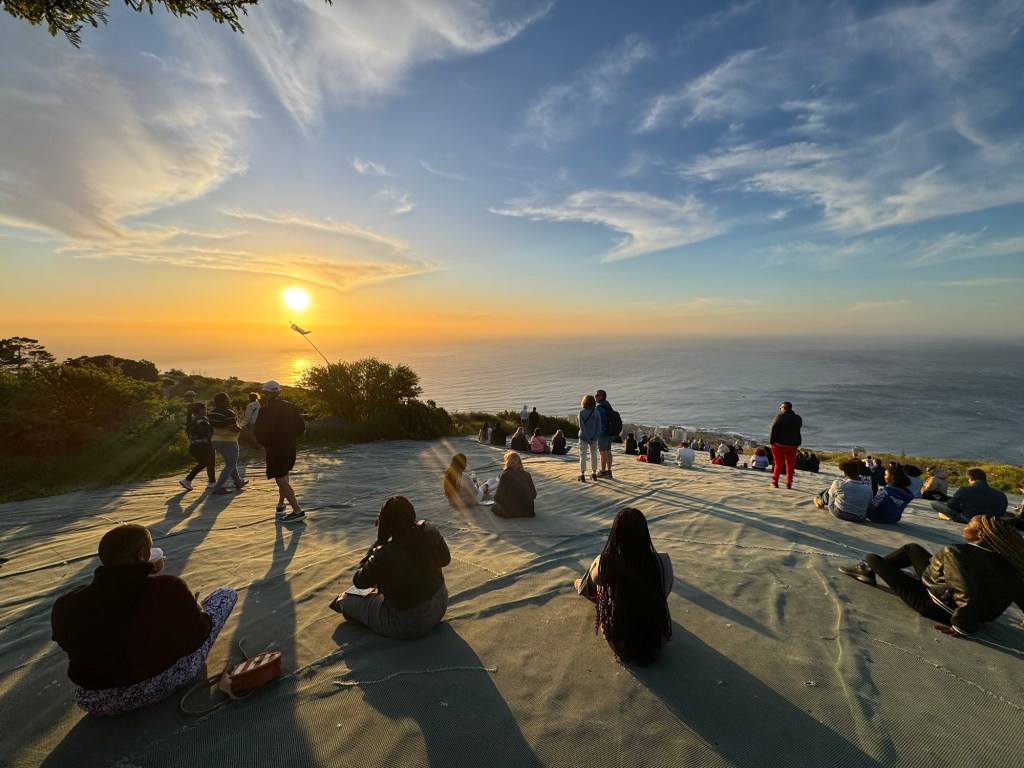
I sat there a bit, then hiked all around to soak in all the views.
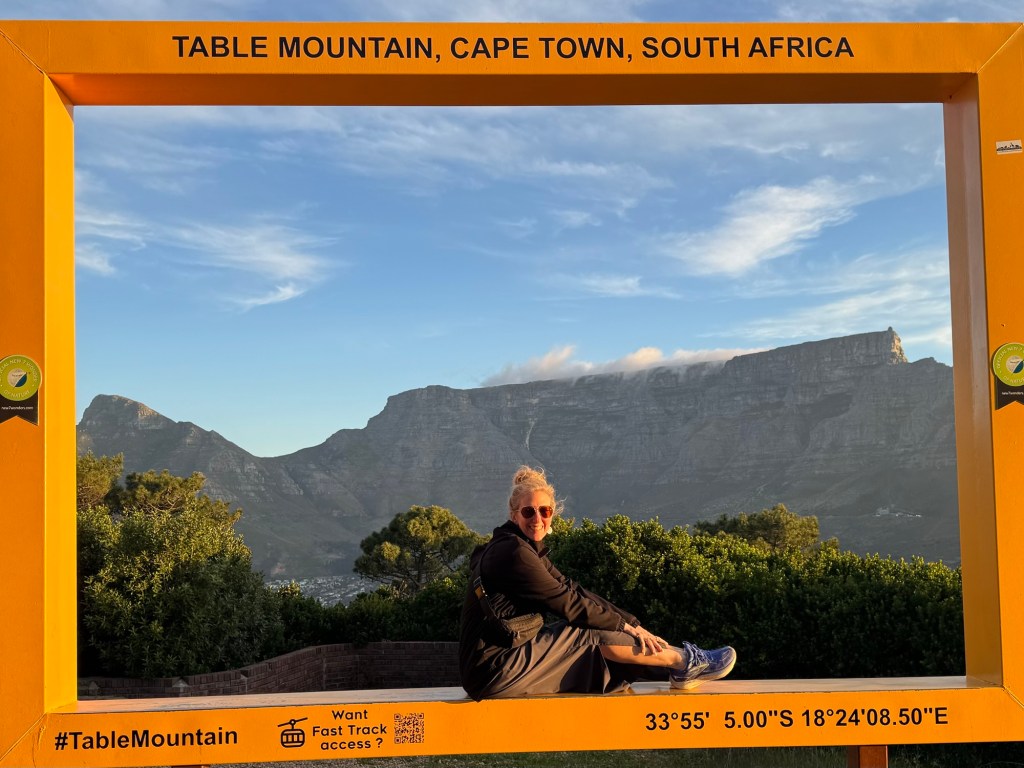


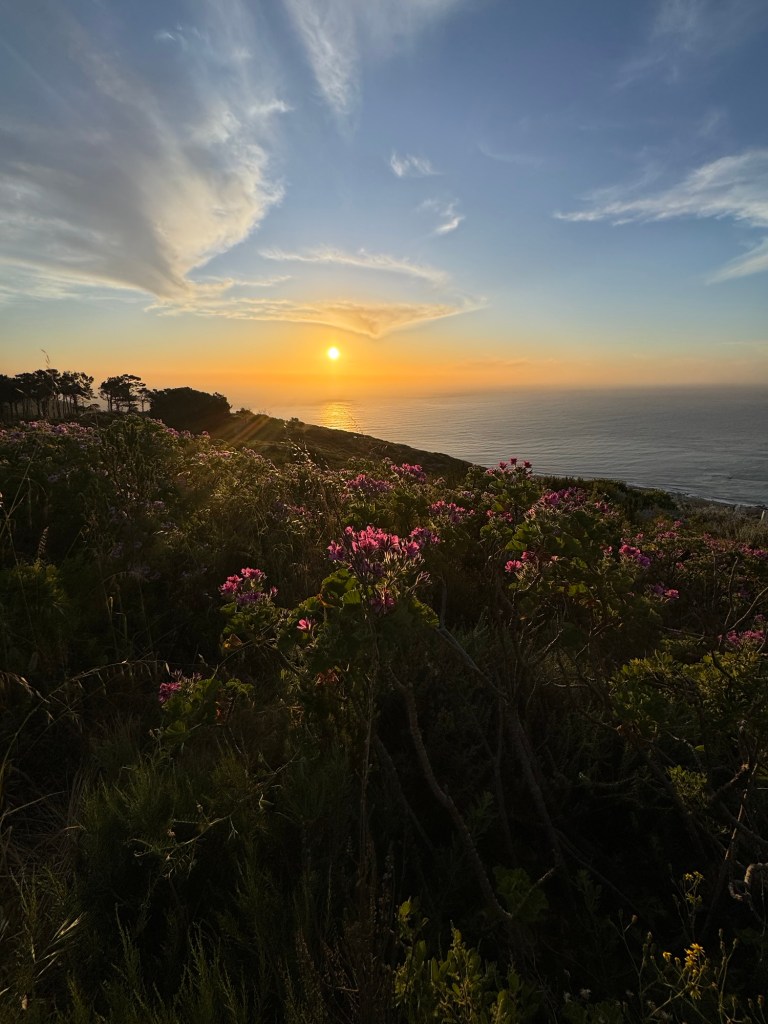
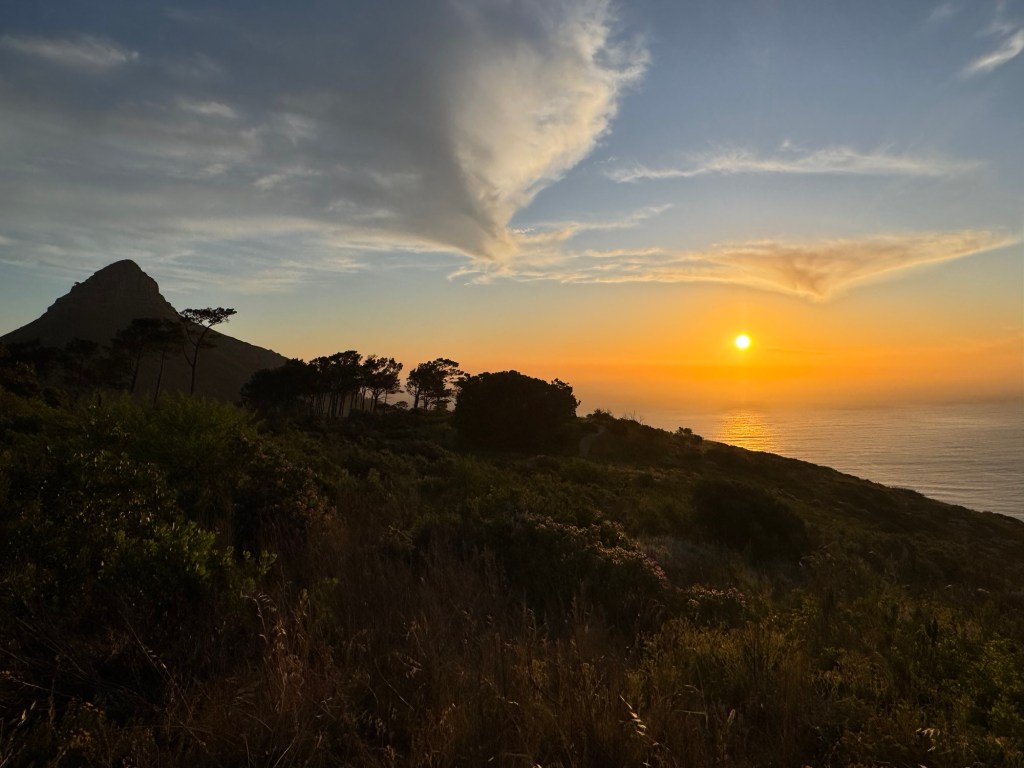
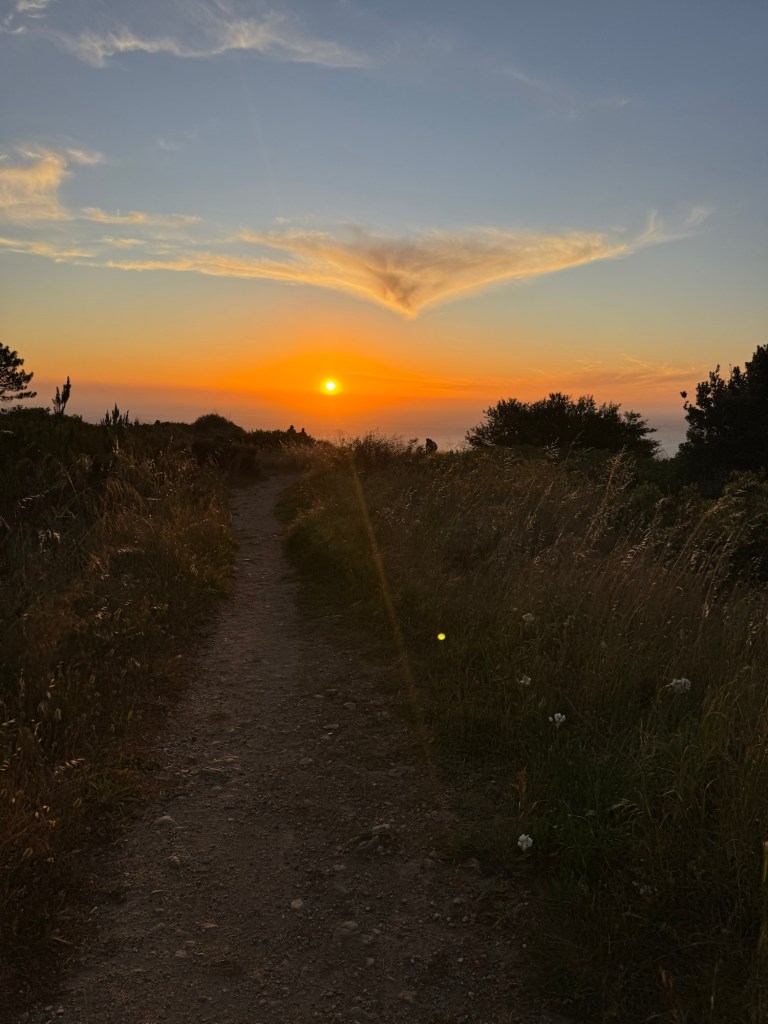
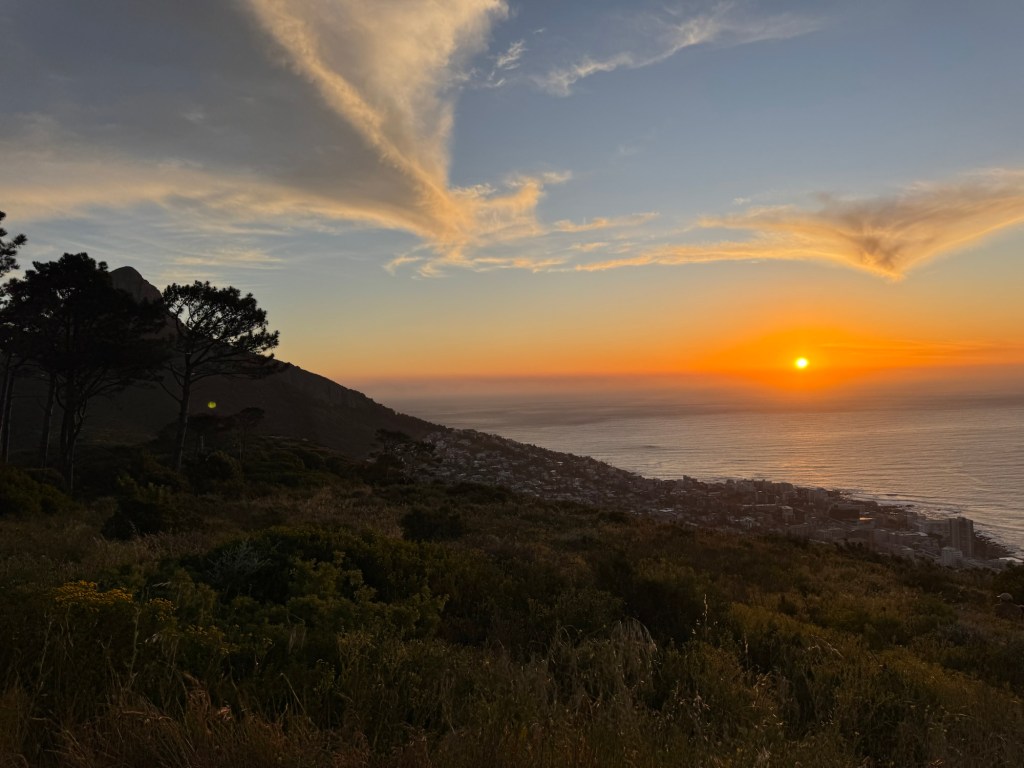
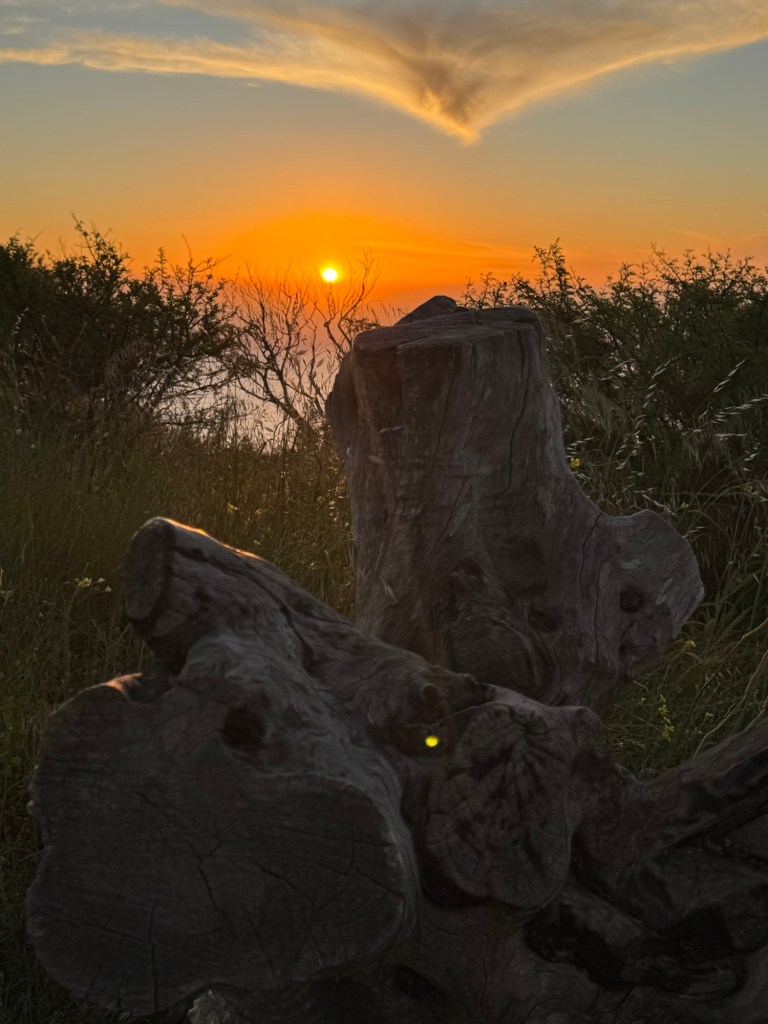
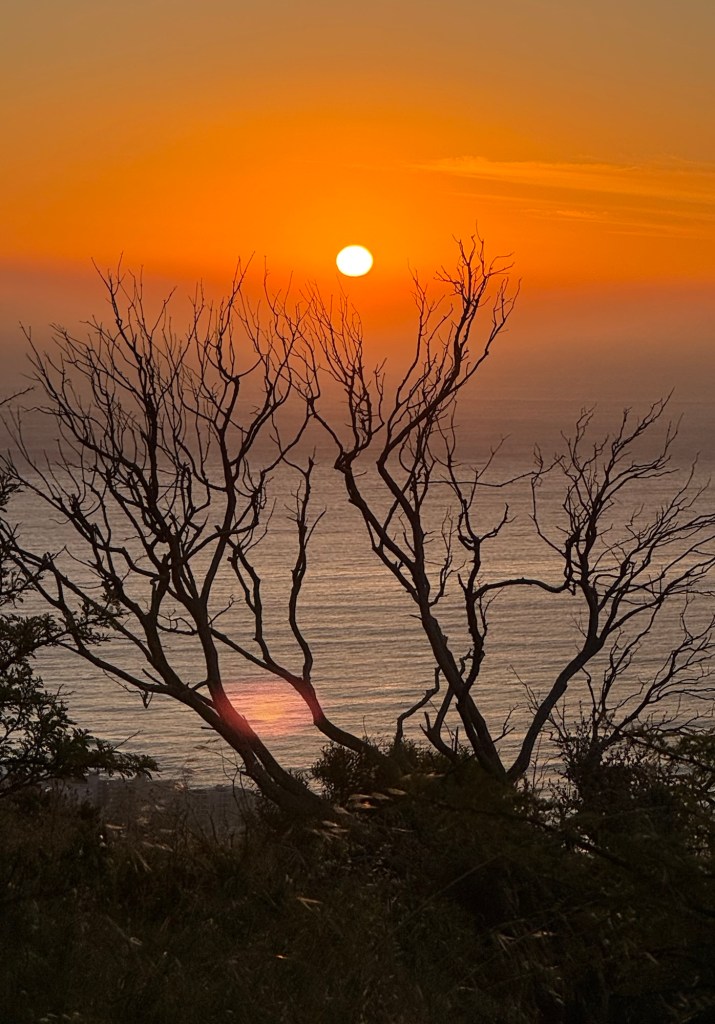

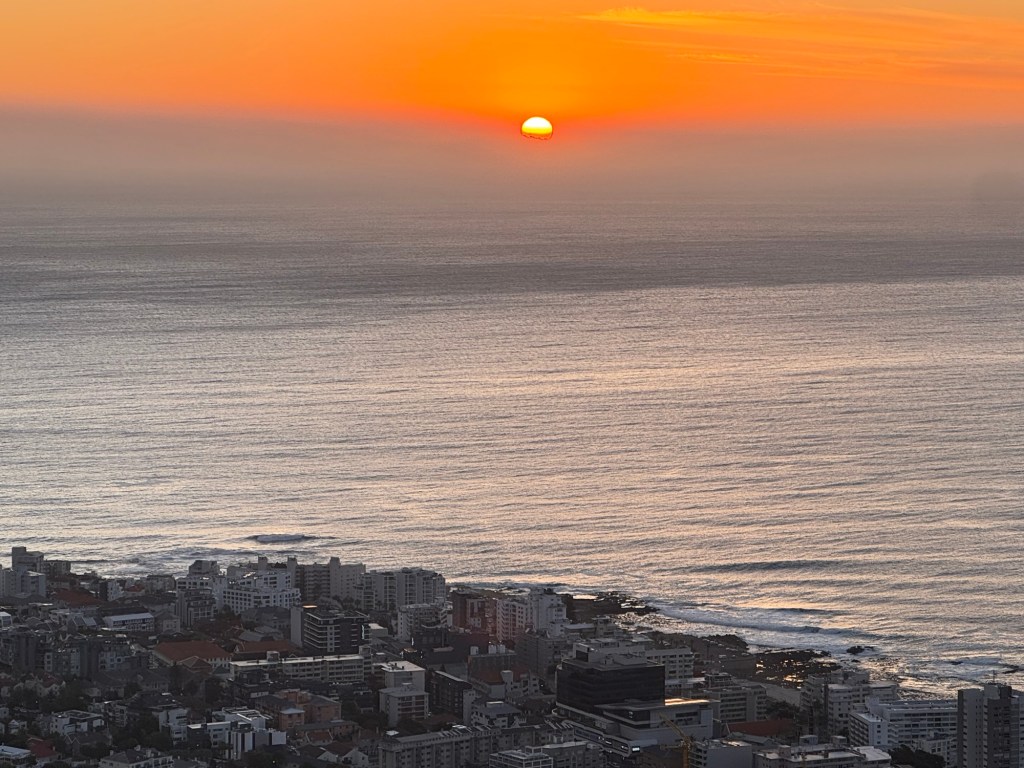
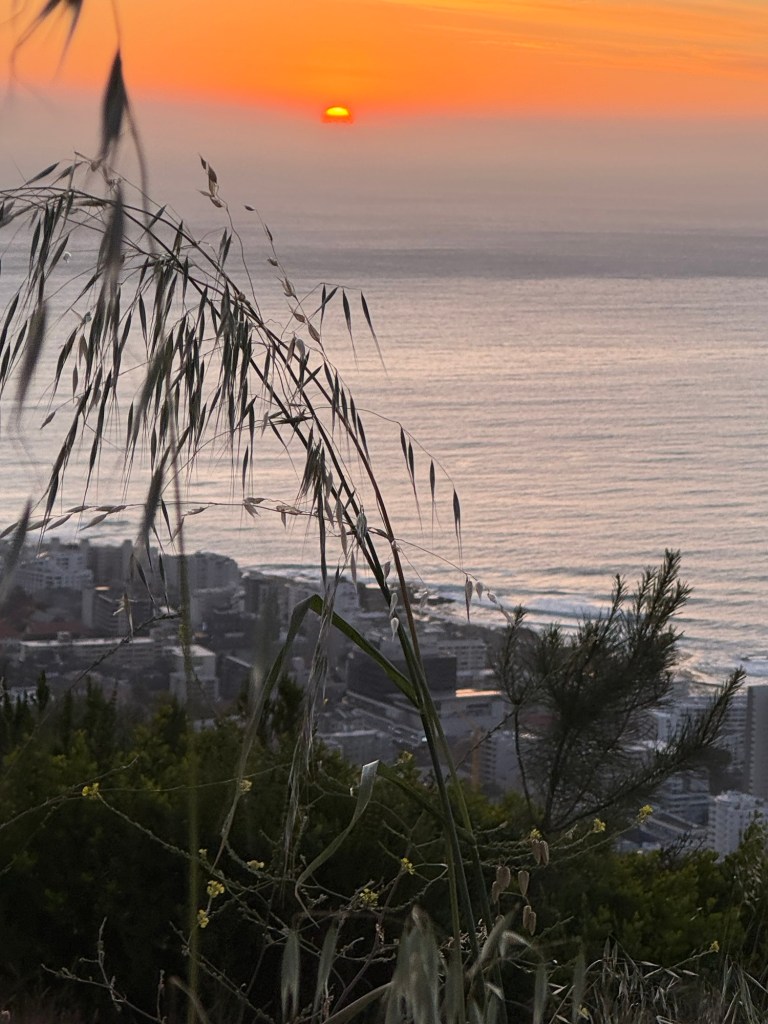
I have found the happy place I’ll go to on my mind!
The ride down was quicker, less scary and on the dark! A beautiful day!


Leave a comment