
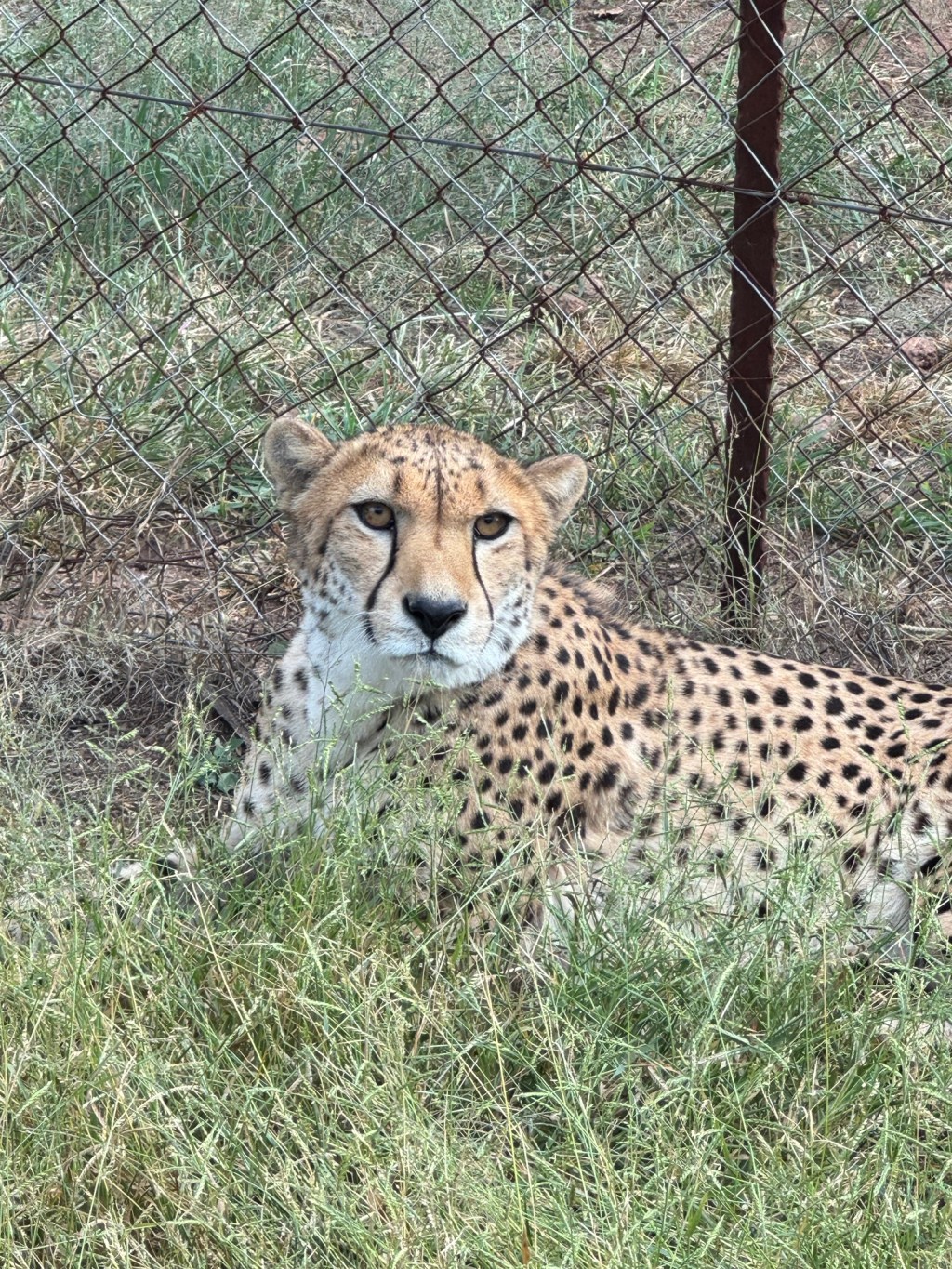
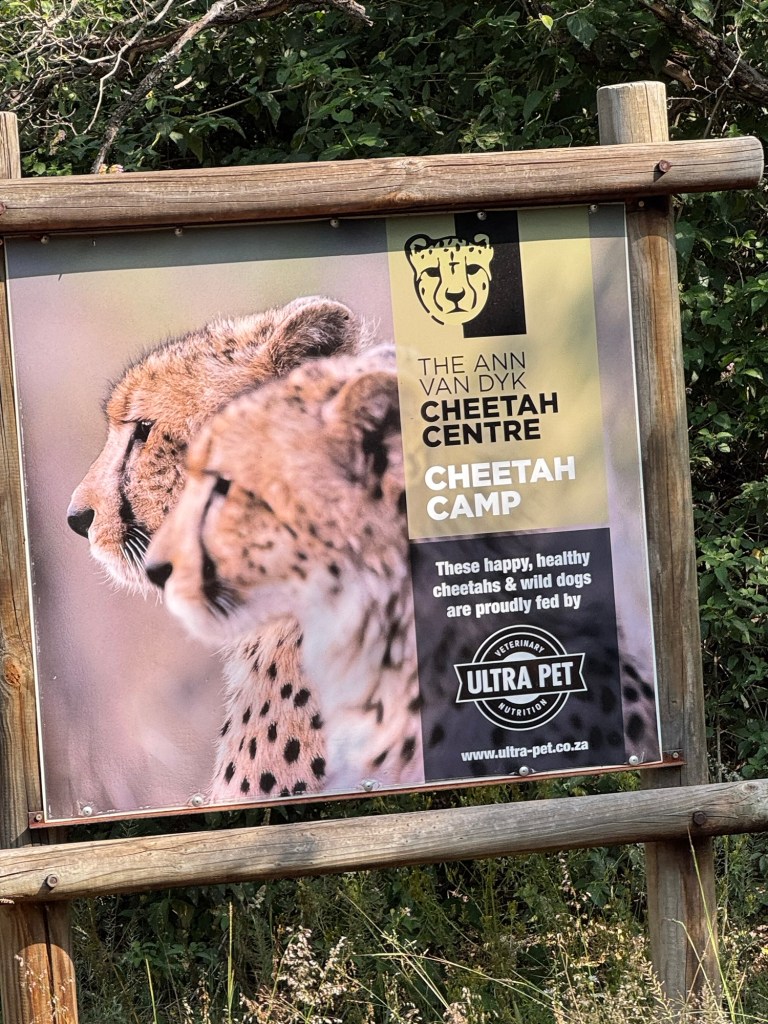
The Ann van Dyk Cheetah Centre in Hartbeespoort was a pleasure to visit. The center is named for the woman who so passionately devoted her life to the rehabilitation and release of cheetahs, big cats and other animals. It is home to some who can never be released, a hospital to those who need healing, a training center for those who will eventually be released, a hospice to those who will spend their final days here. It is an education center, and in some cases, a breeding center.
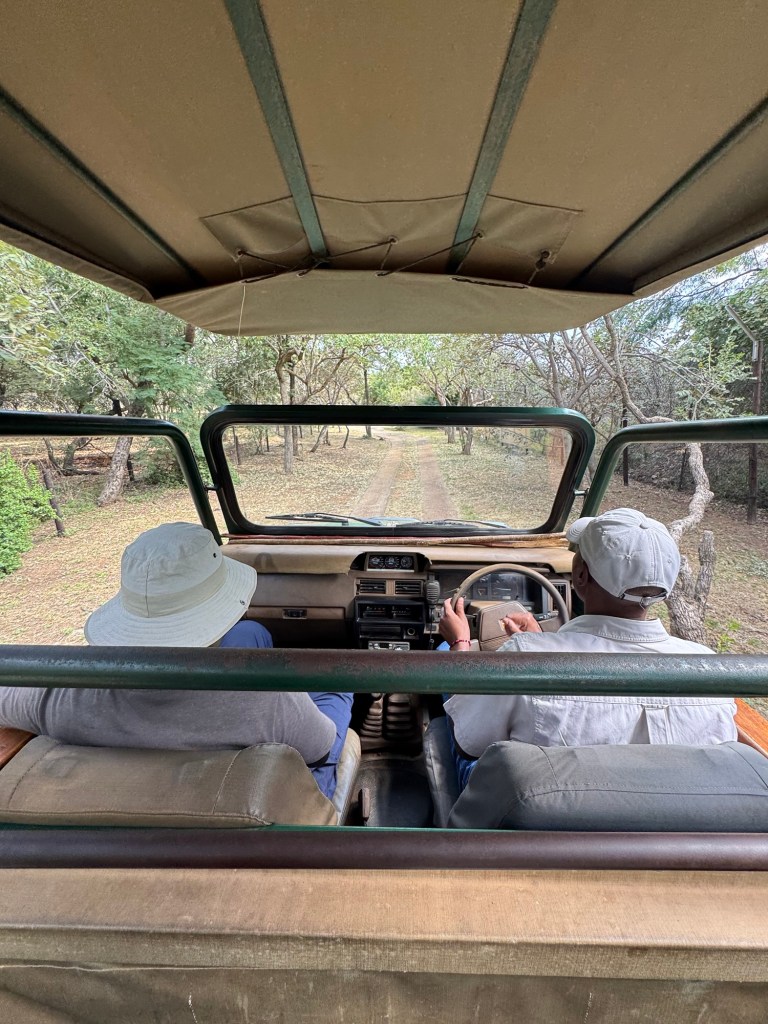
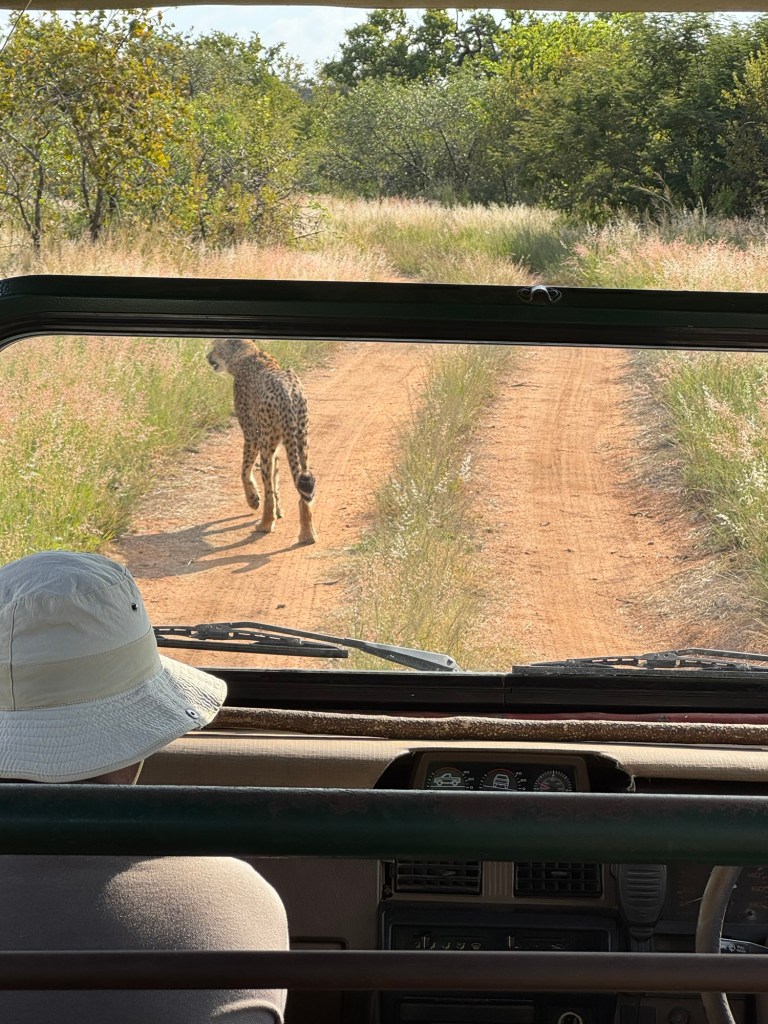
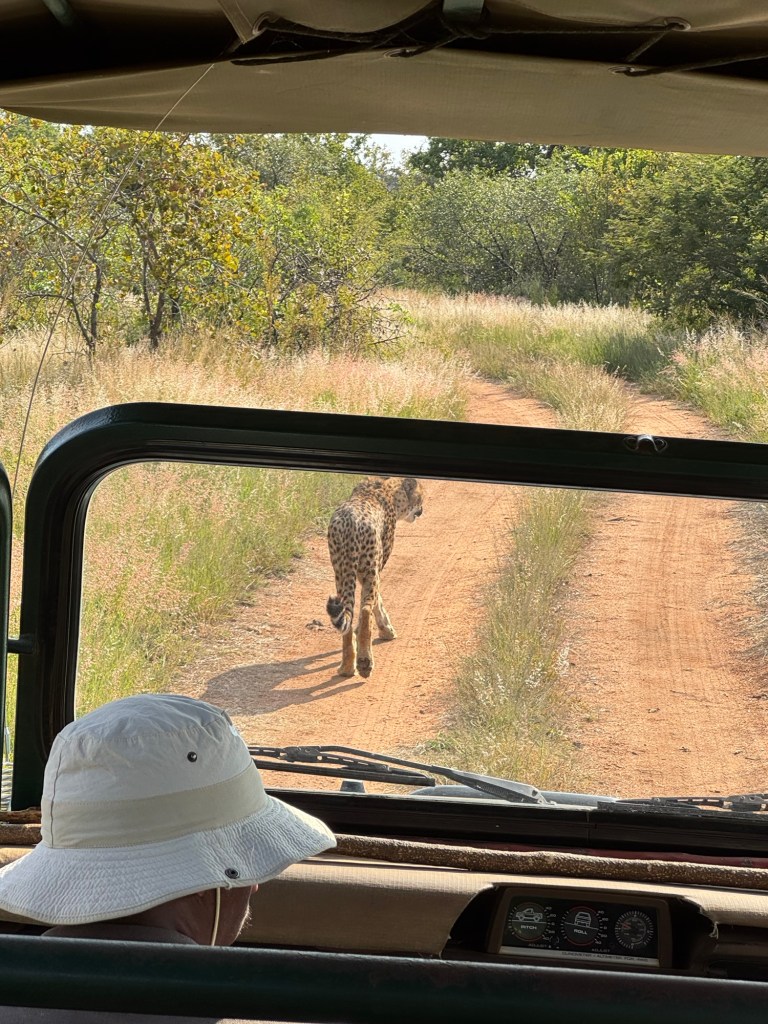
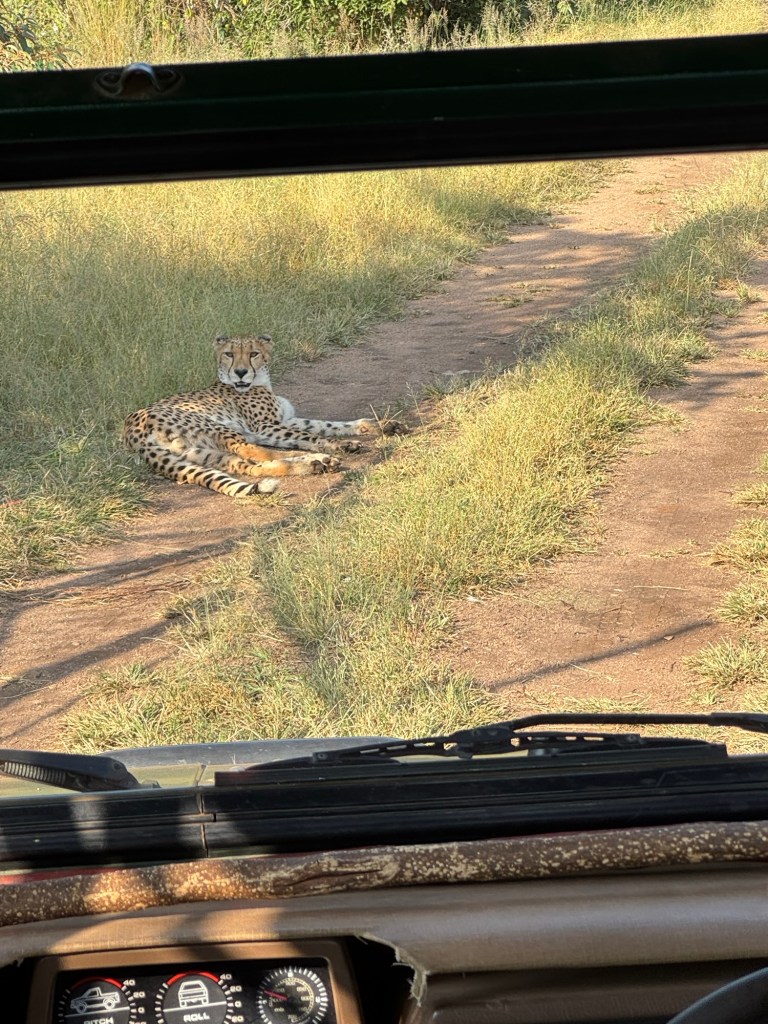
It is situated on 40 hectares and the cheetahs have five of those. Below are some pictures and videos that capture my nearly three hours out on the property. I had the luck to be the only one on the tour with a gentleman who was so knowledgeable and caring regarding big cats. He gave me so much information and answered every question I had. His assistant opened gates, held back cheetahs, and fed animals as we watched from the jeep. It was a magical day!
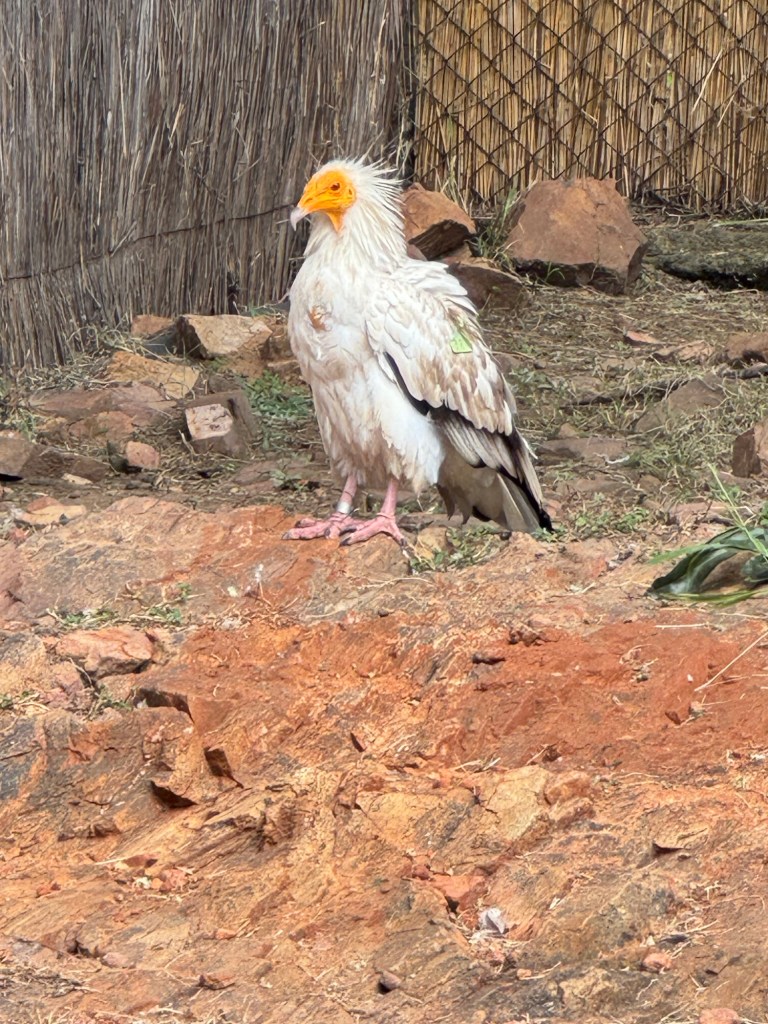
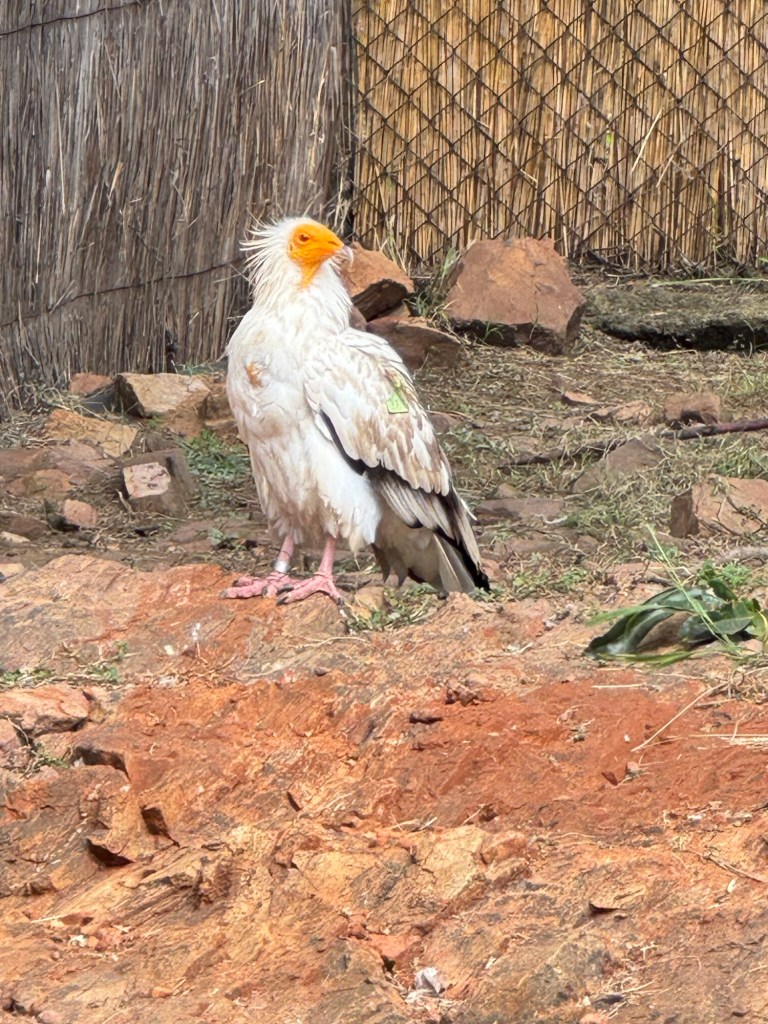
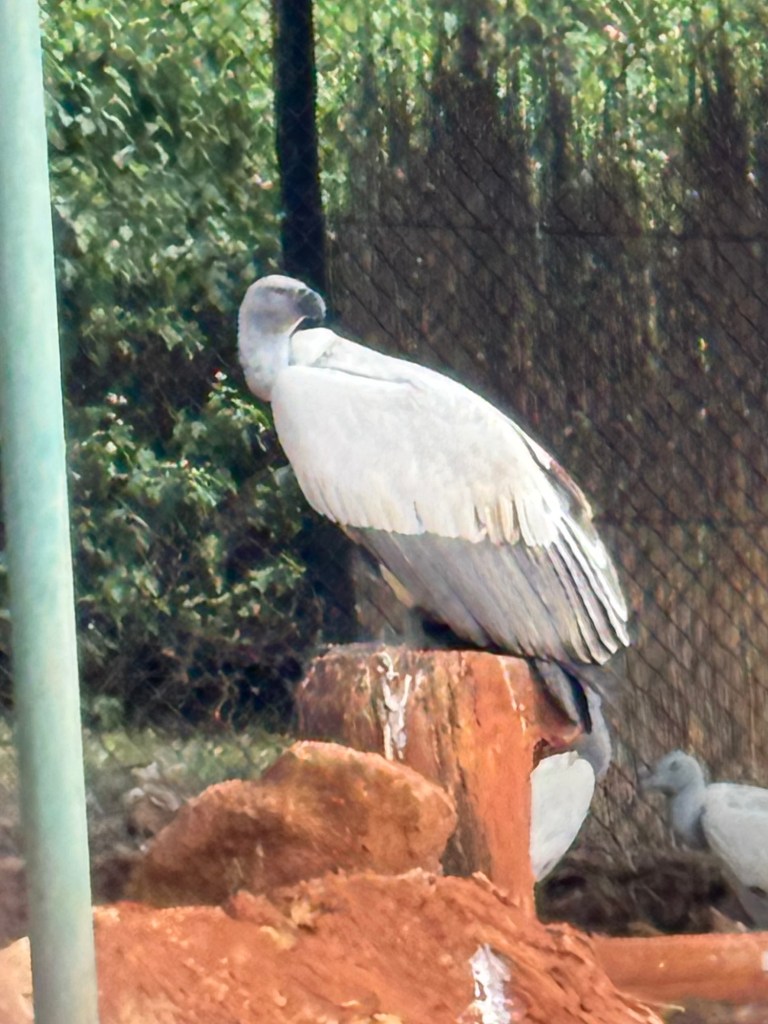
Our first stop was the vultures, one of the Ugly Five (along with spotted hyena, wildebeest, warthog and the marabou stork). They are all birds who will live their lives here, most having had their wings damaged on power lines. I can’t way I really enjoy vultures, but these were impressive in size and wingspan and the Egyptian vulture, with its orange face, was my favorite.
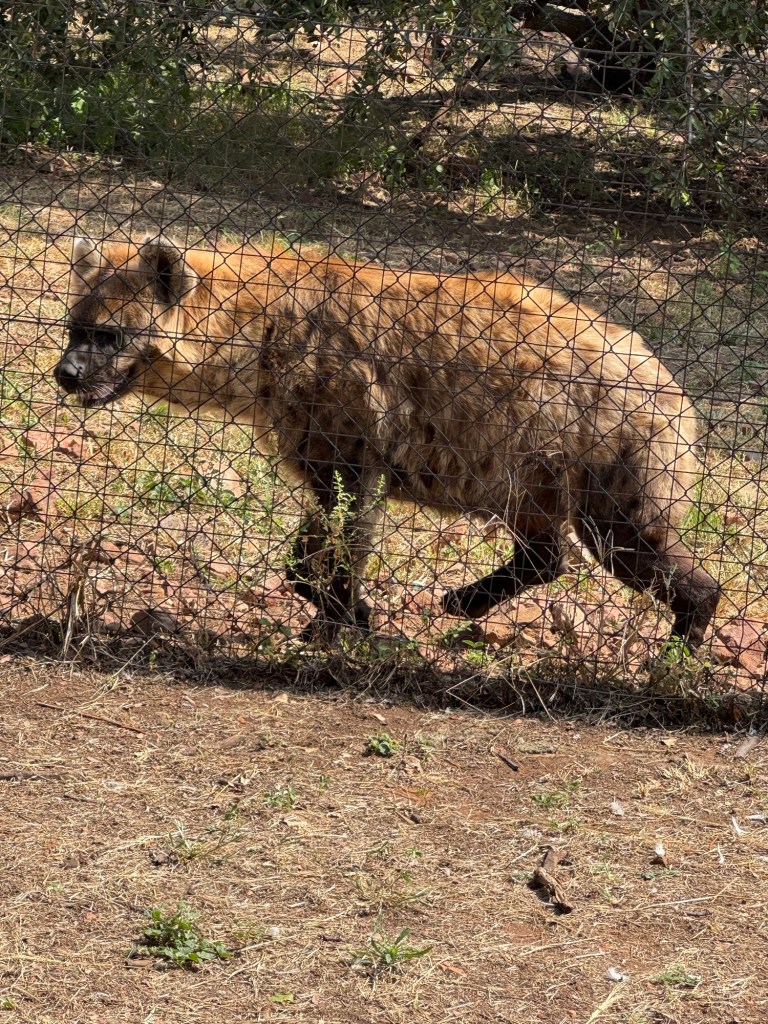
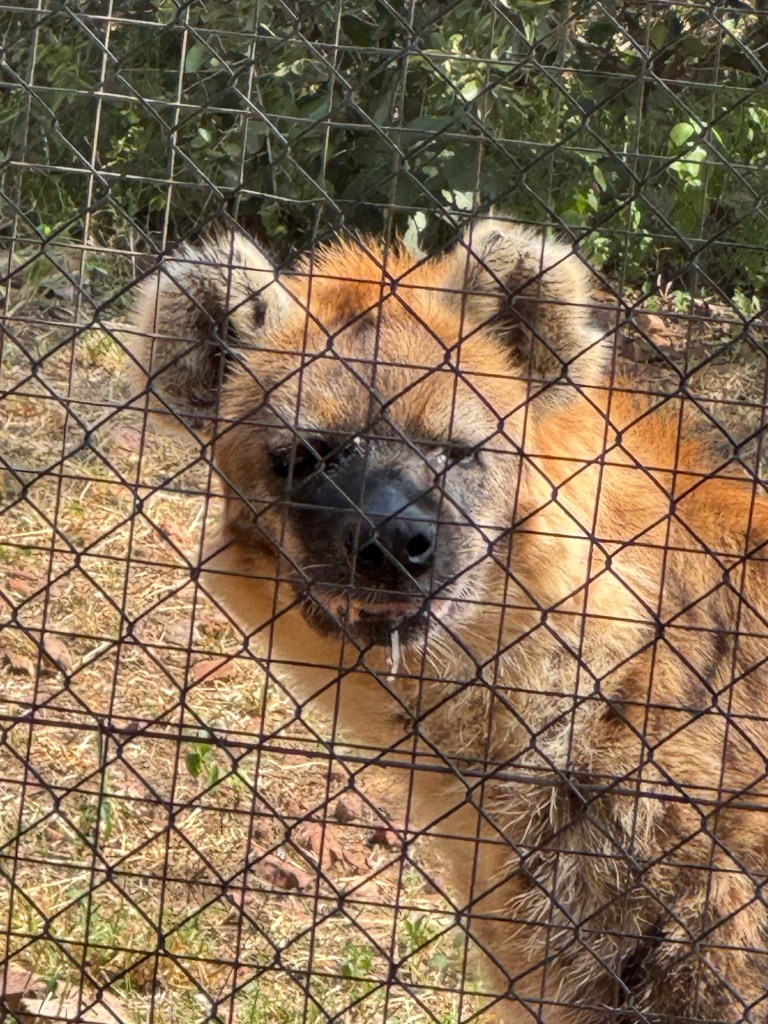
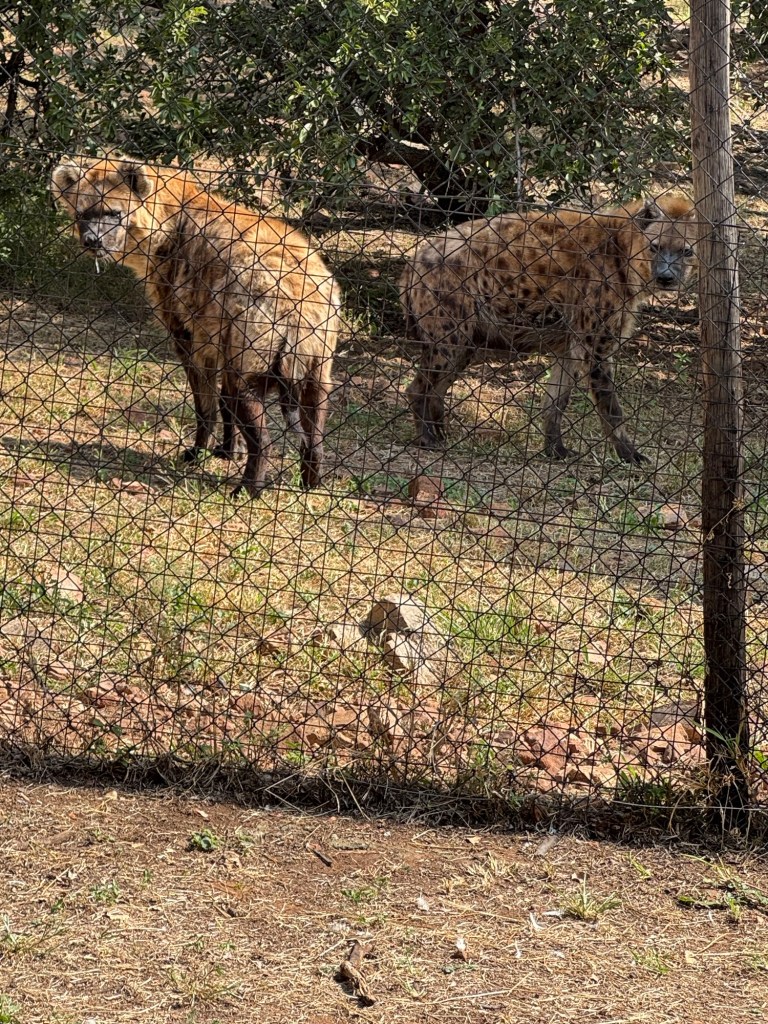
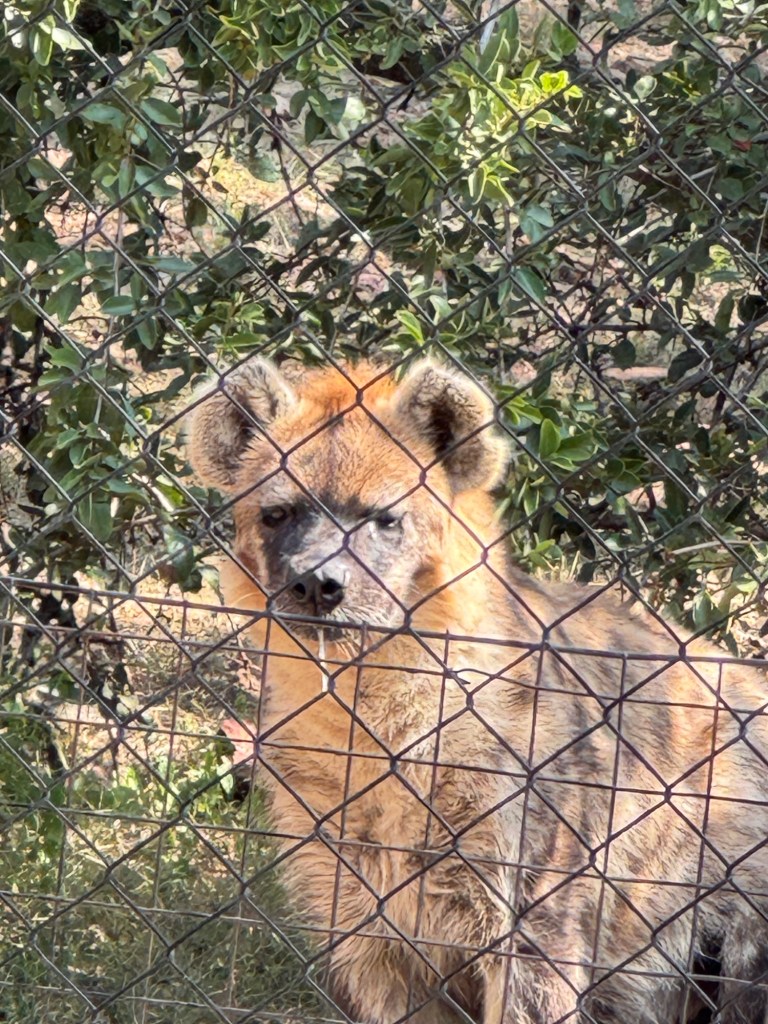
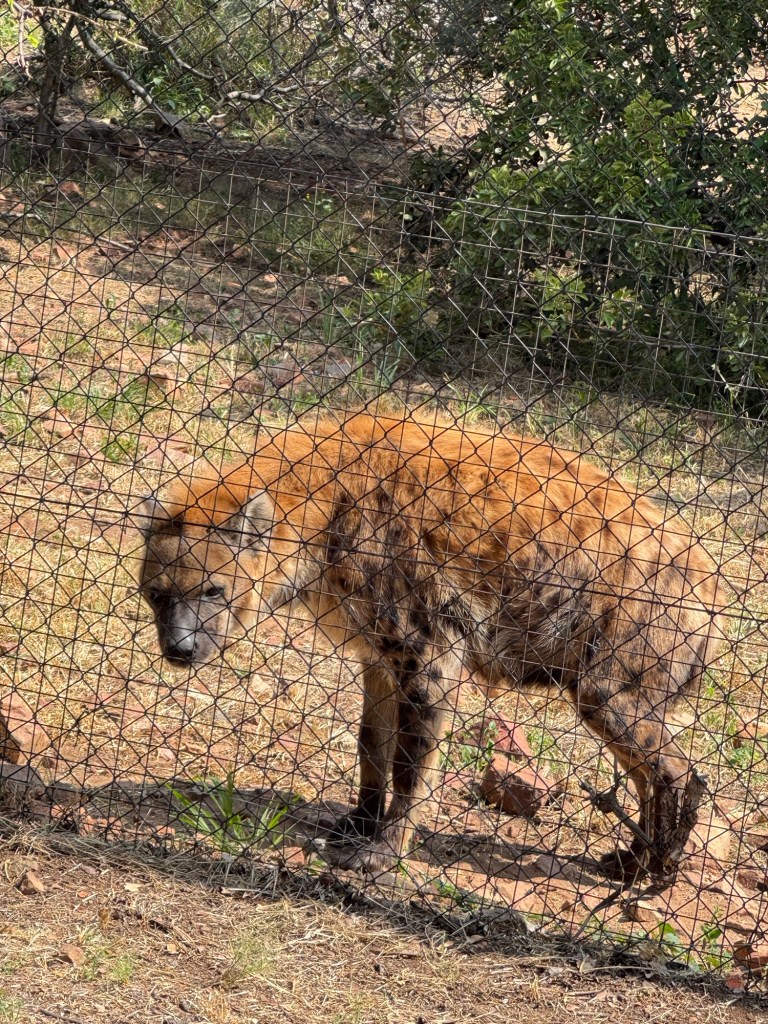
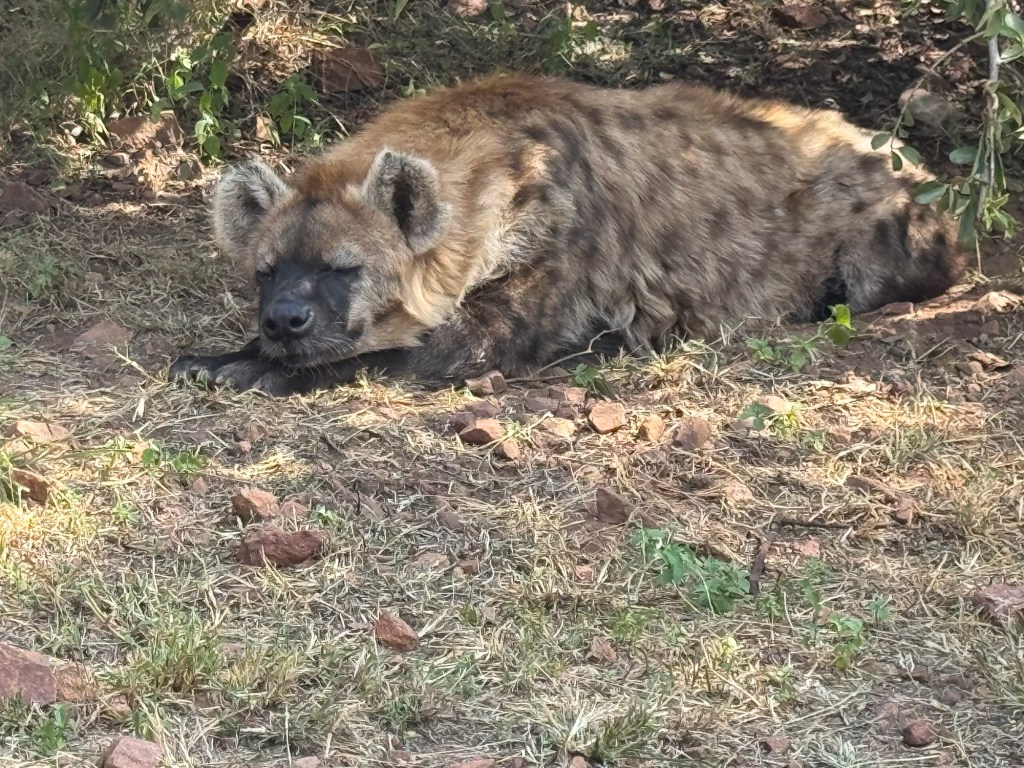
Next up were Becky and Rocky, two hyenas brought here from a zoo that went out of business. I must note that I found them adorable, not ugly at all, and I was surprised by how big, furry, and think they were. The Lion King did not portray them this way! The female hyena has a penis, too, and when giving birth, the first baby usually dies due to suffocation because the canal is so small. The jaws of the hyena are such that they produce 1100 psi of pressure to crush bones (nickname Bone Crusher). Their feces is white because of all the bones they ingest. Tortoises eat their feces to strengthen their shells!
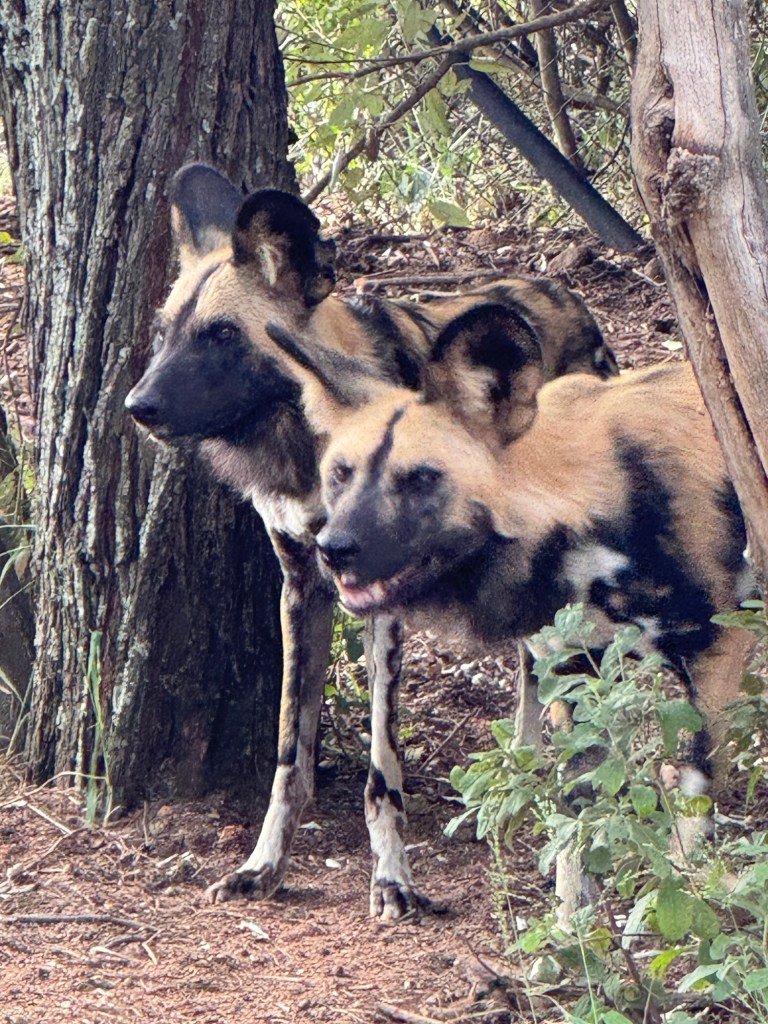
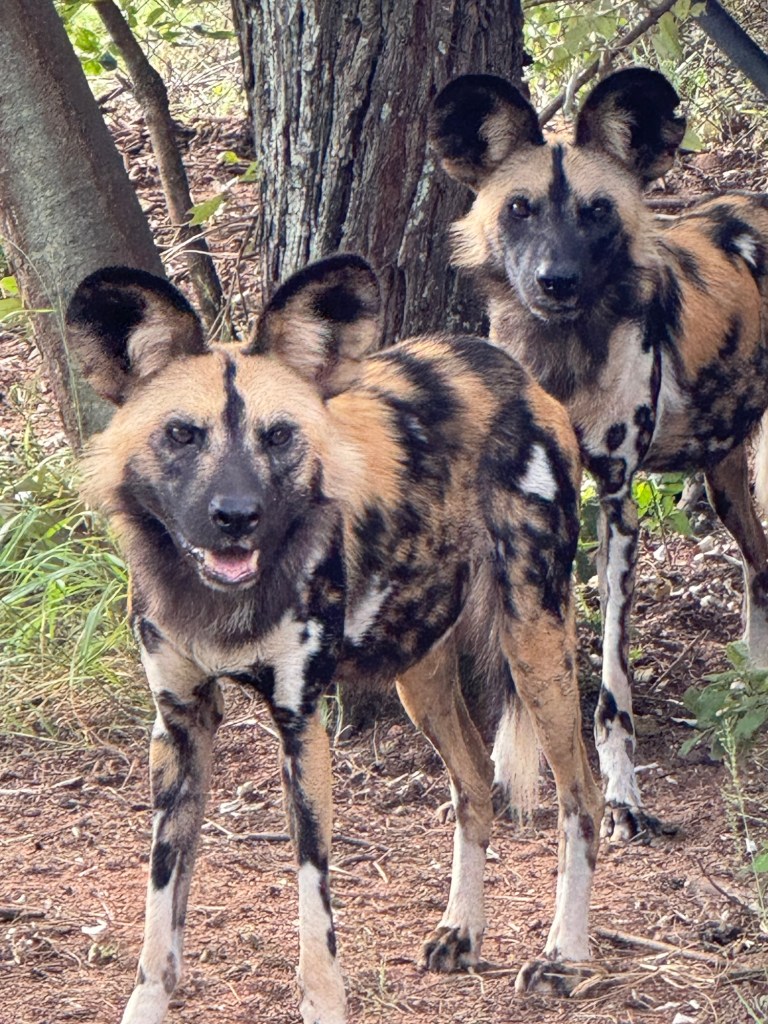
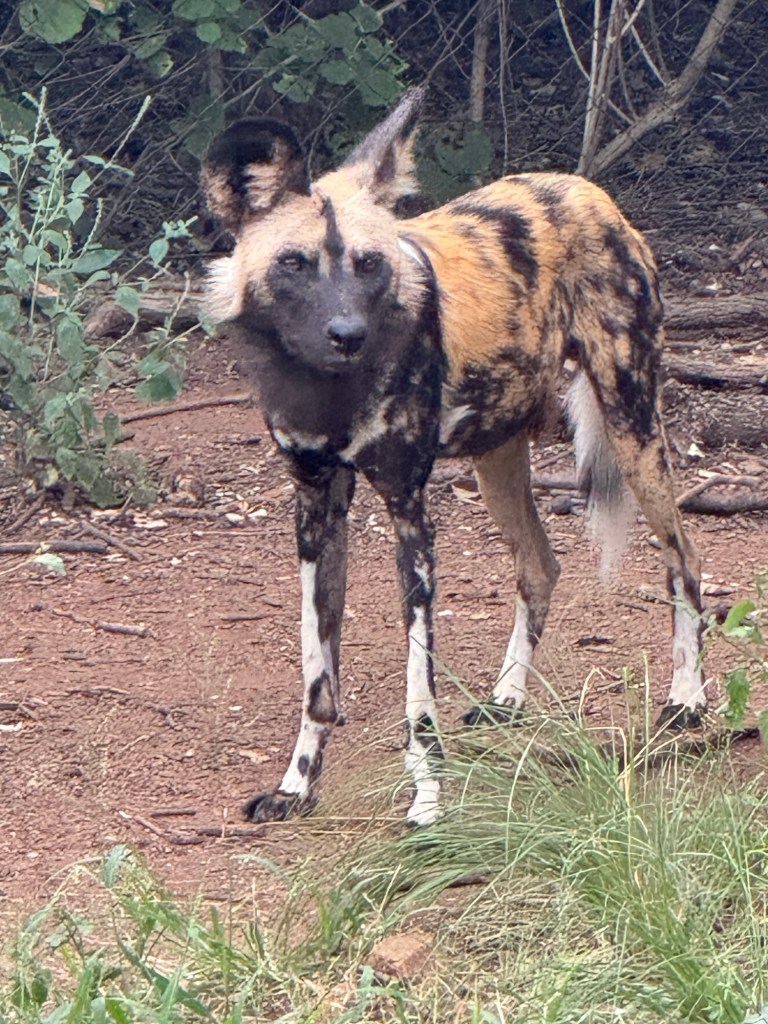
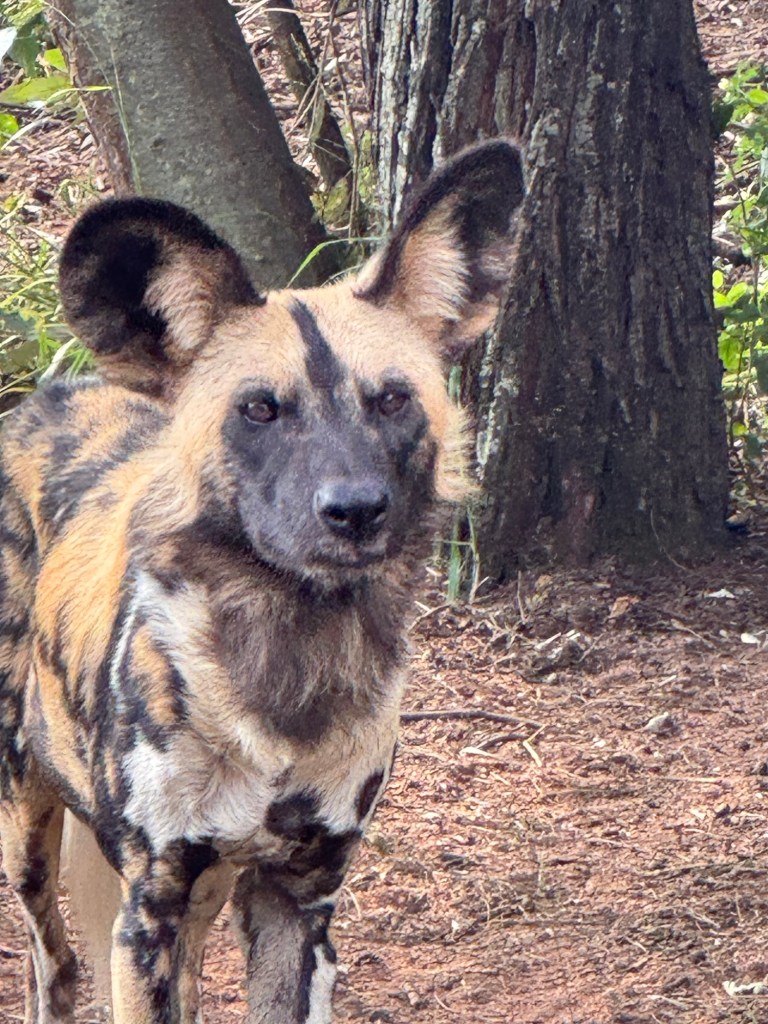
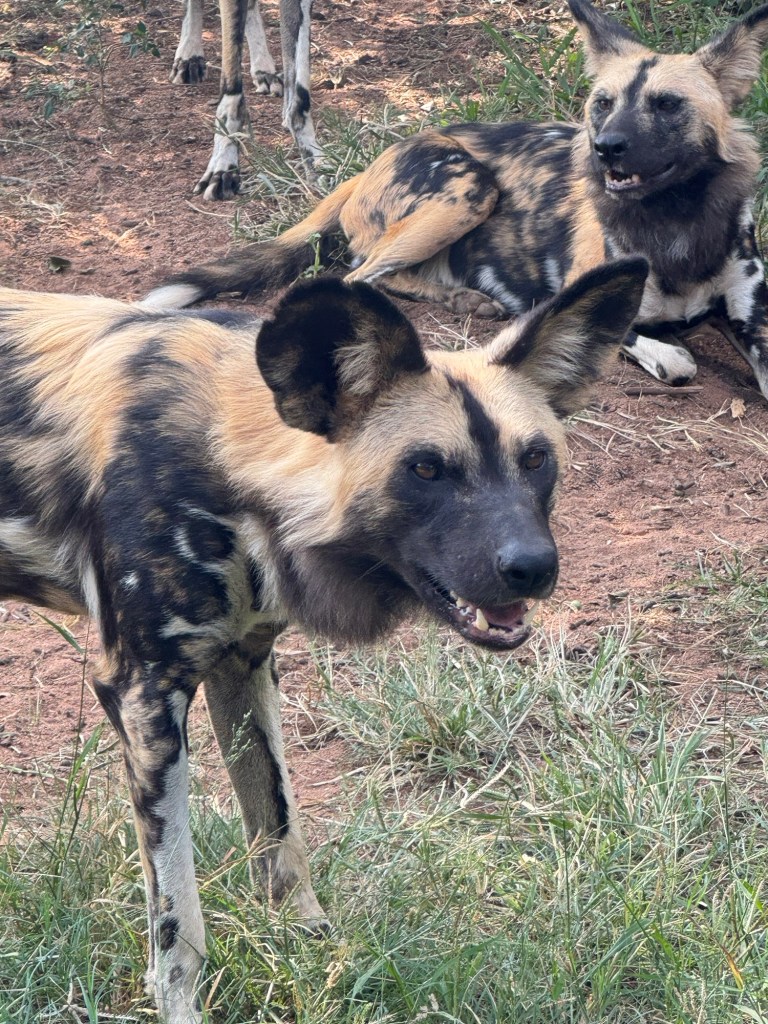
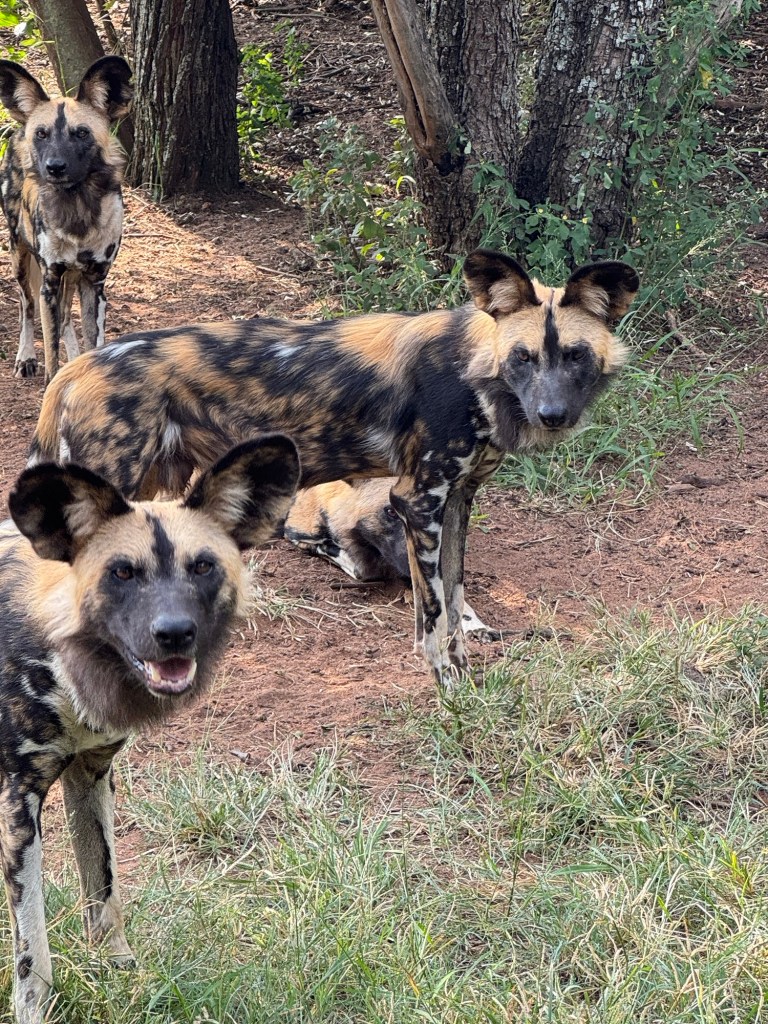
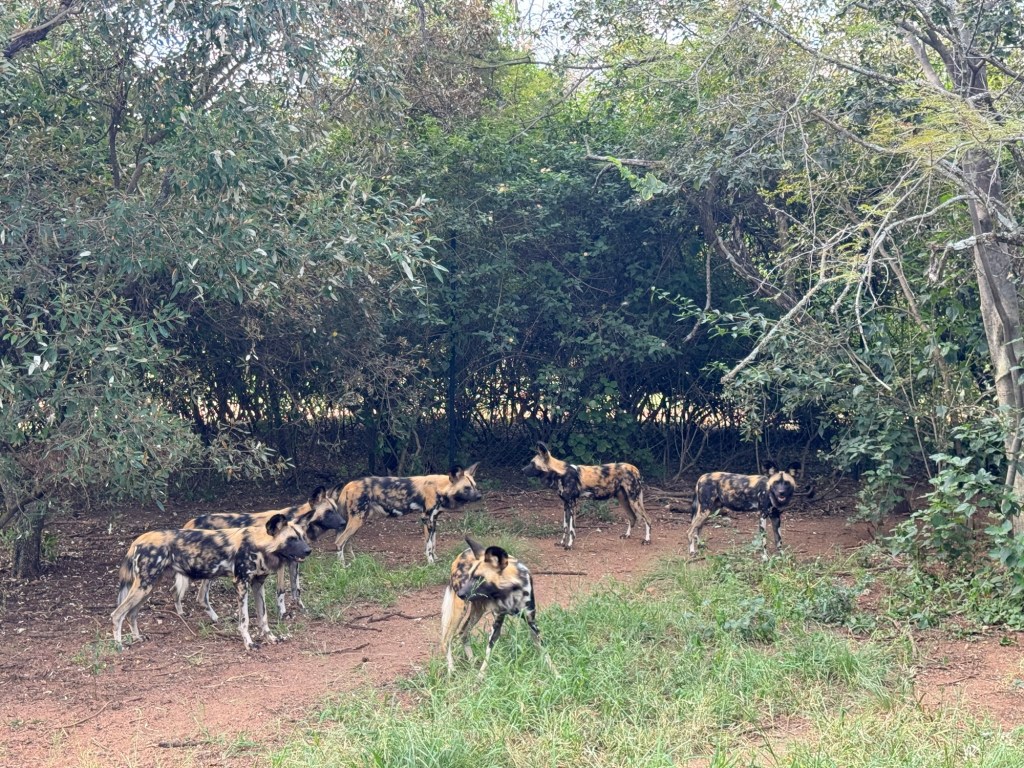
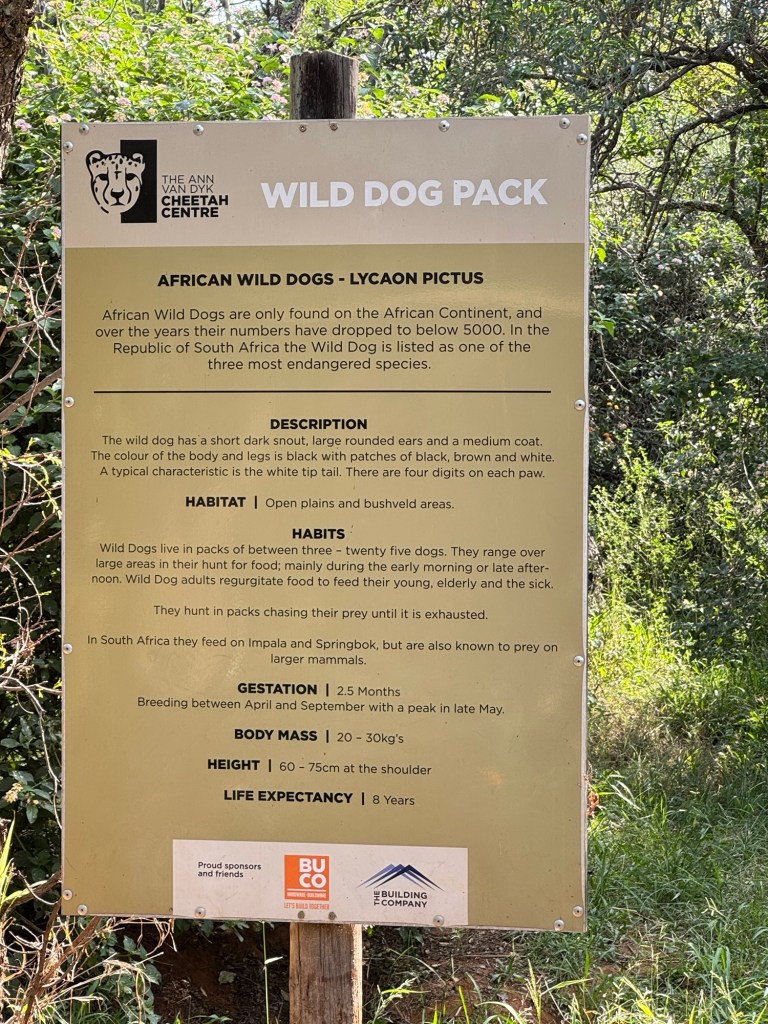
Onto the African wild dogs, only living on the continent of Africa and close to extinction due to the spread of rabies amongst their kind. They were so cute with their big ears and interesting color patterns (nickname Painted Wolf), but when they surrounded our jeep, my head was on a swivel keeping track of the 6 brothers. My guide said they hunt together and just exhaust their prey. I loved when they ran ahead and yipped! The tips of their tails are white as a signal to others to follow. They pee, drink and bathe in their watering hole to keep their smell. If one were to be taken away and came back with a different smell, he would be killed.
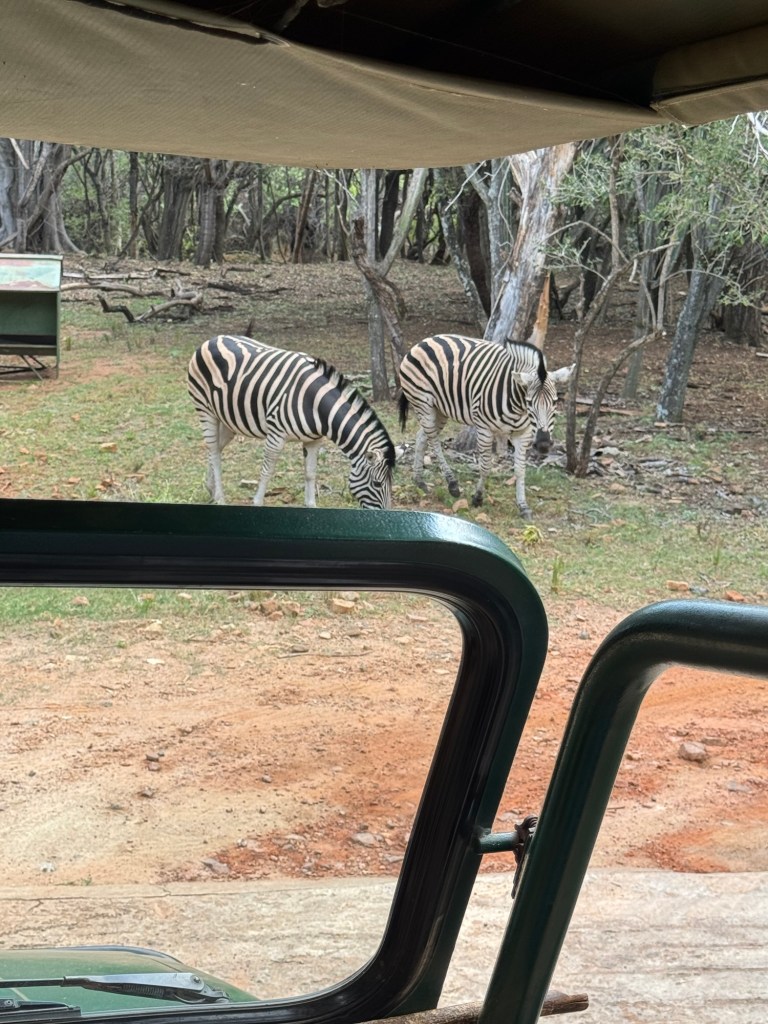
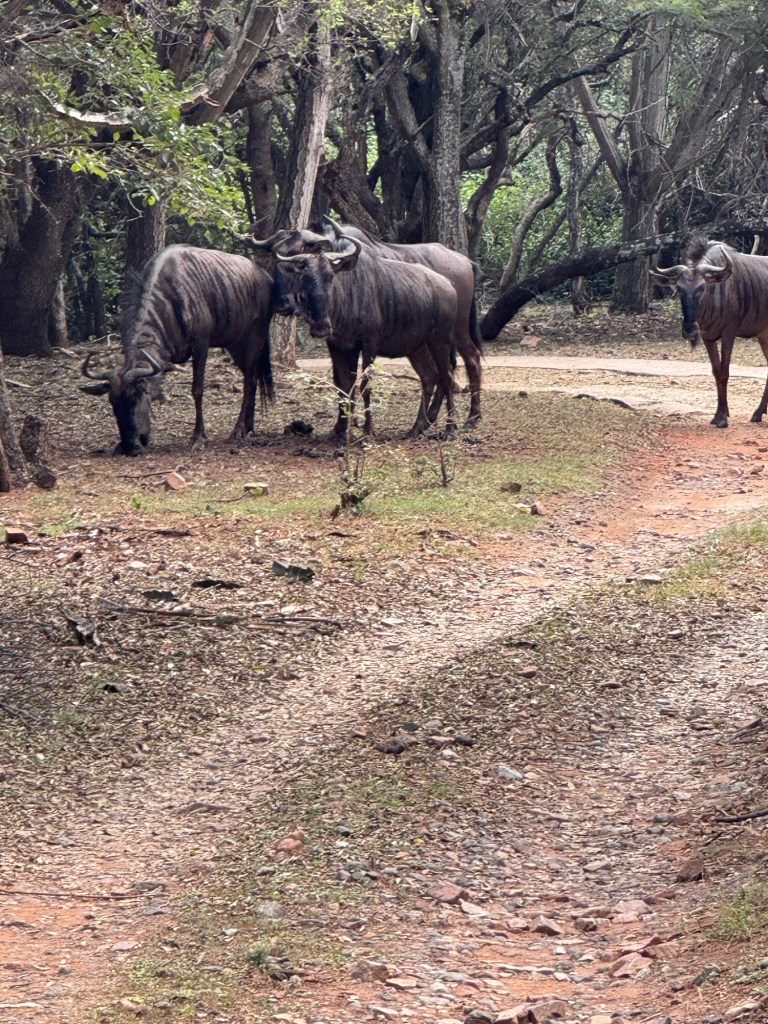
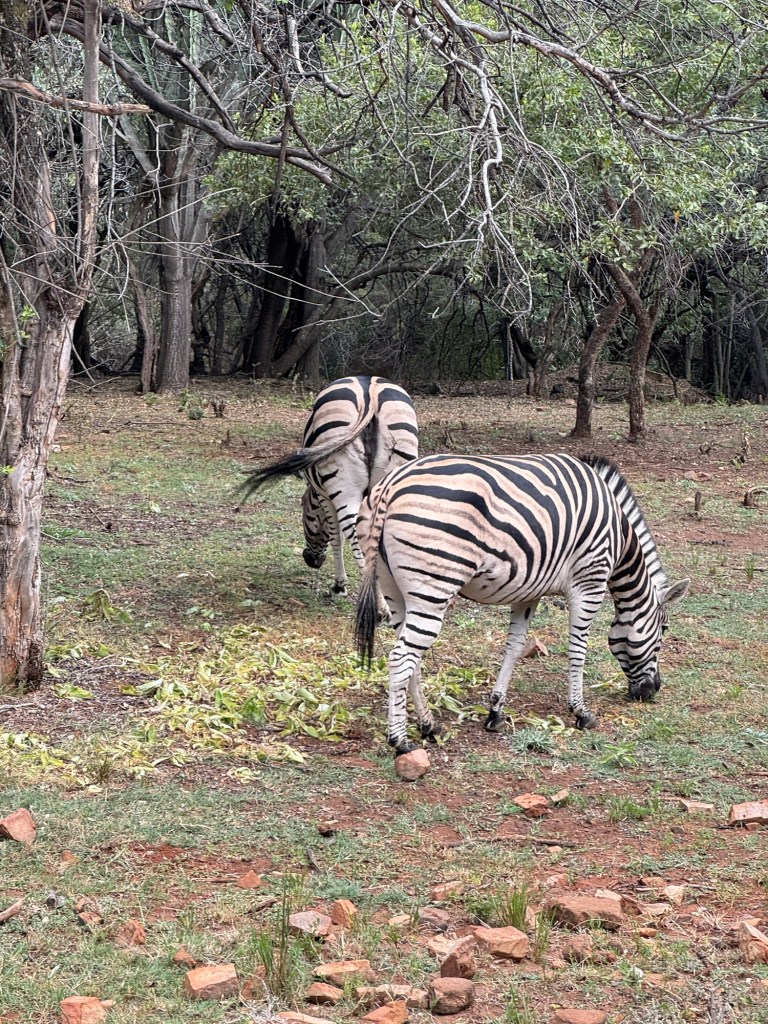
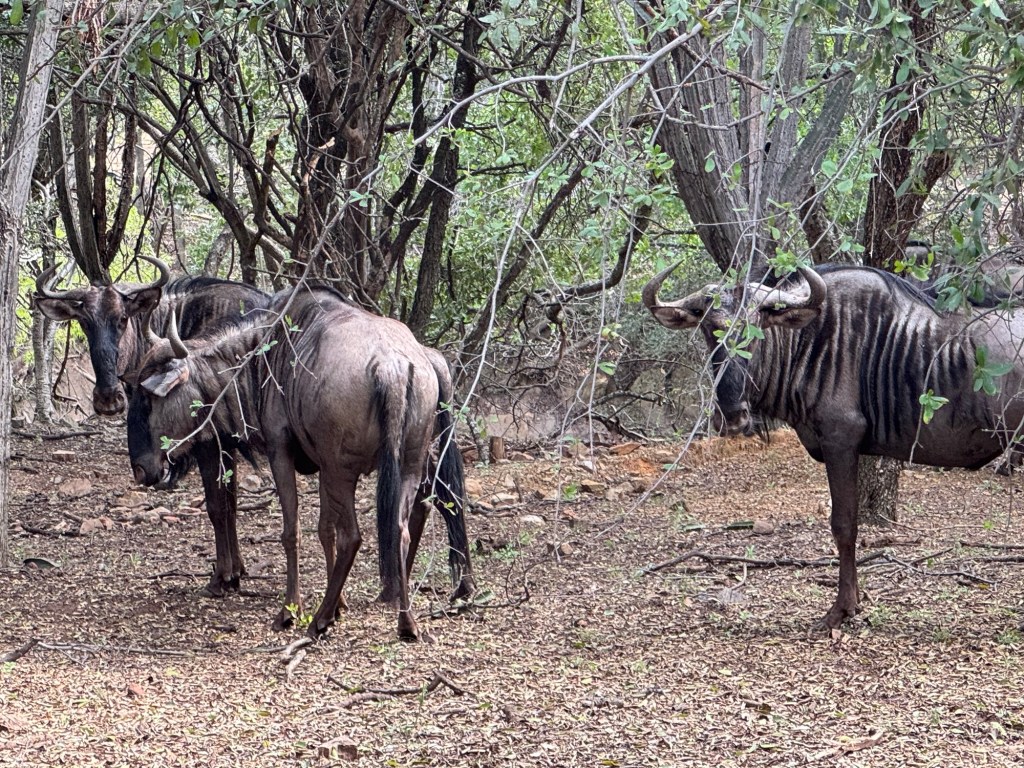
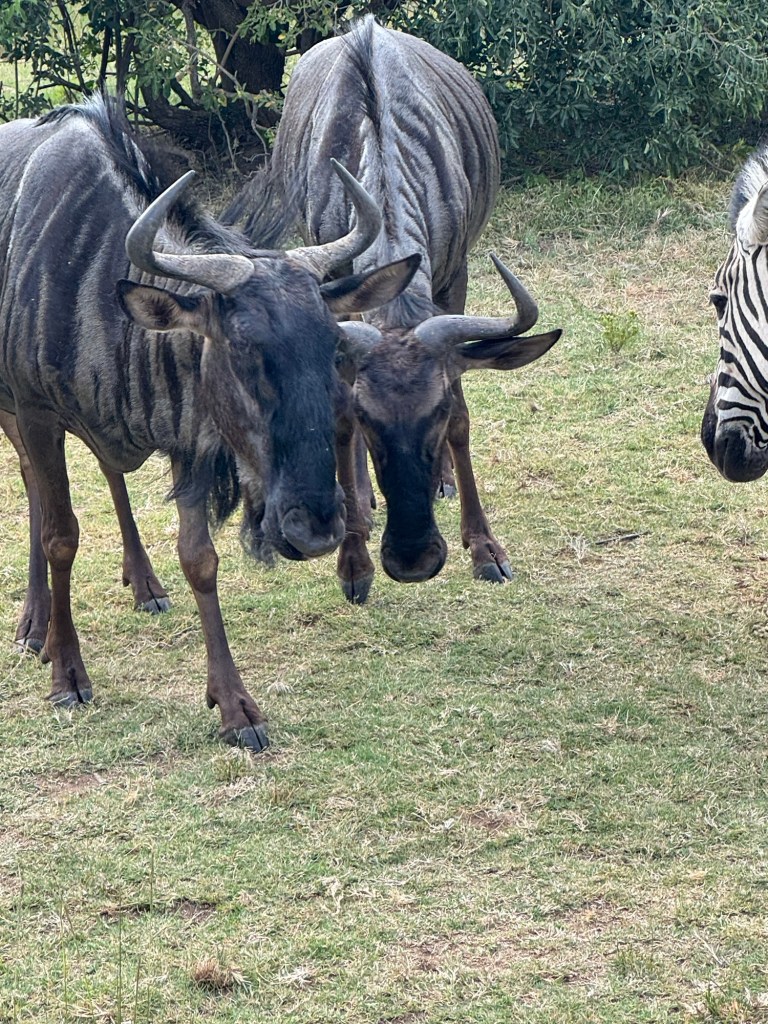
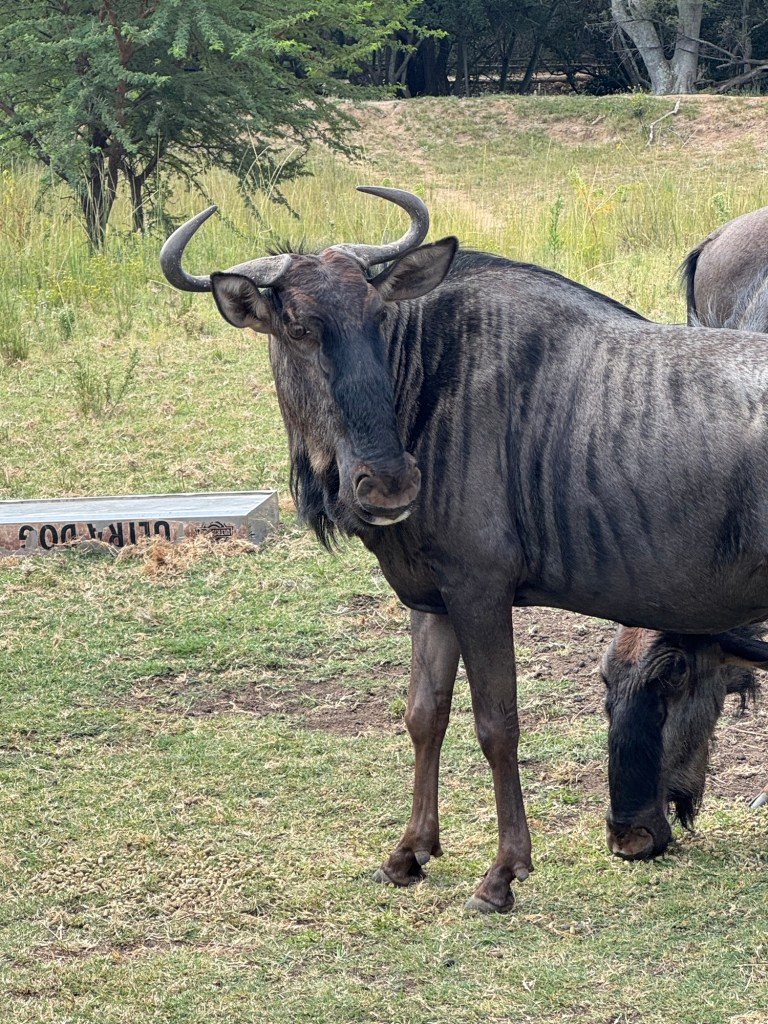
The blue wildebeest is a gangly guy, built in a way that seems awkward and difficult to maneuver. He is bigger than the black. There is also a golden that was specially bred by humans, not nature. Wildebeest are also known as gnus. They are often seen traveling with zebras because of course there is safety in numbers, but also the zebra eats the upper grass and the wildebeest the bottom.
My guide is Zulu and his people only eat animals with split hooves. He said some groups are now eating cats and claiming the meat is quite good. We had a great conversation at this point about the 12 South African languages, many of which he speaks, and about the famous clicks. Zulu has 3 clicks to represent 3 different sounds.
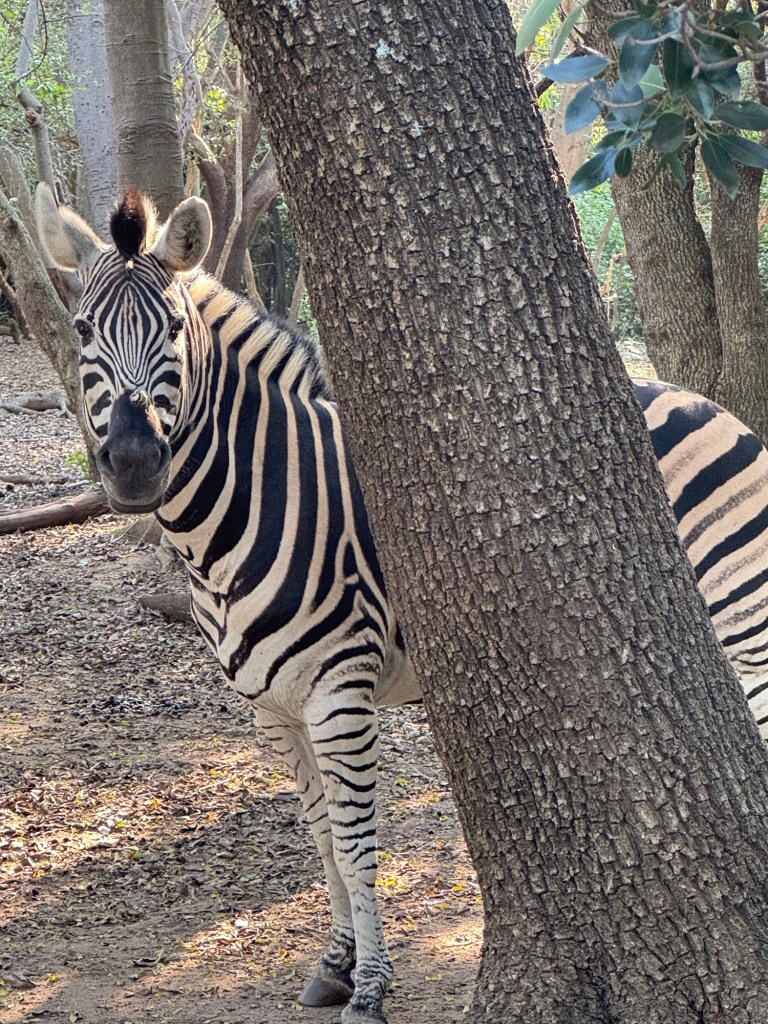
A note about zebras here. They are actually white with black stripes. This is known because if you shave them, their skin is white. With cheetahs, their spots are on their skin!
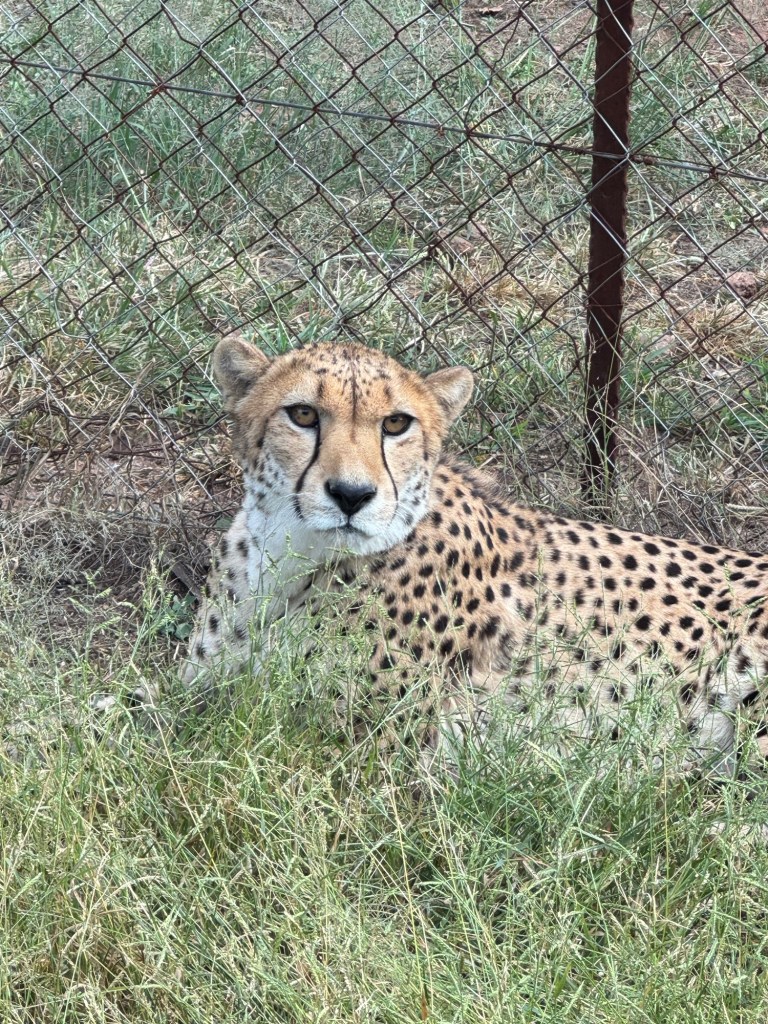
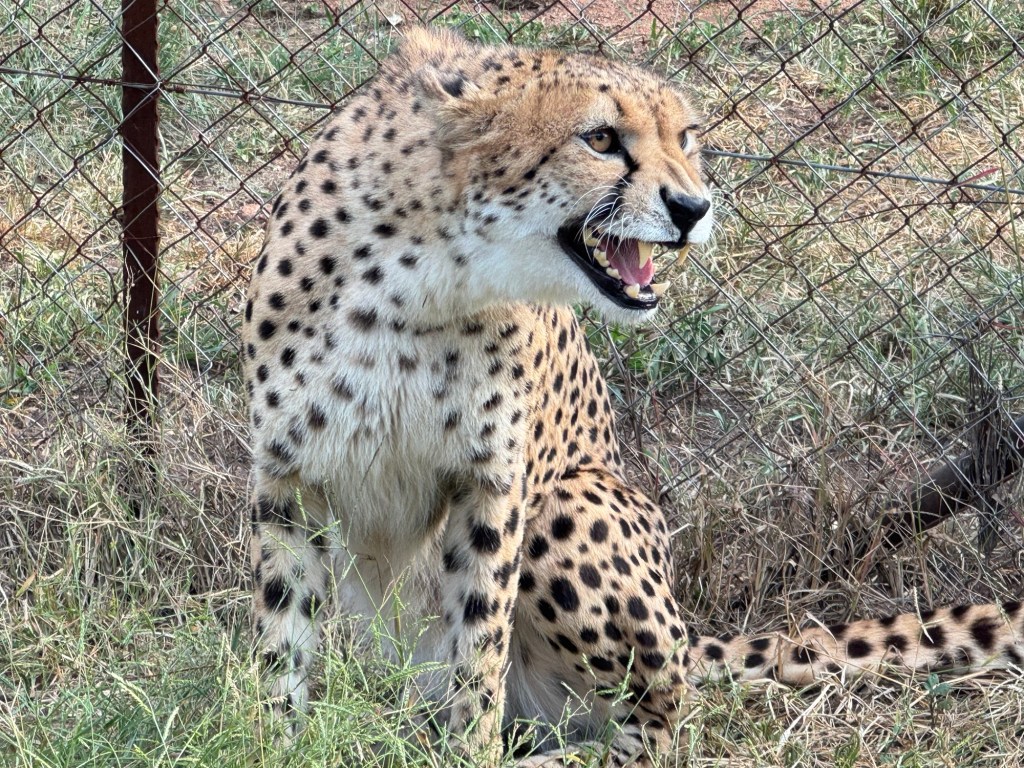
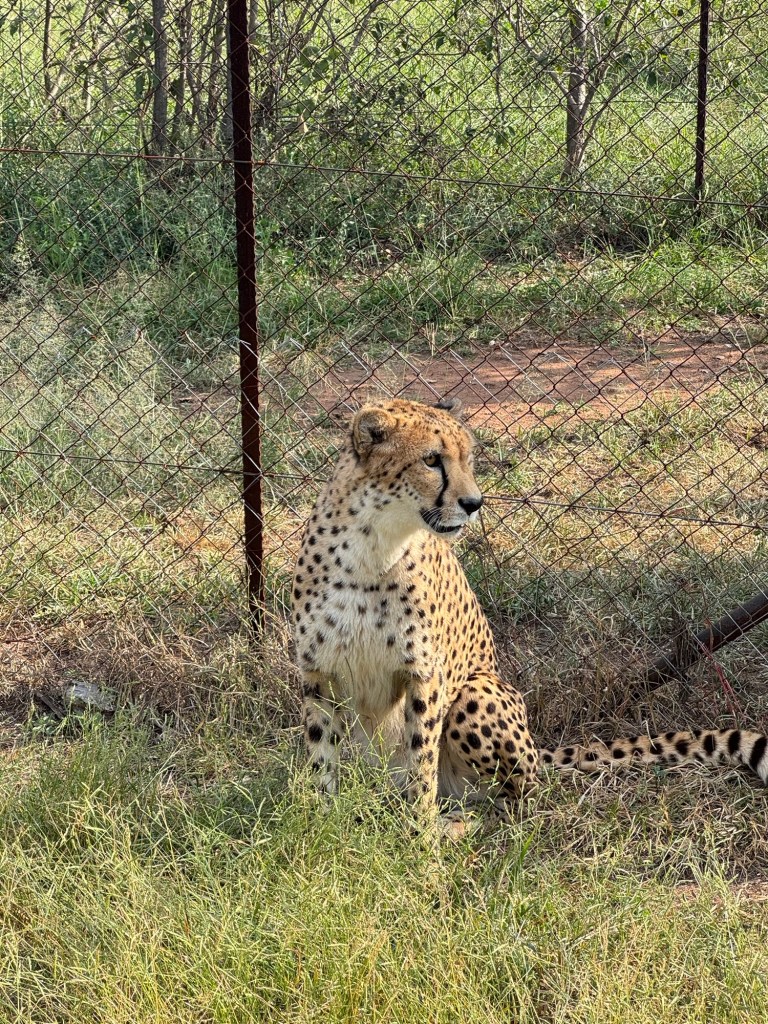
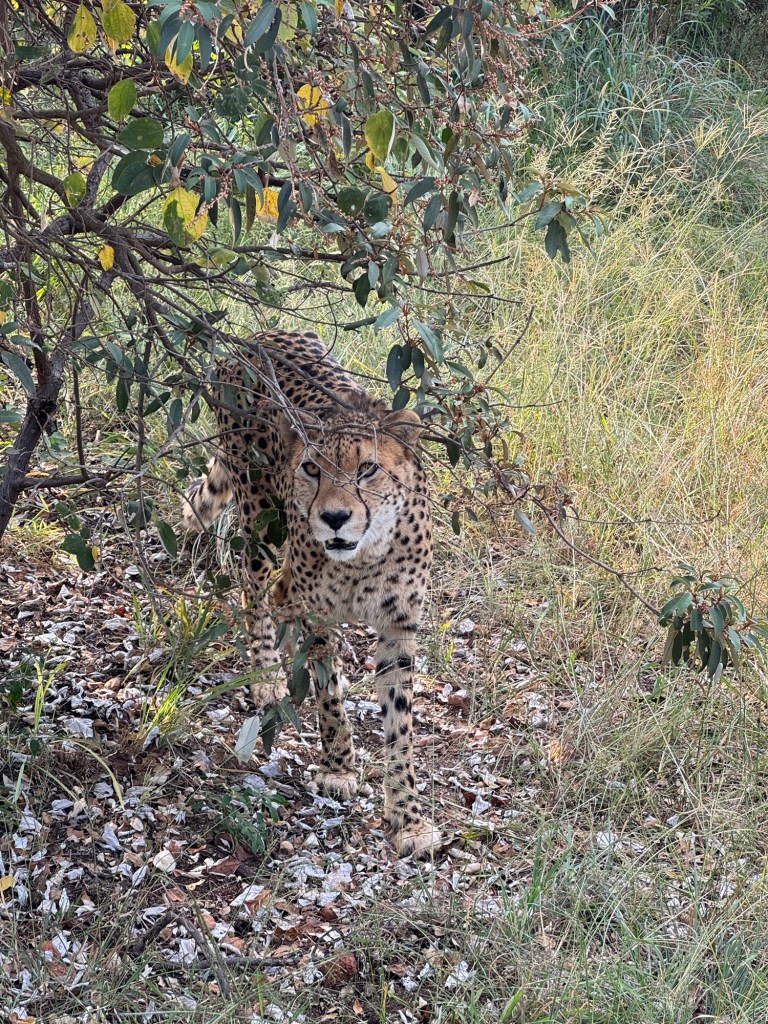
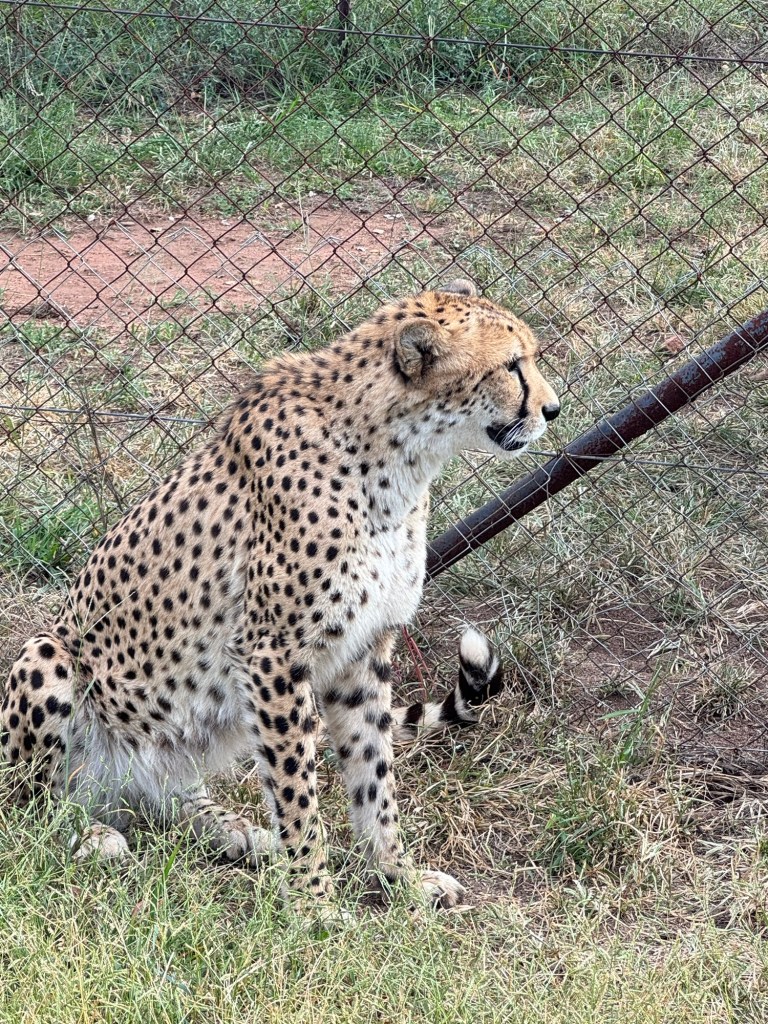
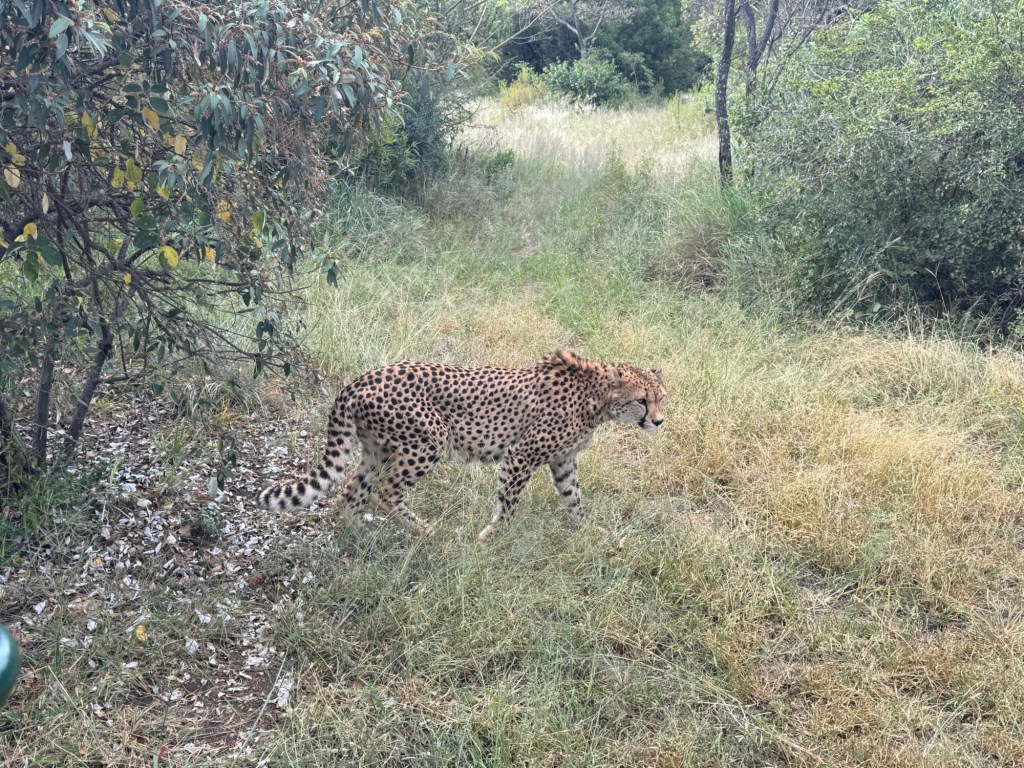
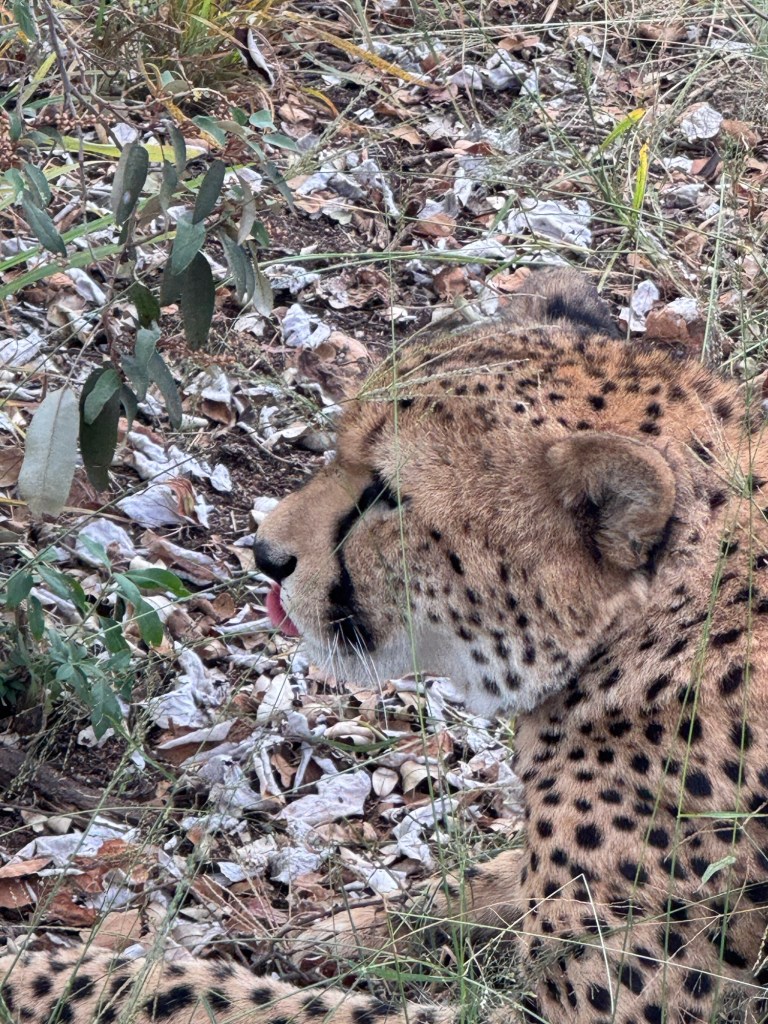
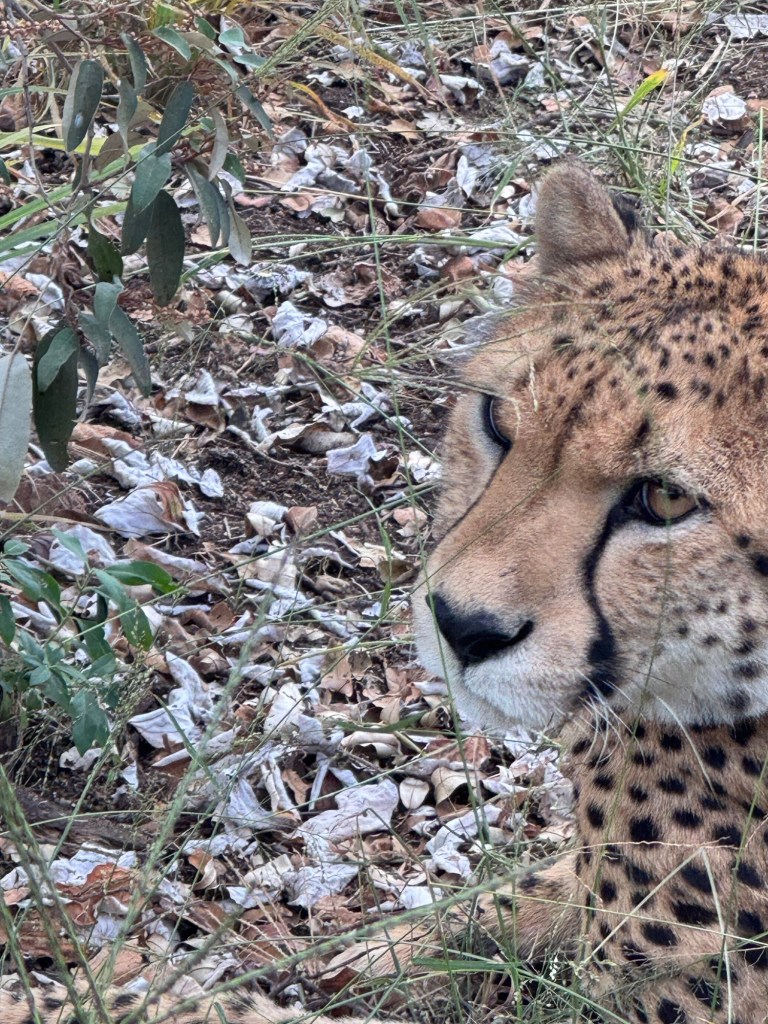
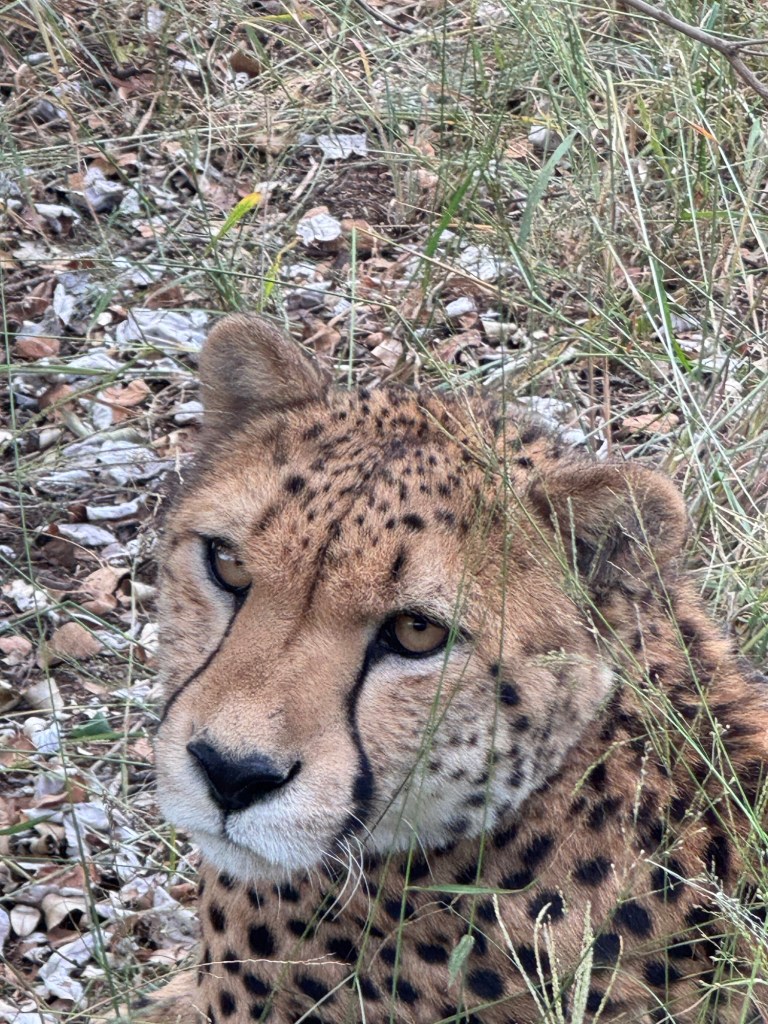
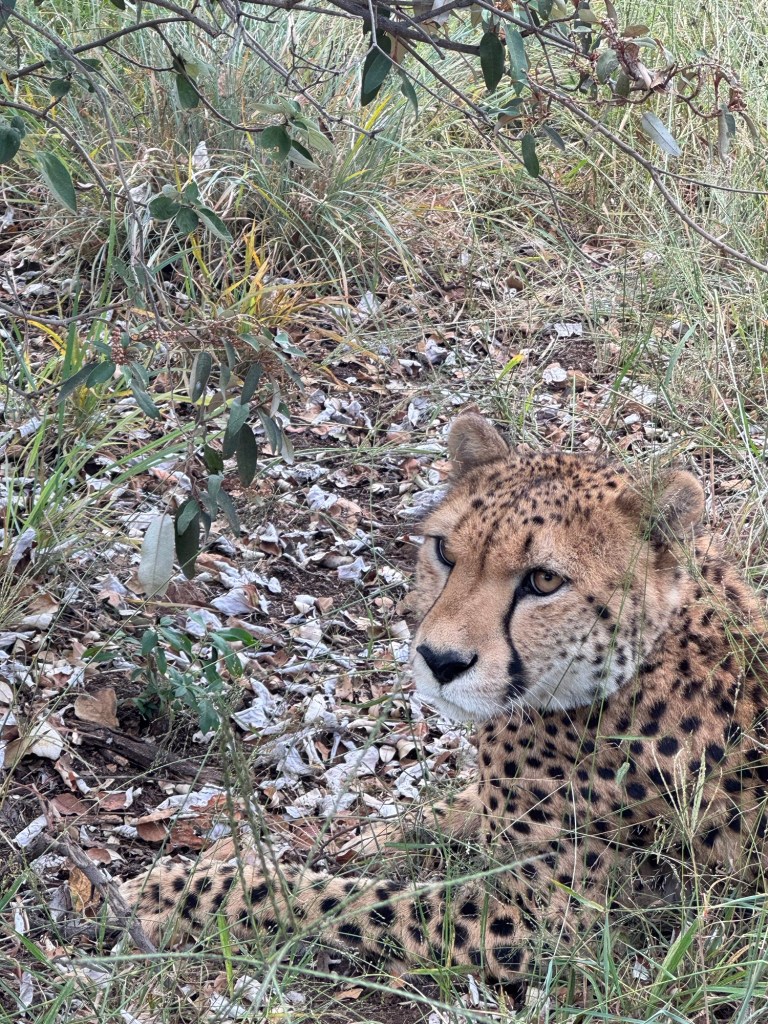
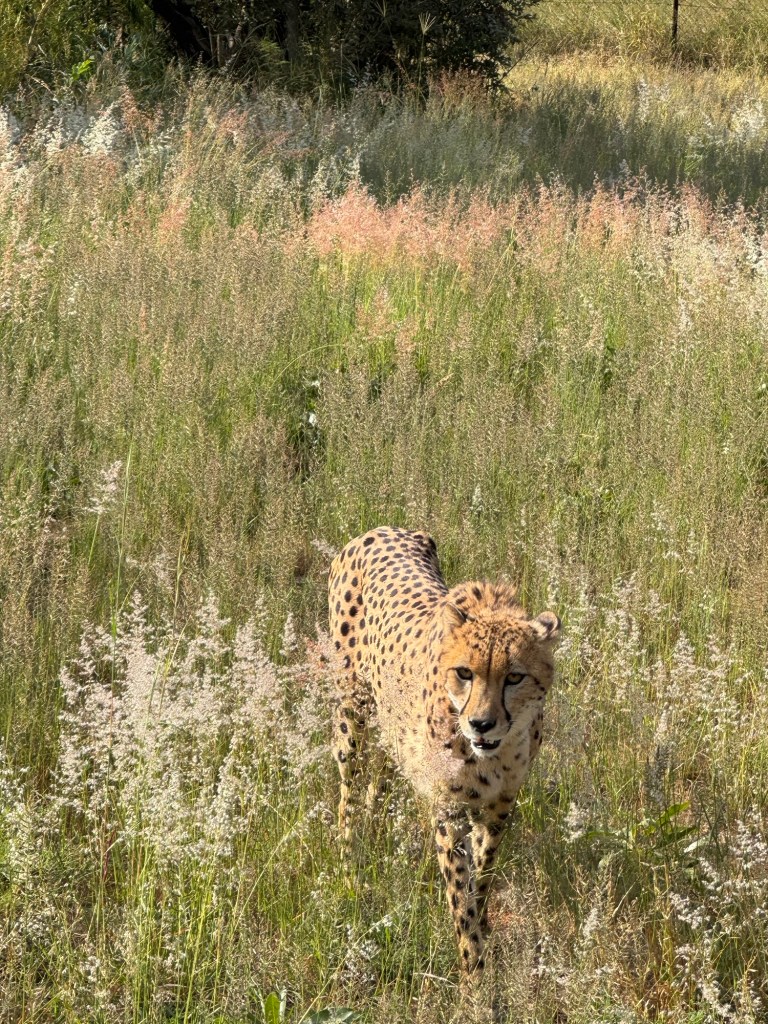
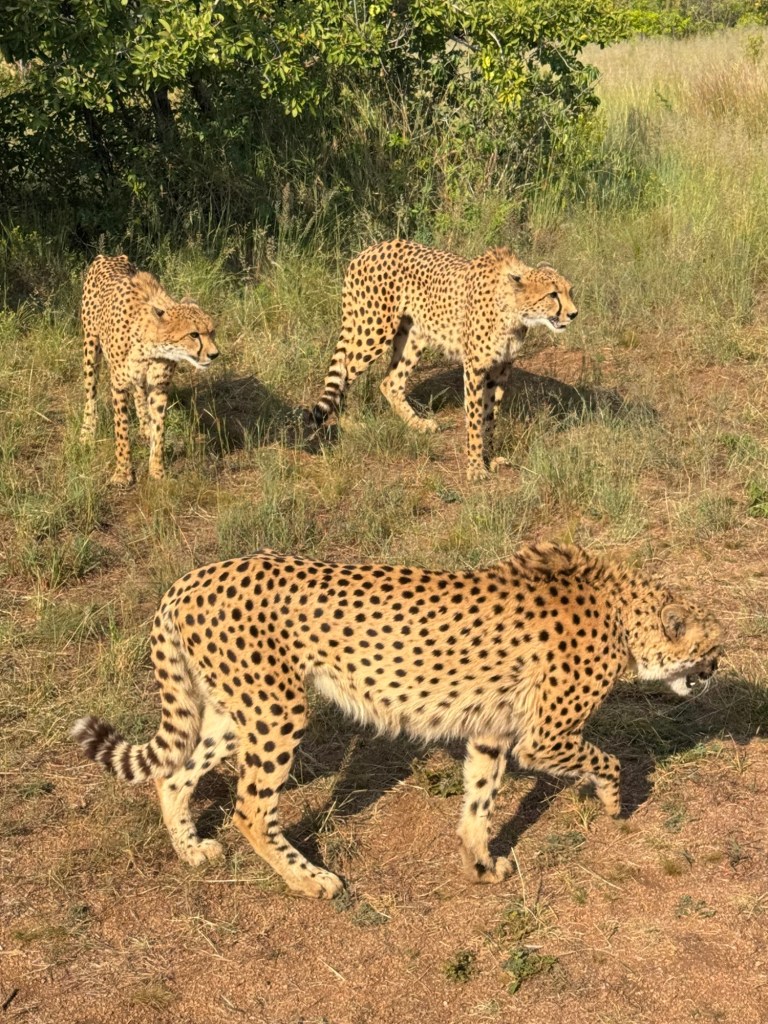
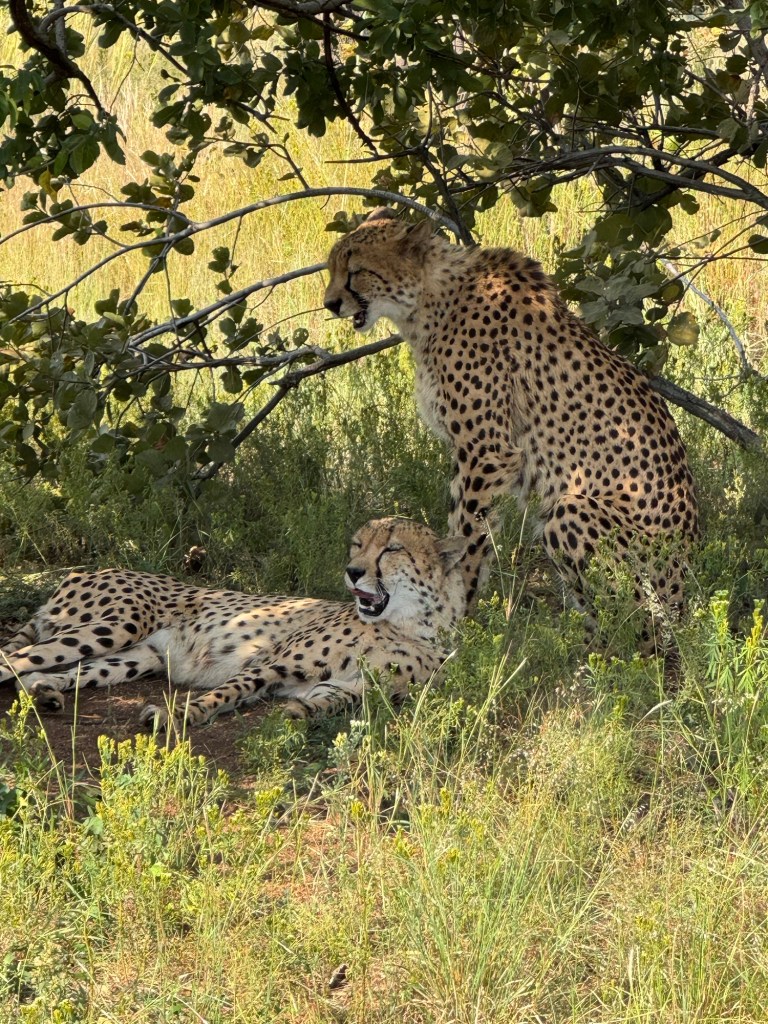
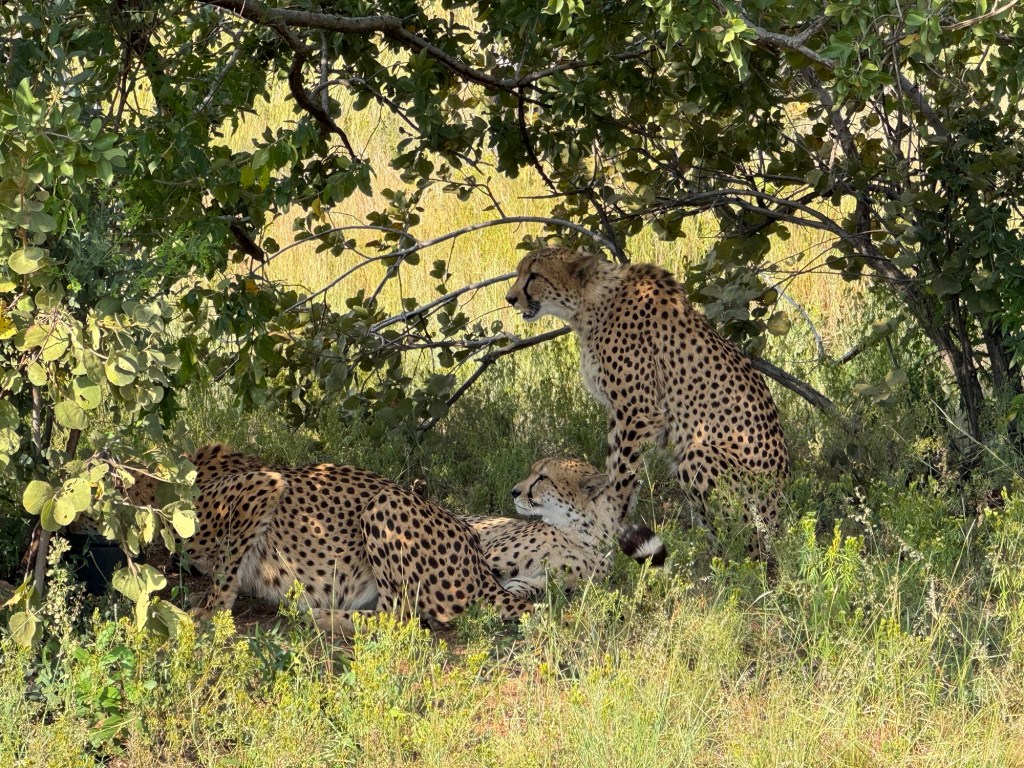
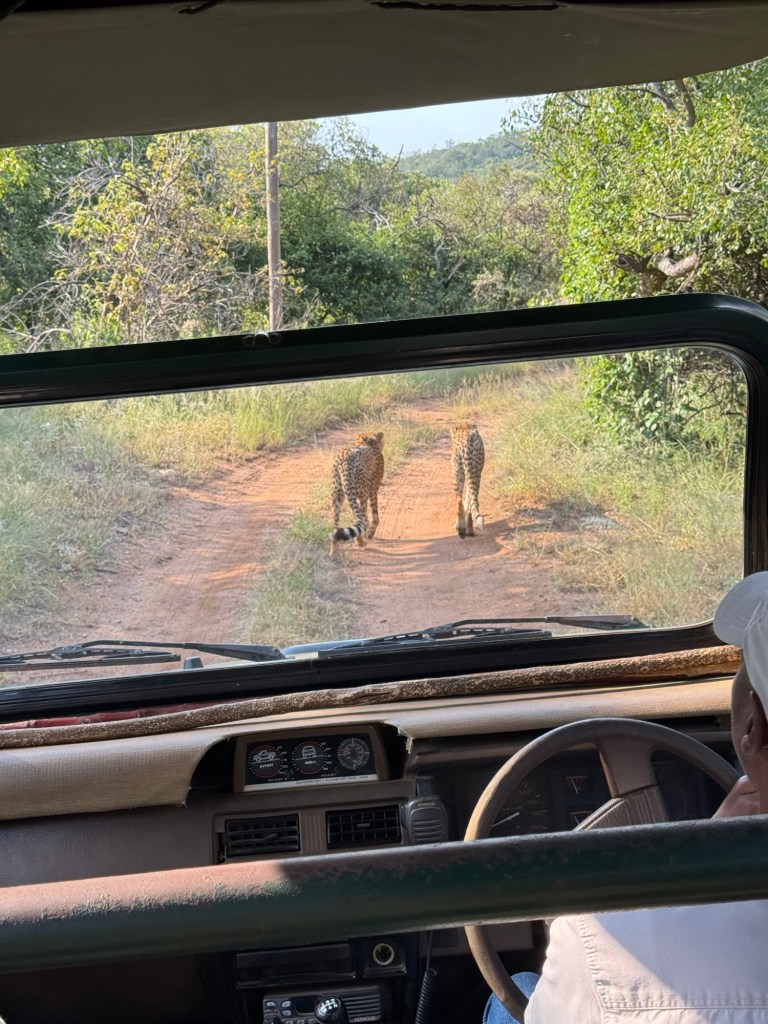
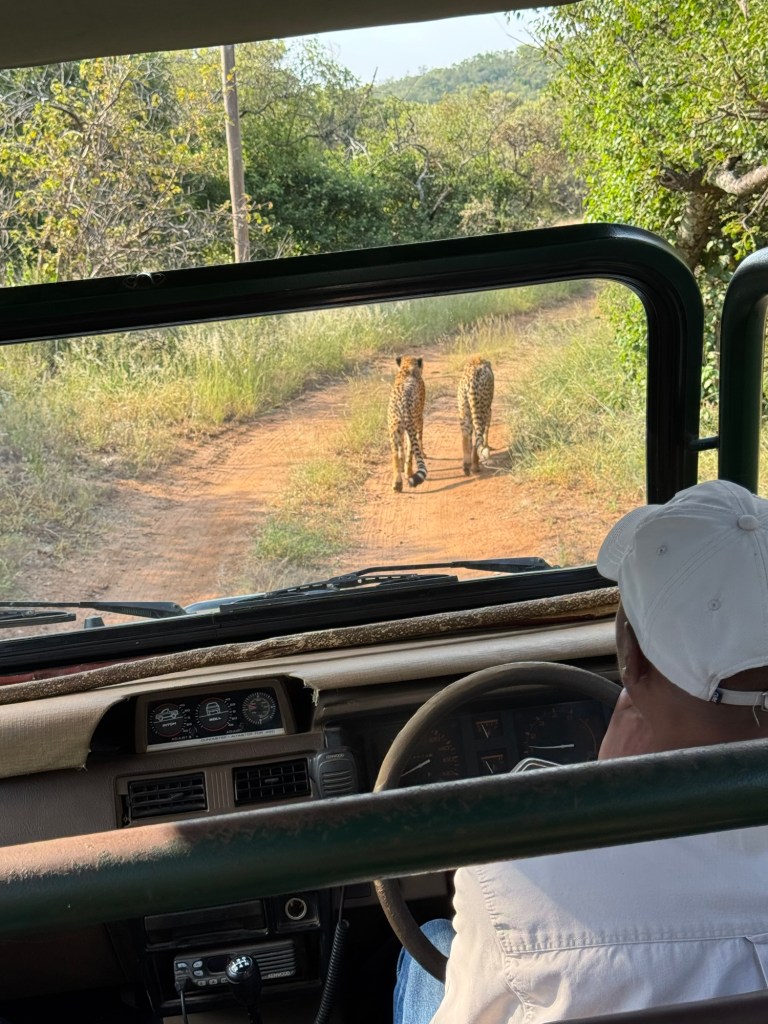
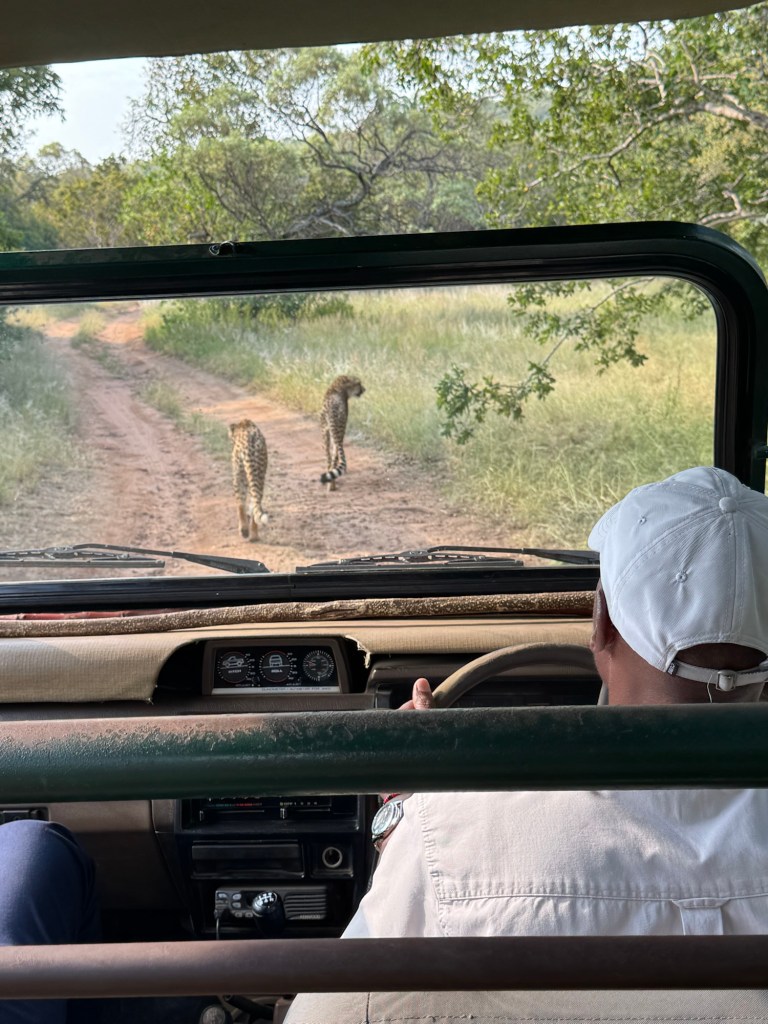
Then…the CHEETAHS! The Hindi word for spotted one, cheetahs are the second laziest cat after lions, though they are built for speed and the fastest cat. They can go from 0 – 120 km/h in 3 seconds, but they must stop or they’ll die from brain damage or heart attack beyond that. They use their flat tails to balance when they change direction at high speed. The black stripes under their eyes are to deflect the sun, like the eye black athletes use, because they are daytime hunters. They are non confrontational and will more likely run from a threat than challenge it. They have weak jaws and kill their prey by suffocating it. If another predator hears the noise, the cheetah runs off with an empty stomach rather than staying to fight. In fact, they eat up on their toes to be ready to flee. Cheetahs have semi retractable claws and cannot climb. They are the only big cat that purrs.
As wonderful as this sanctuary is to these animals, some have to be penned up at night because intruders have been cutting the fence to get in and steal cables. This leaves an exit for the cheetahs. Such a shame.



Leave a comment